ESA    Life in Space    Expanding Frontiers    Improving Daily Life    Protecting the Environment    Benefits for Europe  
   
Media Centre
Press ReleasesESA TelevisionLaunch Media CornerExhibitions
Services
CalendarPublicationsFrequently asked questionsESA-sponsored ConferencesHelpSite CreditsPortal terms of useCommentsSubscribe


Bookmark and Share


Battered Tharsis Tholus volcano on Mars
 
8 November 2011

Download:
 HI-RES JPEG (Size: 852 kb)  HI-RES TIFF (Size: 45 286 kb)
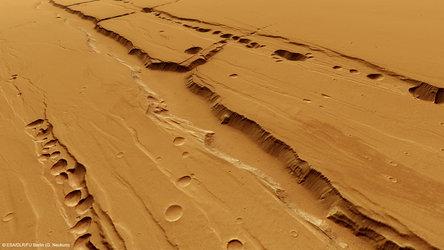
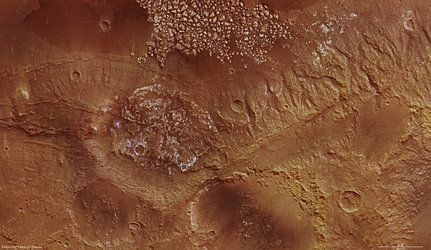
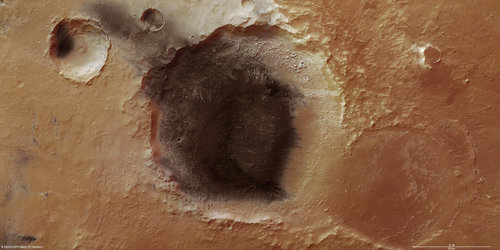
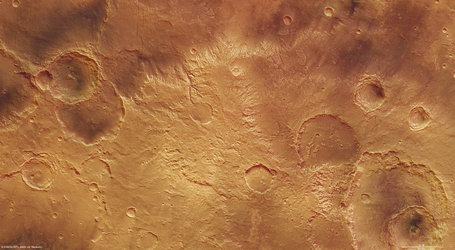
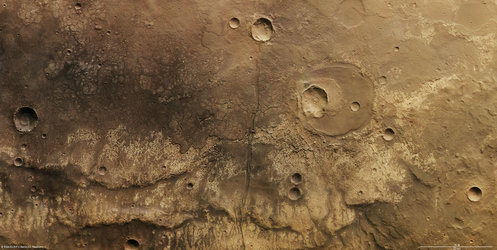
Tharsis Tholis towers 8 km above the surrounding terrain. Its base stretches 155 x 125 km and what marks it out as unusual is its battered condition. The main feature of Tharsis Tholus is the caldera at its centre. It has an almost circular outline, about 32 x 34 km, and is ringed by faults where the caldera floor has subsided by as much as 2.7 km.
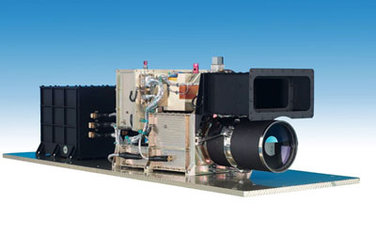
The image was created using a Digital Terrain Model (DTM) obtained data taken by the High Resolution Stereo Camera on ESA’s Mars Express spacecraft during four orbits of Mars: 0997, 1019, 1041, 1052 between 28 October and 13 November 2004. Elevation data from the DTM is colour coded: purple indicates the lowest lying regions and beige the highest. The scale is in metres.

Credits: ESA/DLR/FU Berlin (G. Neukum)
 
 
Download:
 HI-RES JPEG (Size: 475 kb)  HI-RES TIFF (Size: 2875 kb)
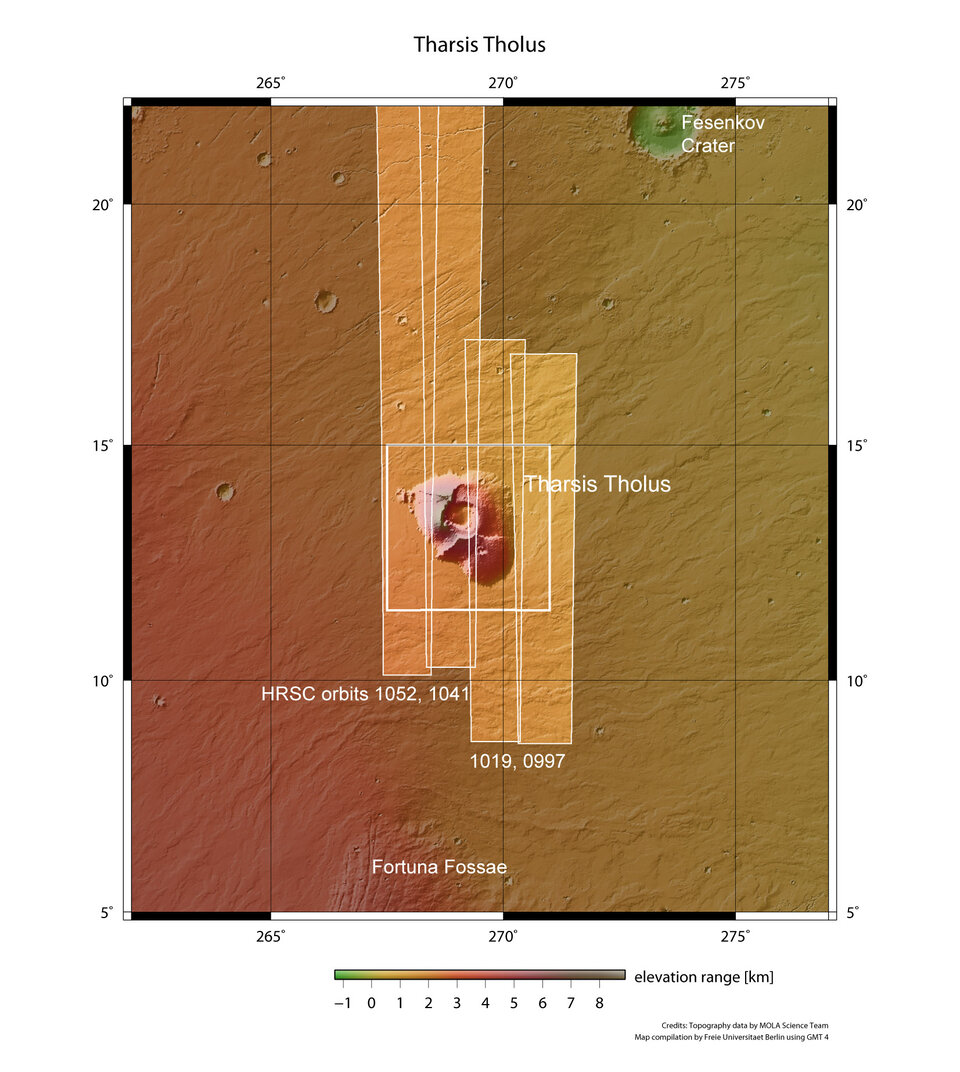
In this wider contextual image of the region surrounding Tharsis Tholus, the rectangles show the region covered in this Mars Express HRSC image release. The area is situated at approximately 13°N/268°E.

Credits: NASA MGS MOLA Science Team
 
 
Download:
 HI-RES JPEG (Size: 455 kb)  HI-RES TIFF (Size: 23 895 kb)
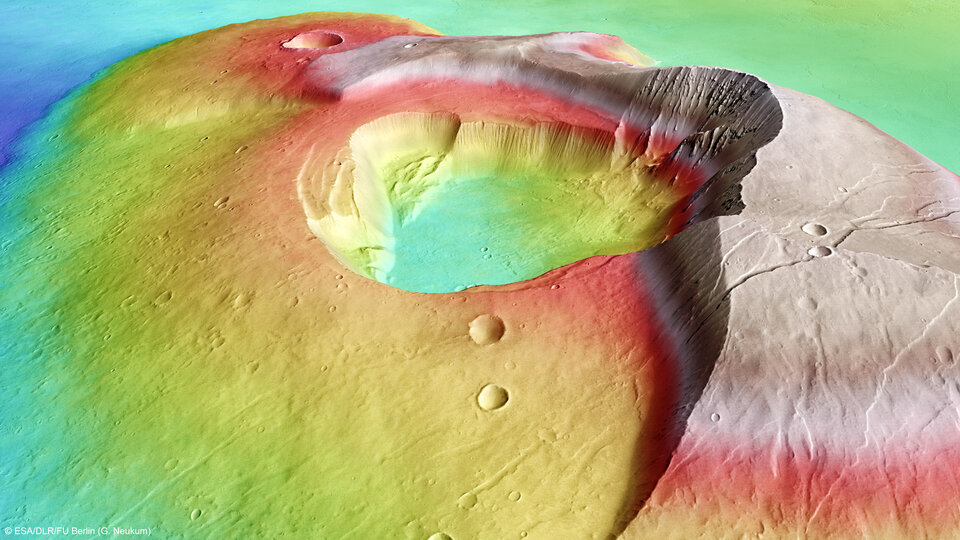
Tharsis Tholis towers 8 km above the surrounding terrain with a base that stretches 155 x 125 km and a central caldera measuring 32 x 34 km. The image was created using a Digital Terrain Model (DTM) obtained from the High Resolution Stereo Camera on ESA’s Mars Express spacecraft. Elevation data from the DTM is colour coded: purple indicates the lowest lying regions and beige the highest. The scale is in metres. In these images, the relief has been exaggerated by a factor of three.

Credits: ESA/DLR/FU Berlin (G. Neukum)
 
 
Download:
 HI-RES JPEG (Size: 380 kb)  HI-RES TIFF (Size: 19 759 kb)
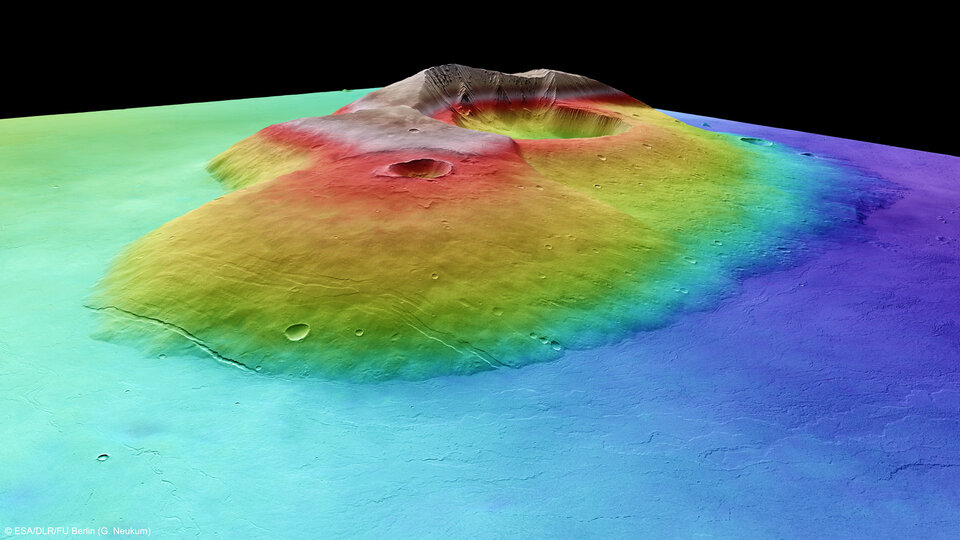
Tharsis Tholis towers 8 km above the surrounding terrain with a base that stretches 155 x 125 km and a central caldera measuring 32 x 34 km. The image was created using a Digital Terrain Model (DTM) obtained from the High Resolution Stereo Camera on ESA’s Mars Express spacecraft. Elevation data from the DTM is colour coded: purple indicates the lowest lying regions and beige the highest. The scale is in metres. In these images, the relief has been exaggerated by a factor of three.

Credits: ESA/DLR/FU Berlin (G. Neukum)
 
 
Download:
 HI-RES JPEG (Size: 377 kb)  HI-RES TIFF (Size: 16 320 kb)
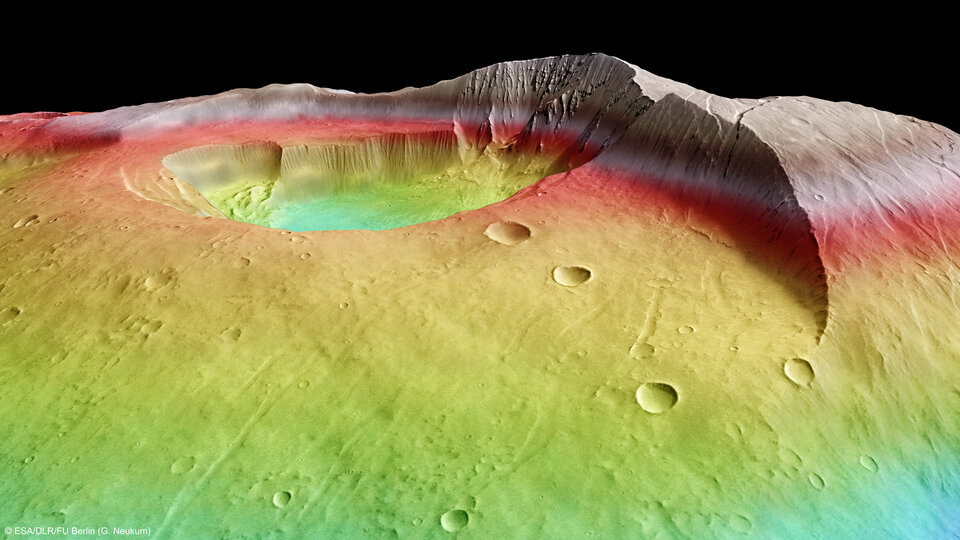
Tharsis Tholis towers 8 km above the surrounding terrain with a base that stretches 155 x 125 km and a central caldera measuring 32 x 34 km. The image was created using a Digital Terrain Model (DTM) obtained from the High Resolution Stereo Camera on ESA’s Mars Express spacecraft. Elevation data from the DTM is colour coded: purple indicates the lowest lying regions and beige the highest. The scale is in metres. In these images, the relief has been exaggerated by a factor of three.

Credits: ESA/DLR/FU Berlin (G. Neukum)
 
 
Download:
 HI-RES JPEG (Size: 366 kb)  HI-RES TIFF (Size: 15 732 kb)
Tharsis Tholis towers 8 km above the surrounding terrain with a base that stretches 155 x 125 km and a central caldera measuring 32 x 34 km. The image was created using a Digital Terrain Model (DTM) obtained from the High Resolution Stereo Camera on ESA’s Mars Express spacecraft. Elevation data from the DTM is colour coded: purple indicates the lowest lying regions and beige the highest. The scale is in metres. In these images, the relief has been exaggerated by a factor of three.

Credits: ESA/DLR/FU Berlin (G. Neukum)
 
 
Download:
 HI-RES JPEG (Size: 317 kb)  HI-RES TIFF (Size: 22 458 kb)
Tharsis Tholis towers 8 km above the surrounding terrain with a base that stretches 155 x 125 km and a central caldera measuring 32 x 34 km. The image was created using a Digital Terrain Model (DTM) obtained from the High Resolution Stereo Camera on ESA’s Mars Express spacecraft. Elevation data from the DTM is colour coded: purple indicates the lowest lying regions and beige the highest. The scale is in metres. In these images, the relief has been exaggerated by a factor of three.

Credits: ESA/DLR/FU Berlin (G. Neukum)
 
 
Download:
 HI-RES JPEG (Size: 537 kb)  HI-RES TIFF (Size: 54 019 kb)
Tharsis Tholis towers 8 km above the surrounding terrain. Its base stretches 155 x 125 km and its caldera is about 32 x 34 km. The caldera floor has subsided by as much as 2.7 km. The image has a ground resolution of approximately 14 m per pixel and was derived from the nadir channel of the High Resolution Stereo Camera on Mars Express, which provides the highest detail of all the channels.

Credits: ESA/DLR/FU Berlin (G. Neukum)
 
 
Download:
 HI-RES JPEG (Size: 447 kb)  HI-RES TIFF (Size: 39 229 kb)
Tharsis Tholis towers 8 km above the surrounding terrain. Its base stretches 155 x 125 km and its caldera is about 32 x 34 km. The caldera floor has subsided by as much as 2.7 km. The image was acquired by the High Resolution Stereo Camera on Mars Express and is of an area at approximately 13°N/268°E on Mars. It combines data from HRSC’s nadir channel and one stereo channel to produce this 3D image. Stereoscopic glasses are required to see the 3D effect.

Credits: ESA/DLR/FU Berlin (G. Neukum)
 
 
Mars Express on YouTube
Traces of Martian life
Related articles
The pit-chains of Mars – a possible place for life?ESA's Mars Express radar gives strong evidence for former Mars oceanMars Express reveals wind-blown deposits on MarsMountains and buried ice on MarsMars Express observes clusters of recent craters in Ares VallisRare martian lake delta spotted by Mars ExpressMars’ northern polar regions in transitionPhobos slips past JupiterSpringtime at Mars’ south poleMars Express sees deep fractures on MarsNeighbouring volcanoes on MarsThe scars of impacts on MarsMars Express puts craters on a pedestalMars Express close flybys of martian moon PhobosWind and water have shaped Schiaparelli on MarsLight and dark in the Phoenix LakeMars: how low can you go?Mars’s mysterious elongated craterRocky mounds and a plateau on MarsWet era on early Mars was globalVolcanic ash in Meridiani PlanumCraters young and old in Sirenum FossaeCraters, lava flows and tectonic features near Ma'adim VallisCraters and channels in Hephaestus FossaeChaotic terrain in Ariadnes CollesIce-covered martian North PoleThe Euminedes Dorsum mountains on MarsLava deposits in Mangala Fossae
Related links
High Resolution Stereo CameraBehind the lens...Frequently asked questions
For specialists
ESA Planetary Science archive (PSA)NASA Planetary Data SystemHRSC data viewer


   Copyright 2000 - 2012 © European Space Agency. All rights reserved.