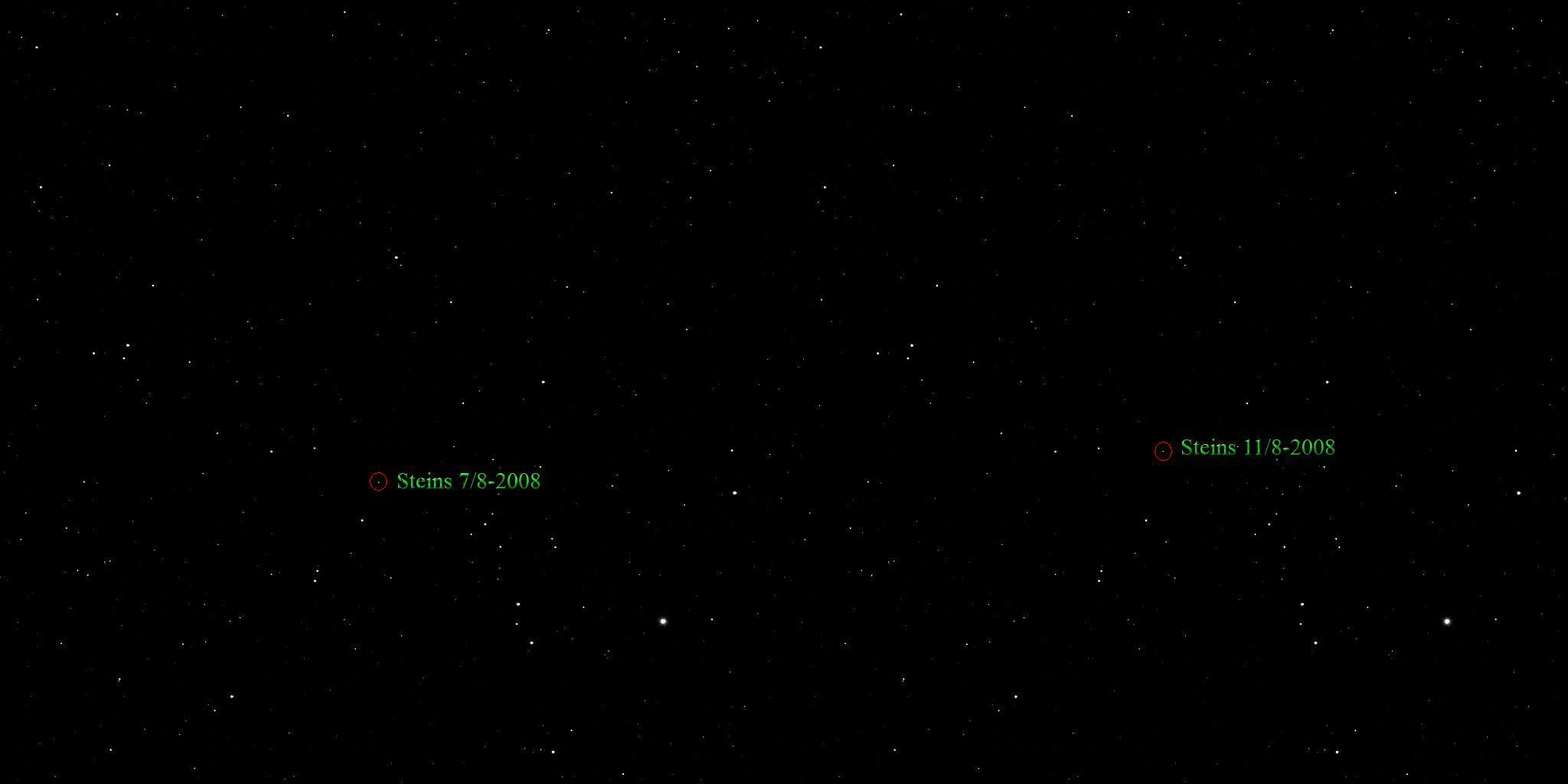
Perfect sight: Rosetta cameras track asteroid target
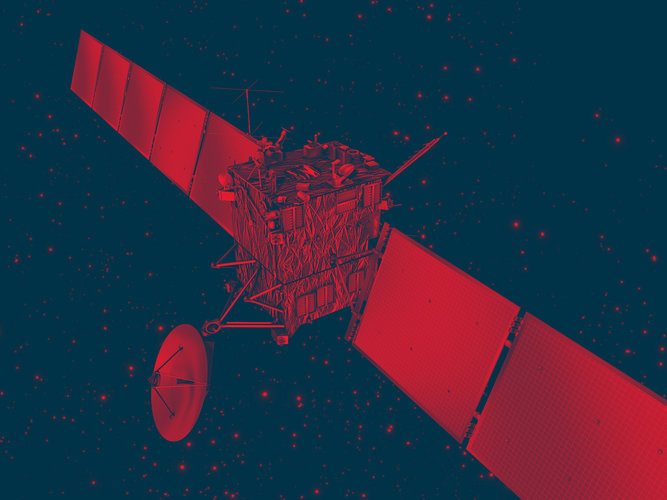
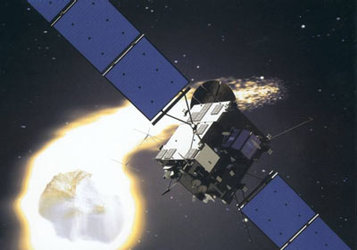
On 14 August, Rosetta conducted a successful trajectory correction manoeuvre using data obtained from ESA's first-ever optical tracking of an asteroid target, (2867) Steins. Images from the spacecraft's cameras were used to calculate the asteroid's location and optimise its trajectory for fly-by next month.
Rosetta's first major correction manoeuvre in the approach phase took place while the spacecraft was just less than 17 million km from Steins. The spacecraft’s thrusters burned continuously for approximately 2 minutes, starting at 13:42 CEST (Central European Summer Time). This achieved a change in Rosetta’s speed with respect to Steins of 12.8 cm/sec.
This tiny change in speed, though, will be enough to correct the spacecraft's 5 September Steins fly-by distance by 250 km. Prior to this manoeuvre, the spacecraft’s trajectory would have led it too close to the asteroid at the time of closest approach; to be compatible with spacecraft performance, Rosetta must be no closer than 800 km from Steins.
Daily imaging

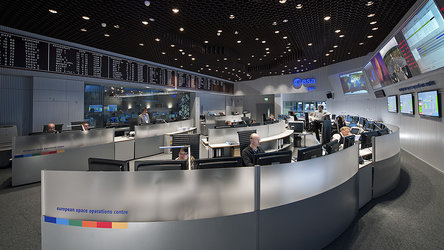
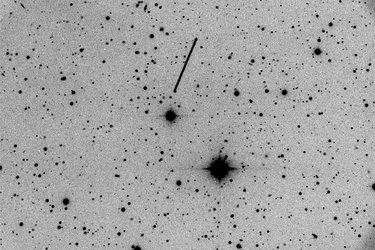
Rosetta's OSIRIS (Optical, Spectroscopic, and Infrared Remote Imaging System) scientific camera and the on-board star-tracker navigational cameras began twice-weekly imaging periods on 4 August, recording 52 images of Steins. Flight dynamics specialists at ESA's European Space Operations Centre (ESOC) used these to calculate the 14 August thruster burn. Optical tracking of Steins will continue twice per week until 22 August, and will intensify with imaging slots daily between 25 August and 4 September - when the asteroid will be much closer.
"The closer we get to Steins, the more accurate our knowledge of the asteroid's position relative to Rosetta will be," said Trevor Morley, leading the Rosetta Flight Dynamics Orbit team at ESOC, Darmstadt, Germany. "Thanks to Rosetta's cameras, we will obtain increasingly precise measurements that will allow us to adjust again, if necessary, Rosetta's orbit for an optimal asteroid encounter."
Slots for possible future trajectory manoeuvres prior to the rendezvous with Steins are set for 28 August and 2, 4 and 5 September.
Exceptional results
According to Andrea Accomazzo, Rosetta Spacecraft Operations Manager at ESOC, the optical navigation campaign is providing exceptional results, far exceeding expectations.
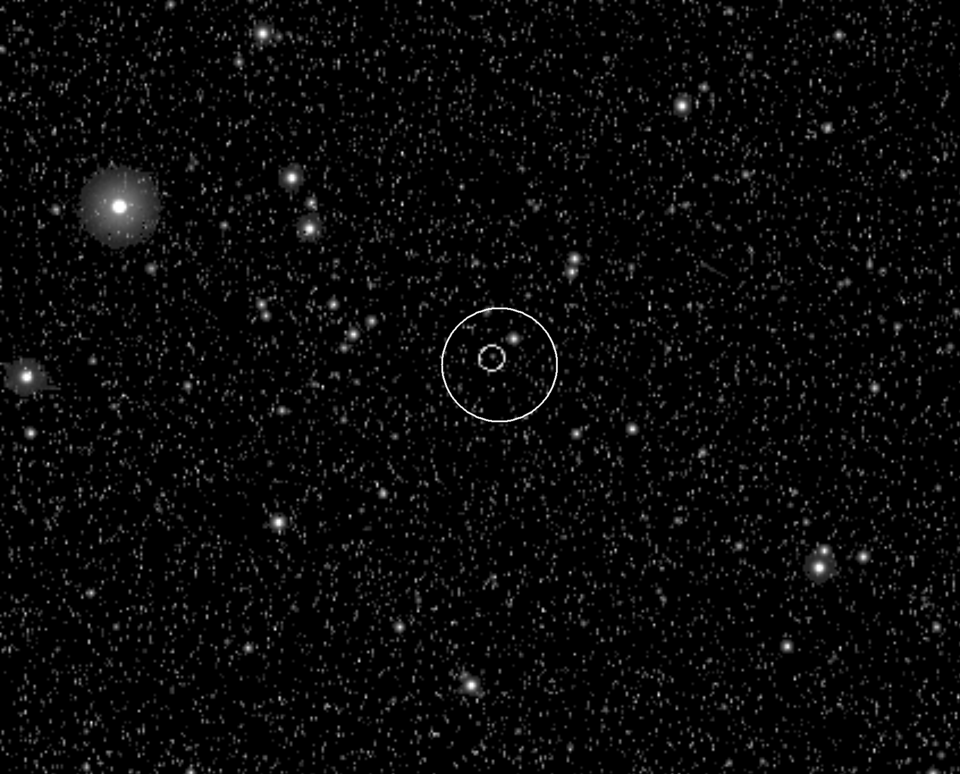
"Both of Rosetta's navigation cameras could already see the asteroid from the very beginning of the tracking campaign - despite the long distance from Steins, and contrary to what we expected," Accomazzo said.
"The exceptional quality of the OSIRIS scientific camera – namely its angular resolution – provided data as accurate as expected, and made our current trajectory calculations very precise."
Rosetta's optical tracking campaign marks history for ESA's spacecraft operations. "It is the first time ever that we have used optical instrumentation on board a scientific spacecraft for navigation, as opposed to the usual techniques based on analysing radio signals," said Morley. "The exceptional results are really encouraging and we look forward to using this technique again in the future, if and when it is possible."
The Steins optical tracking campaign will continue right up to Rosetta's closest approach, now expected at 20:58 CEST, 5 September 2008.
For more information
Andrea Accomazzo, ESA Rosetta Spacecraft Operations Manager
Email: Andrea.Accomazzo @ esa.int
Gerhard Schwehm, ESA Rosetta Mission Manager
Email: Gerhard.Schwehm @ esa.int
Rita Schulz, ESA Rosetta Project Scientist
Email: Rita.Schulz @ esa.int