Mars Express probes the Red Planet’s most unusual deposits
The radar system on ESA’s Mars Express has uncovered new details about some of the most mysterious deposits on Mars: The Medusae Fossae Formation. It has given the first direct measurement of the depth and electrical properties of these materials, providing new clues about their origin.
The Medusae Fossae Formation (MFF) are unique deposits on Mars. They are also an enigma. Found near the equator, along the divide between the highlands and lowlands, they may represent some of the youngest deposits on the surface of the planet. This is inferred from the marked lack of impact craters dotting this terrain, unlike on older terrain.
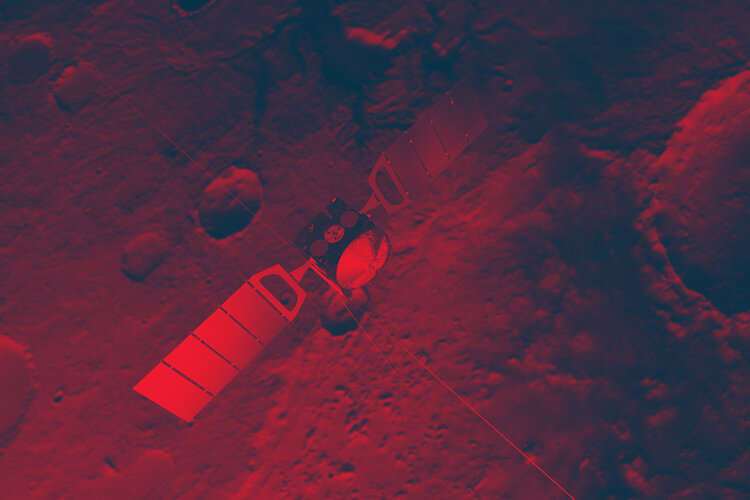
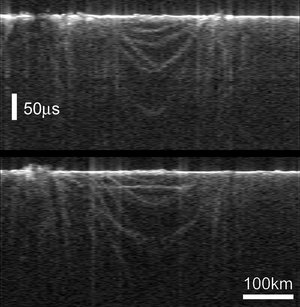
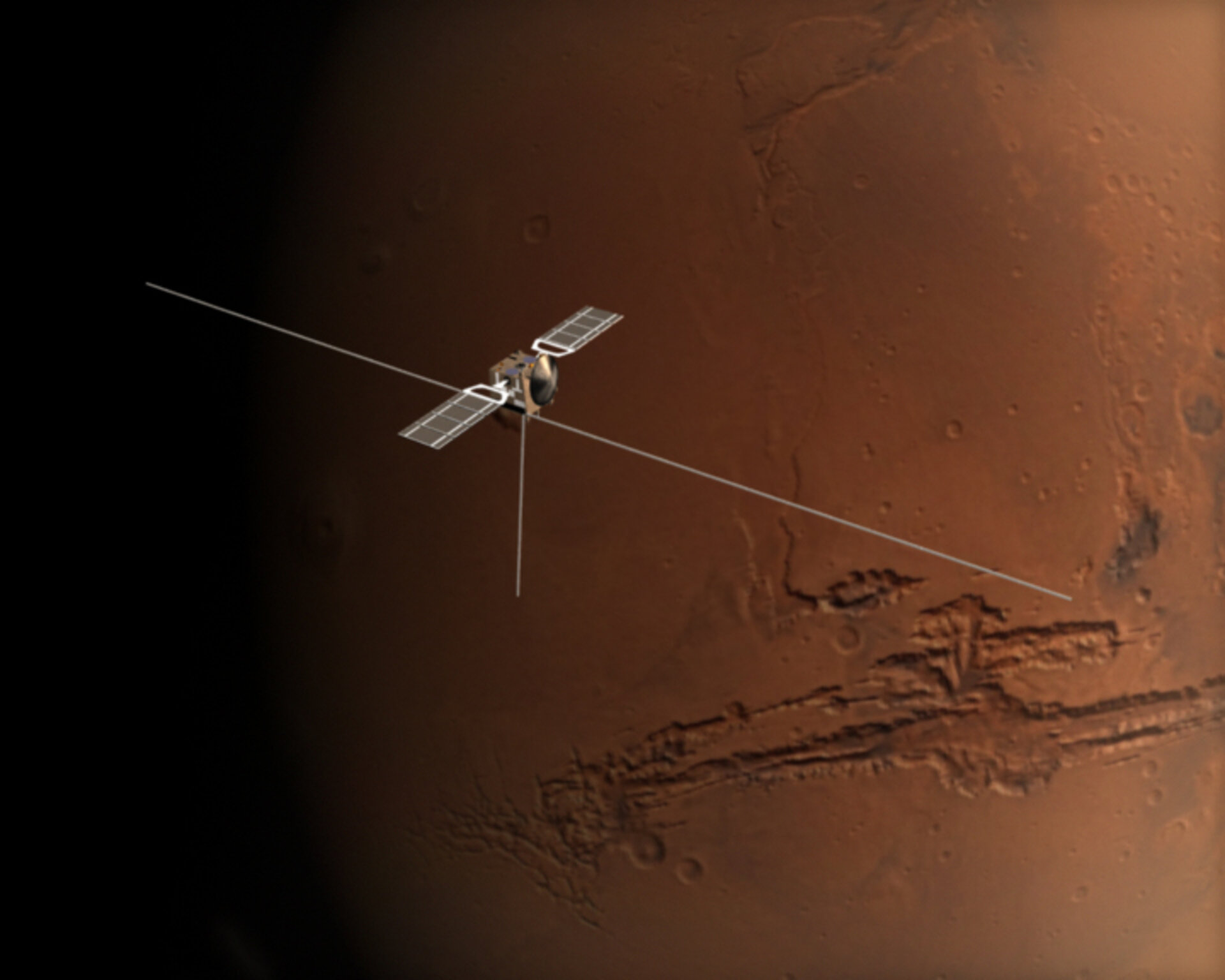
Mars Express has been collecting data from this region using its Mars Advanced Radar for Subsurface and Ionospheric Sounding (MARSIS). Between March 2006 and April 2007, Mars Express orbited the region many times, taking radar soundings as it went.
For the first time, these radar soundings revealed the depth of the MFF layers, because of the time it took for the radar beam to pass through the top layers and bounce off the solid rock beneath. “We didn’t know just how thick the MFF deposits really were” says Thomas Watters, lead author of the results at the Center for Earth and Planetary Studies, National Air and Space Museum, Smithsonian Institution, USA.
“Some investigators thought they might be a thin veneer overlaying topographic rises in the lowlands. The new data show that the MFF are massive deposits over 2.5 km thick in some places where MARSIS orbits pass over them,” Watters added.
The MFF deposits intrigue scientists because they are associated with regions that absorb certain wavelengths of Earth-based radar. This had led to them being called ‘stealth’ regions because they give no radar echo. The affected wavelengths are 3.5 to 12.6 centimetres. MARSIS, however, works at wavelengths of 50 to over 100 metres. At these wavelengths, the radar waves mostly pass through the MFF deposits creating subsurface echoes when the radar signal reflects off the plains material beneath.
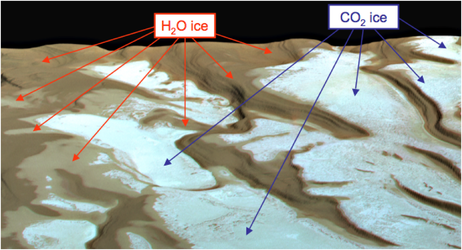
A variety of scenarios have been proposed for the origin and composition of these deposits. Firstly, they could be volcanic ash deposits from now-buried vents or other nearby volcanoes. Second, they could be deposits of wind-blown materials eroded from other martian rocks. Thirdly, they could be ice-rich deposits, somewhat similar to the layered ice deposits at the poles of the planet, but formed when the spin axis of Mars tilts over, making the equatorial region colder.
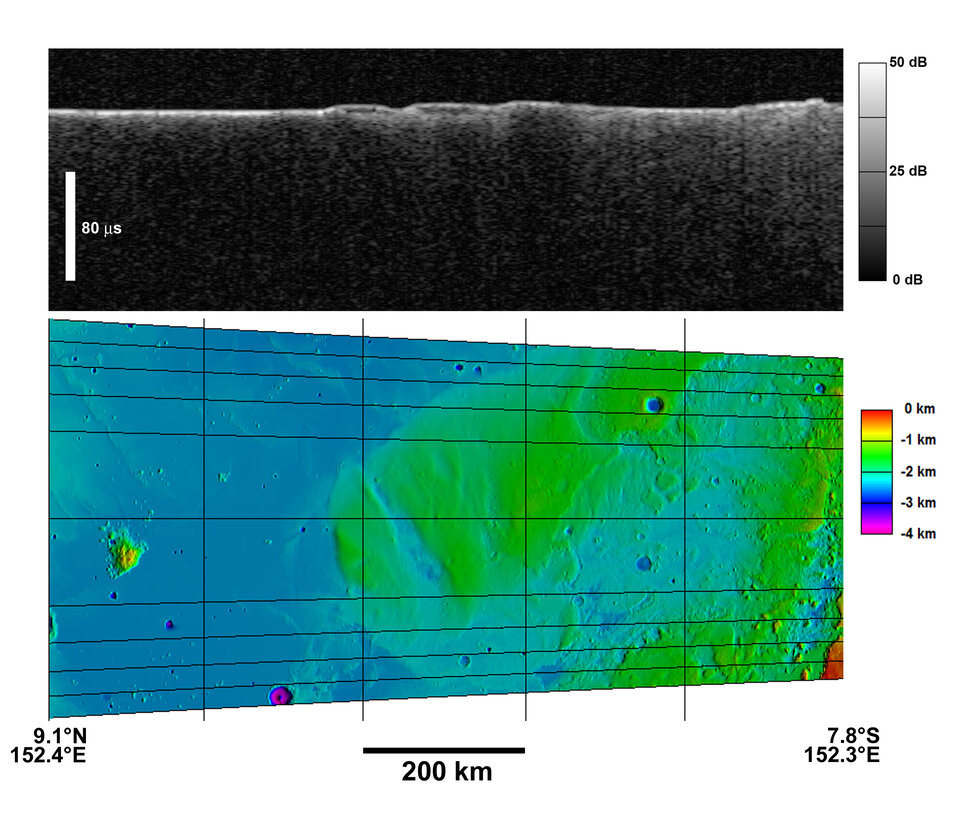
Deciding between these scenarios is not easy, even with the new data. The MARSIS data reveal the electrical properties of the layers. These suggest that the layers could be poorly packed, fluffy or dusty material. However it is difficult to understand how porous material from wind-blown dust can be kilometres thick and yet not be compacted under the weight of the overlying material.
On the other hand, although the electrical properties are consistent with water ice layers, there is no other strong evidence for the presence of ice today in the equatorial regions of Mars. “If there is water ice at the equator of Mars, it must be buried at least several metres below the surface,” says Jeffrey Plaut, MARSIS Co-Principal Investigator at the Jet Propulsion Laboratory, USA. This is because the water vapour pressure on Mars is so low that any ice near the surface would quickly evaporate.
So, the mystery of Mars’s Medusae Fossae Formation continues. “It is still early in the game. We may get cleverer with our analysis and interpretation or we may only know when we go there with a drill and see for ourselves,” says Plaut.
Giovanni Picardi at the University of Rome, La Sapienza, Principal Investigator of the experiment, says, “’Not only is MARSIS providing excellent scientific results but the team is also working on the processing techniques that will allow for more accurate evaluation of the characteristics of the subsurface layers and their constituent material. Hence, the possible extension of the mission will be very important to increase the number of observations over the regions of interest and improve the accuracy of the evaluations.
Notes for editors:
The results appear in ‘Radar sounding of the Medusae Fossae Formation Mars: Equatorial ice or dry, low-density deposits?’ published in today's issue of Science. The article is by T. R. Watters, B. Campbell, L. Carter, C. J. Leuschen, J. J. Plaut, G. Picardi, R. Orosei, A. Safaeinili, S. M. Clifford, W. M. Farrell, A. B. Ivanov, R. J. Phillips, E. R. Stofan and the MARSIS Science Team.
For more information:
Giovanni Picardi, University of Rome, La Sapienza
Email: Gio.Pic @ tiscali.it
Thomas Watters, Center for Earth and Planetary Studies, Smithsonian Institution, USA
Email: WattersT @ si.edu
Jeff Plaut, Jet Propulsion Laboratory, USA
Email: Plaut @ mail.jpl.nasa.gov
Agustin Chicarro, ESA Mars Express Project Scientist
Email: Agustin.Chicarro @ esa.int