Feature

Objectives


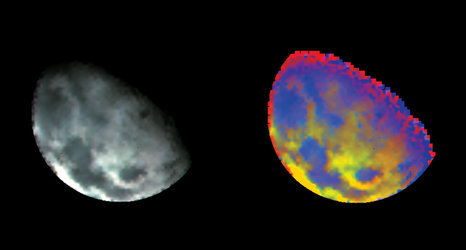
Chandrayaan-1 will use several electromagnetic wavelengths – visible, near infrared, microwave, X-ray – to map the Moon’s minerals in unprecedented, high resolution, and study lunar geology and geochemistry.
 
The mission will:

  • Analyse geological, mineralogical and topographical aspects of the lunar surface in unprecedented detail
  • Study the vertical distribution of crustal material
  • Investigate the processes that led to the formation of craters, maria and basins on the Moon
  • Explore space weathering processes, that result from the interaction of the solar wind and cosmic rays with the Moon’s surface
  • Analyse the magnetic anomalies on the lunar surface
  • Search for ices at the poles
  • Produce 3D maps of regions of particular scientific interest at high spatial resolution (5-10 m)
  • Drop an impact probe on the lunar surface to test near-surface properties and test impact technology


Last update: 9 October 2008

 •  Looking at the Moon (http://www.esa.int/esaSC/SEM5DO4N0MF_index_0_m.html)
 •  SMART-1 (http://www.esa.int/SPECIALS/SMART-1/index.html)

Read more

 •  Welcome to the double planet (http://www.esa.int/SPECIALS/SMART-1/SEMO1VMKPZD_0.html)
 •  Lunar science - still plenty left to do! (http://www.esa.int/SPECIALS/SMART-1/SEM2BHXO4HD_0.html)
 •  Where did the Moon come from? (http://www.esa.int/SPECIALS/SMART-1/SEMACHXO4HD_0.html)

Related ESApod

 •  SHAR: the Indian launch base (http://www.esa.int/esaCP/SEMHJLY5KMF__0.html)
 •  India – Europe cooperation (http://www.esa.int/esaSC/SEMZ4A3IDMF_index_0.html)
 •  Video overview of the Chandrayaan-1 mission (http://www.esa.int/esaSC/SEMNBQSG7MF_index_0.html)

Related links

 •  Indian Space Research Organisation (http://www.isro.org/)
 •  Chandrayaan-1 at ISRO (http://www.isro.org/chandrayaan/htmls/home.htm)
 •  C1XS web page (http://www.sstd.rl.ac.uk/c1xs/C1_Launch.htm)
 •  SIR-2 web page (http://www.mps.mpg.de/projects/sir)
 •  SARA web page (http://documents.irf.se/get_document.php?group=Administration &docid=984)

In depth

 •  Moon facts (http://sci.esa.int/science-e/www/object/index.cfm?fobjectid=31412)