The search for life
Life on other planets is always going to be an exciting subject for debate. But how do we find out if life really exists elsewhere in the Universe?
One way is to travel to the planets, either with remotely operated probes or with manned spacecraft.
Mars is currently the only planet in our Solar System on which there is a strong possibility of finding life, either past or present. ESA’s Mars Express is Europe’s first mission to the Red Planet, and its Beagle 2 lander will perform on-the-spot experiments to search for signs of this life.
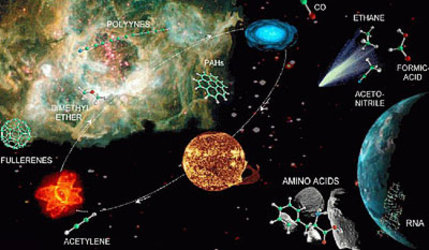
In 2004, ESA's Huygens probe to Titan, a moon of Saturn, could provide vital information towards the great mystery of how life began on Earth. Later, Rosetta will be the first spacecraft to land on a comet, analysing its surface for organic compounds that could be the building blocks of life. This will help us to understand if life on Earth began with the help of 'comet seeding'.
First, find the stars with planets...
However, these missions are only looking for life within our own Solar System. But how do we find life on planets around other stars? ESA has a plan for searching for this life in other solar systems.
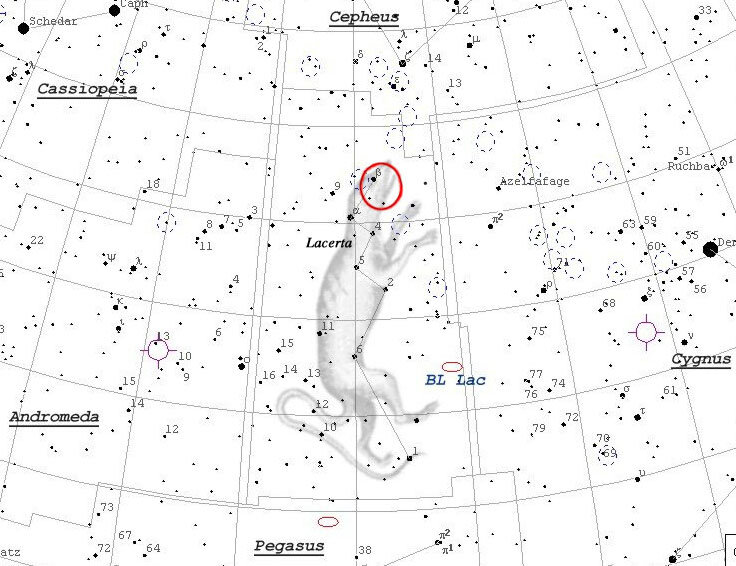
First you have to find the stars that have planets. There are too many stars to analyse them all, so you have to choose a small part of the sky as your starting point. Next you have to decide what kind of planets you are looking for.
With Earth-based telescopes, the only planets we have detected around other stars have been giant gaseous worlds, like Jupiter, over 10 times the diameter of the Earth. Scientists believe we should be looking for rocky, Earth-like planets, because a solid surface is needed on which organic molecules can form and develop into life.
...then decide what kind of planets...

The joint CNES/European mission Corot will be the first spacecraft capable of detecting large rocky planets in short-period orbits around nearby stars.
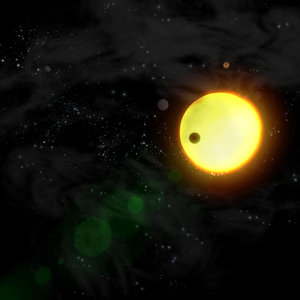
It will use its 30-centimetre telescope to look at few thousand stars, monitoring changes in their brightness caused by planets crossing in front of them.
...then identify signs of life
When we have found some suitable planets, then we can look for signs of life. ESA will continue the search into the second decade of the century with the Darwin mission. Darwin's main objective is to find the most likely places for life to develop - at least as we know it!
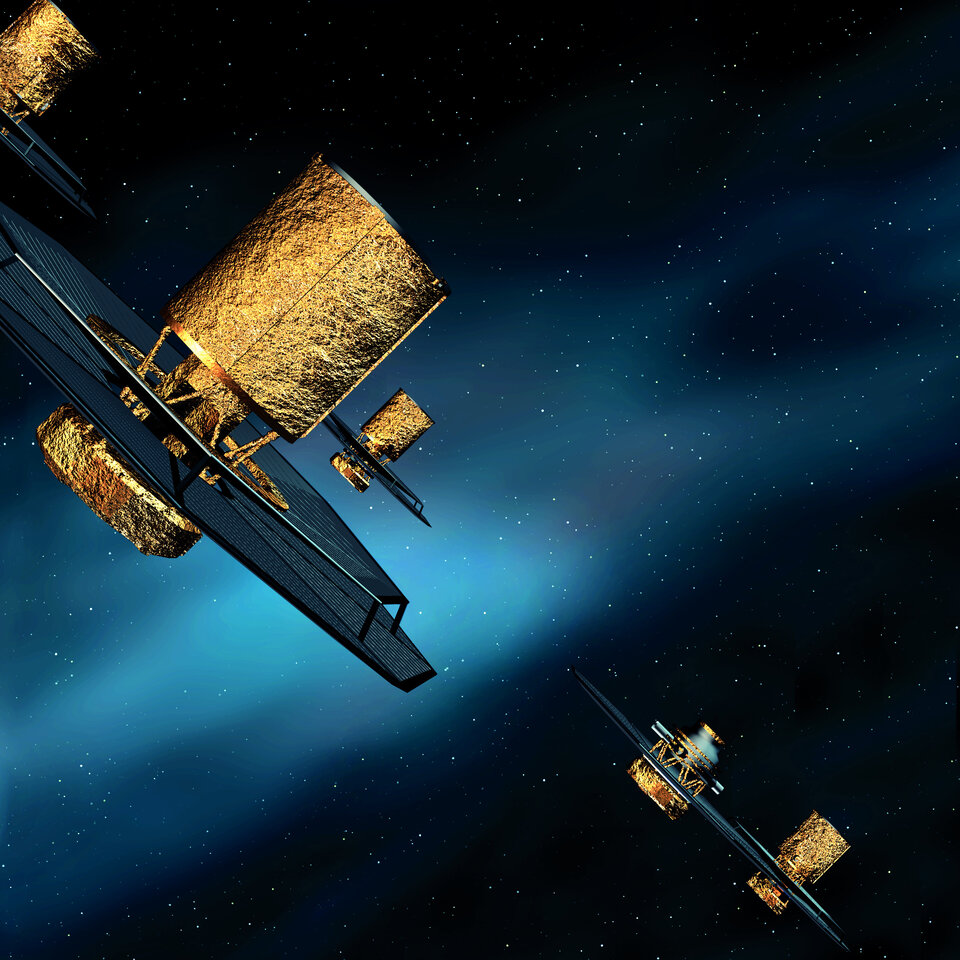
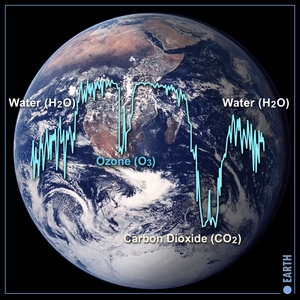
Darwin will make observations in the infrared since life on Earth leaves its mark in our atmosphere at these wavelengths. On Earth, biological activity produces gases that mingle with our atmosphere.
For example, plants give out oxygen and animals expel carbon dioxide and methane. This flotilla of eight spacecraft will survey 1000 of the closest stars, looking for rocky planets and analysing their atmospheres for this evidence of possible life.