First Double Star satellite successfully launched
This evening, at 20:06 CET, the Chinese National Space Administration (CNSA) successfully launched TC-1, the first of two scientific satellites known as Double Star.
The spacecraft, called ‘Tan Ce 1’ which in Chinese means ‘Explorer 1,’ took off from the Chinese launch base in Xichang, in Sichuan province, on board a Long March 2C launcher.
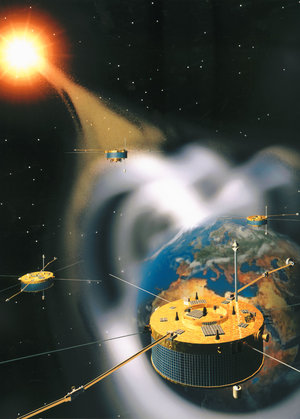
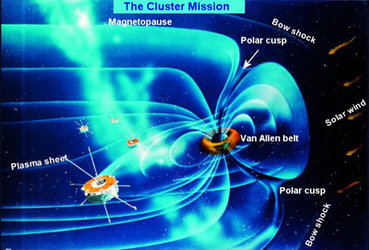
ESA has contributed to the Double Star mission by providing eight on-board scientific instruments. Double Star follows the footsteps of ESA’s Cluster mission and will study closely the interaction between the solar wind and the Earth’s magnetic field.
The People's Republic of China and ESA have a long history of scientific collaboration. The first co-operation agreement was signed in 1980, to facilitate the exchange of scientific information.
Thirteen years later, the collaboration focused on a specific mission, ESA’s Cluster, to study the Earth's magnetosphere.
Then, in 1997, the CNSA invited ESA to participate in Double Star, a two-satellite mission to study the Earth’s magnetic field, but from a perspective which is different from that of Cluster and complementary to it.

An agreement to develop this joint mission was signed on 9 July 2001 by ESA’s Director General, Antonio Rodota, and Luan Enjie, Administrator of the CNSA.
ESA’s contribution to the mission includes eight scientific instruments, of which seven are spares from the Cluster mission, and support to the ground segment for four hours each day via ESA’s satellite tracking station in Villafranca, Spain.
Today’s launch sees the culmination of these joint efforts and marks another important step in the collaboration between CNSA and ESA. The instruments on board Double Star are the first ever European ones to be flown on a Chinese satellite. Together with those built by Chinese scientists, they will work in synergy with those mounted on board the four Cluster spacecraft.

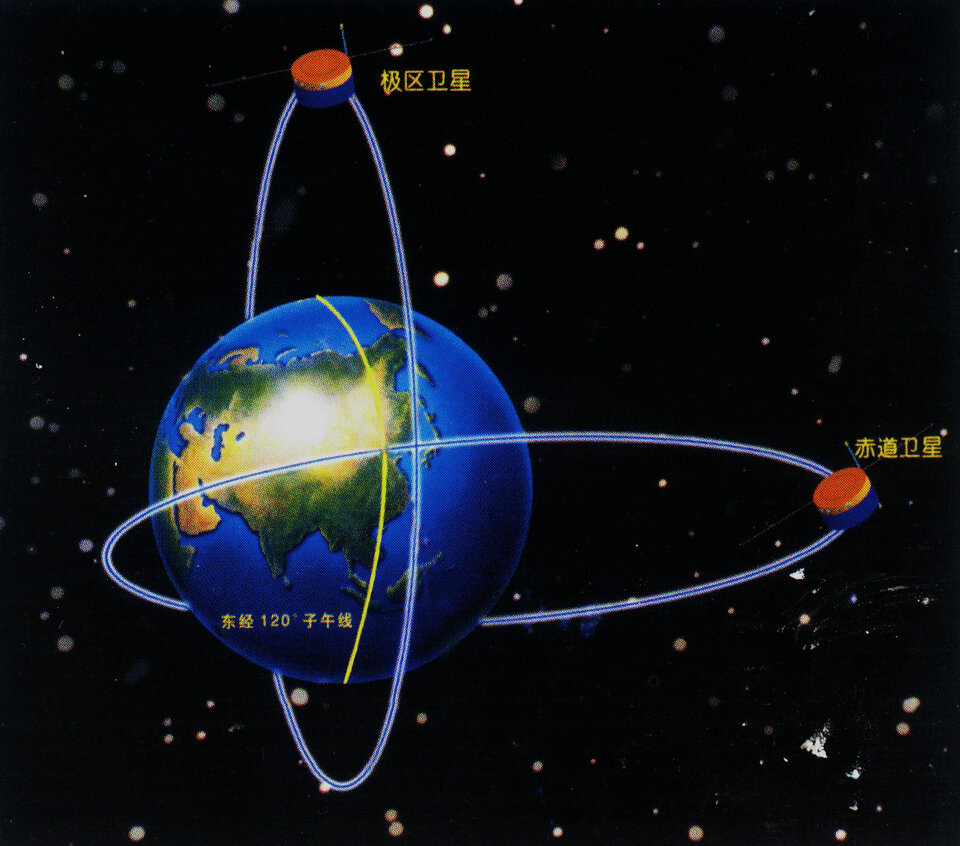
The positions and orbit of the two Double Star satellites have been carefully defined to allow the study of the magnetosphere on a larger scale than that possible with Cluster alone. An example of this co-ordinated activity is the study of the substorms producing the bright aurorae.
The exact region where they form is still unclear but the simultaneous high-resolution measurements to be made by Double Star and Cluster are expected to give an answer.
Professor David Southwood, the Director of ESA’s Scientific Programme, said: “Double Star is a win-win project. Not only will European scientists participate in a new mission, at a very low cost, but they will also see an increased scientific return from the four ESA Cluster satellites. Chinese scientists will equally benefit of this, since they already participate in the Cluster mission. These are the great advantages of an historic international collaboration.”