Timeline: Mars swingby at 36 000 km/hr
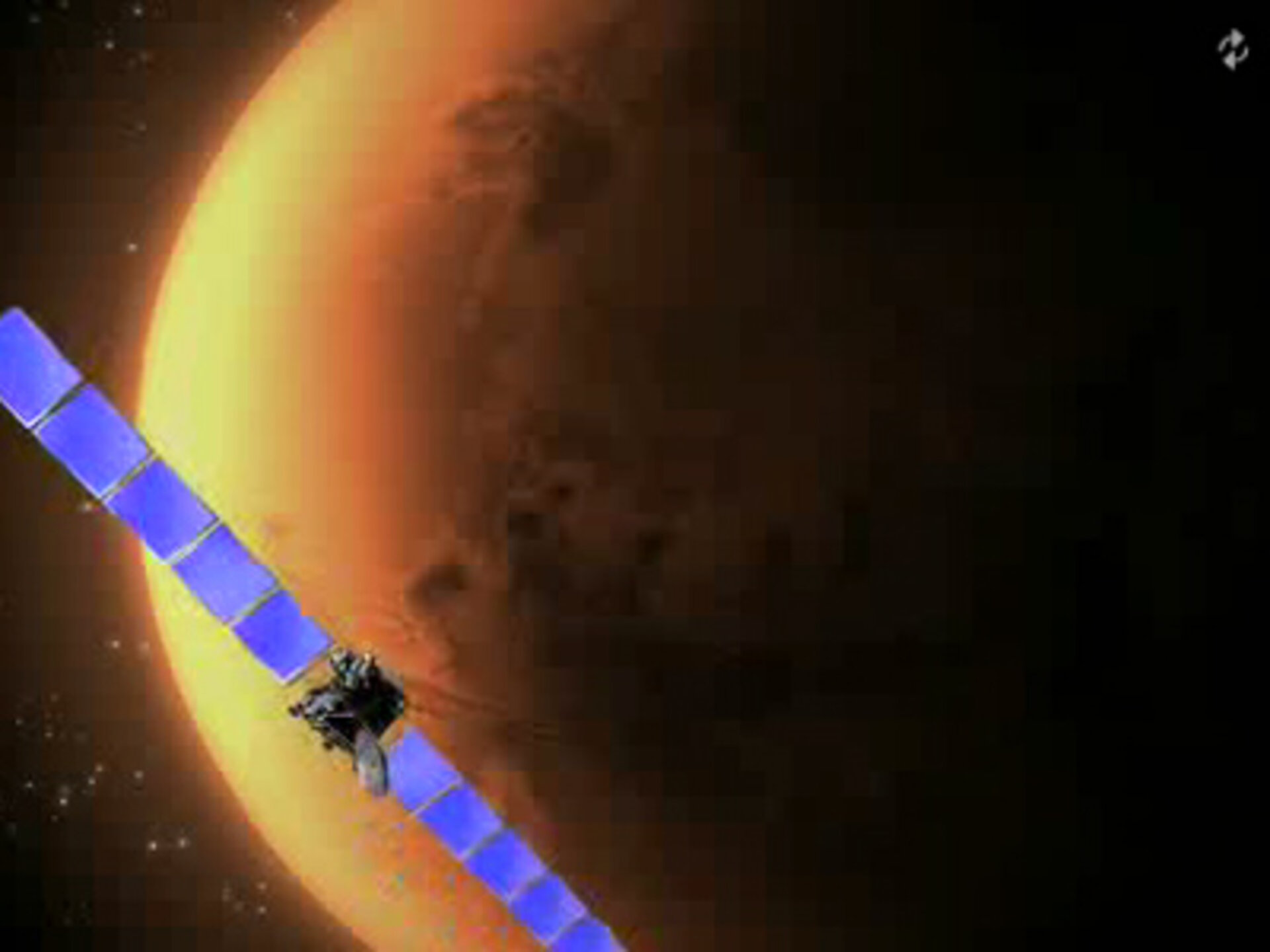
The timeline for Rosetta's speedy swingby of Mars on 25 February includes a series of slew manoeuvres, an occultation and signal blackout, an eclipse and some excellent opportunities for scientific observations.
Rosetta's Mars swingby kicks off today with a series of complex slew manoeuvres to enable instrument calibration. The spacecraft has been correctly lined up on the proper trajectory since a series of engine firings in the past several weeks.
Rosetta is expected to pass the Red Planet at 250 km altitude and 36 191 km/hr with respect to Mars at closest approach. The swingby should reduce Rosetta's velocity with respect to the Sun by 7887 km/hr, and the spacecraft should depart Mars travelling at 78 779 km/hr relative to the Sun.
Timeline of major activities
Note: Times shown are ground event times in Central European Time, equivalent to UTC (Coordinated Universal Time) + 1 hour. Spacecraft event time is 17 mins 33 secs earlier.
23 February
| 17:32 | First of a series of slew manoeuvres to perform instrument calibrations |
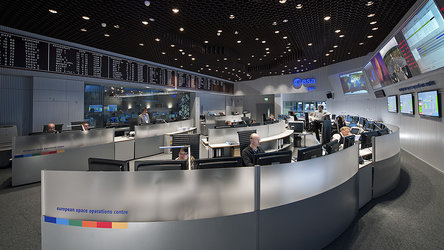
| 19:30 | Flight Control Team in ESOC's Main Control Room (MCR) around the clock |
24 February

| ~14:00 | Webcam in MCR switched on (access via link at right) |
| 18:35 | Additional slew manoeuvres to perform Mars observations with onboard instruments |
| 22:30 | End of observations until after Mars swingby |
25 February
| 02:15 | -- All payload instruments switched off; CIVA camera (onboard lander) remains in operation and scheduled to take images
-- Loss of telemetry; S-band carrier signal remains
|
| 03:13 | -- Occultation starts; Rosetta behind Mars
-- Loss of S-band signal; no communication with spacecraft
|
| 03:15 | -- Closest approach to Mars (250 km)
-- Start of eclipse; no visibility for camera; no sunlight on solar panels
|
| 03:28 | -- End of occultation; S-band carrier signal back
-- Receipt of S-band carrier signal provides initial technical confirmation of swingby success
|
| 03:40 | End of eclipse; sunrise above Mars |
| 03:50 | Start of Phobos and Mars tracking with additional scientific observations |
| 03:52 | -- Acquisition of telemetry (radio signal & data); full technical confirmation of swingby success
-- Downloading of science data begins
|
| After 13:00 | Results expected to be available on ESA portal |
ESA/NASA interagency cooperation supports Rosetta
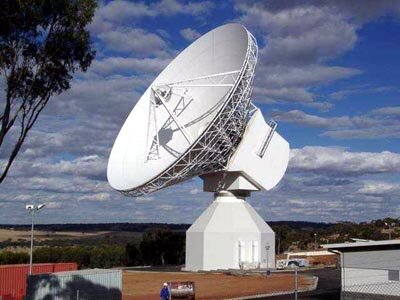
Increased ground tracking support has been scheduled throughout the swingby period.
In addition to ESA's 35m deep-space station at New Norcia, NASA's Deep Space Network (DSN) stations at Goldstone, Canberra and Madrid will participate.
The two agencies often work together and regularly share tracking station resources.