Craters and channels in Hephaestus Fossae


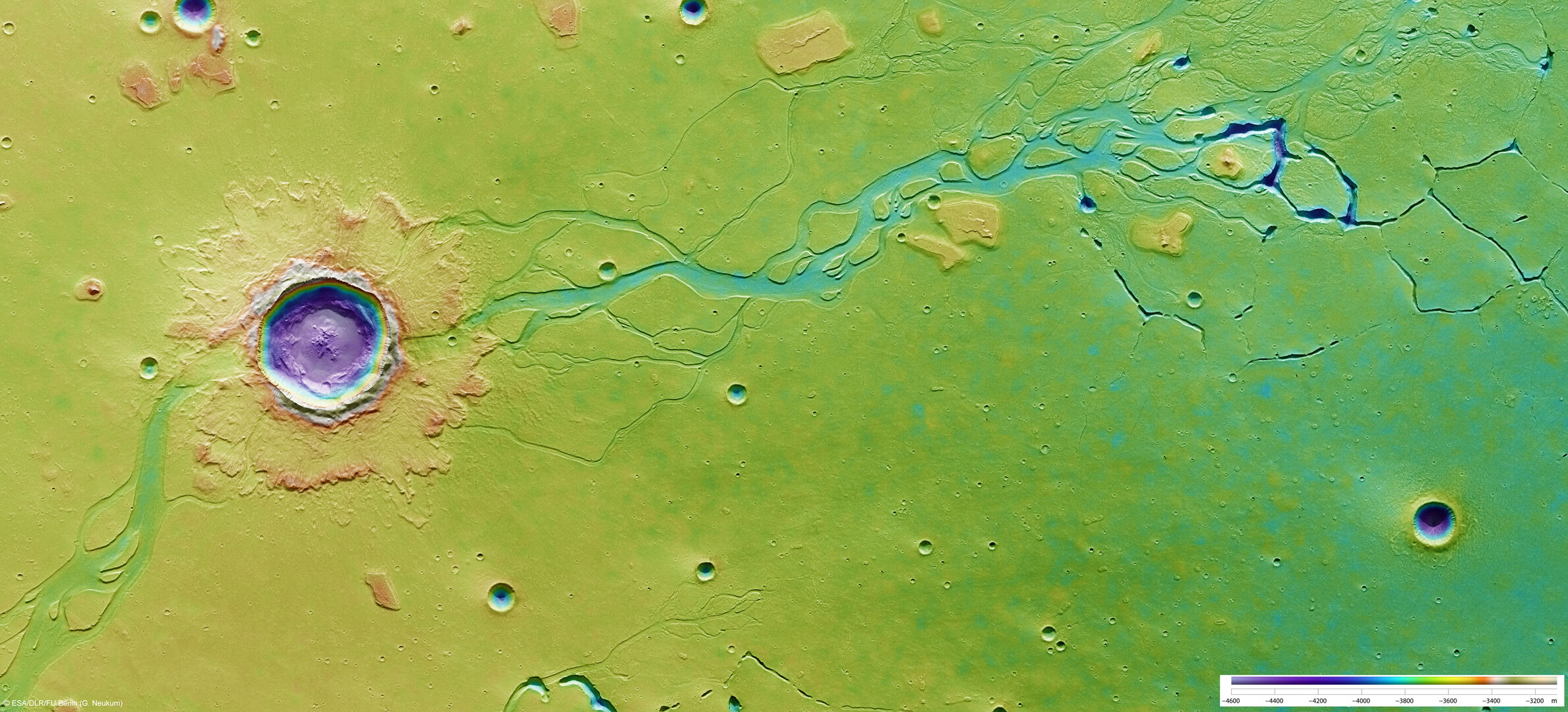
Hephaestus Fossae ortho-image
 
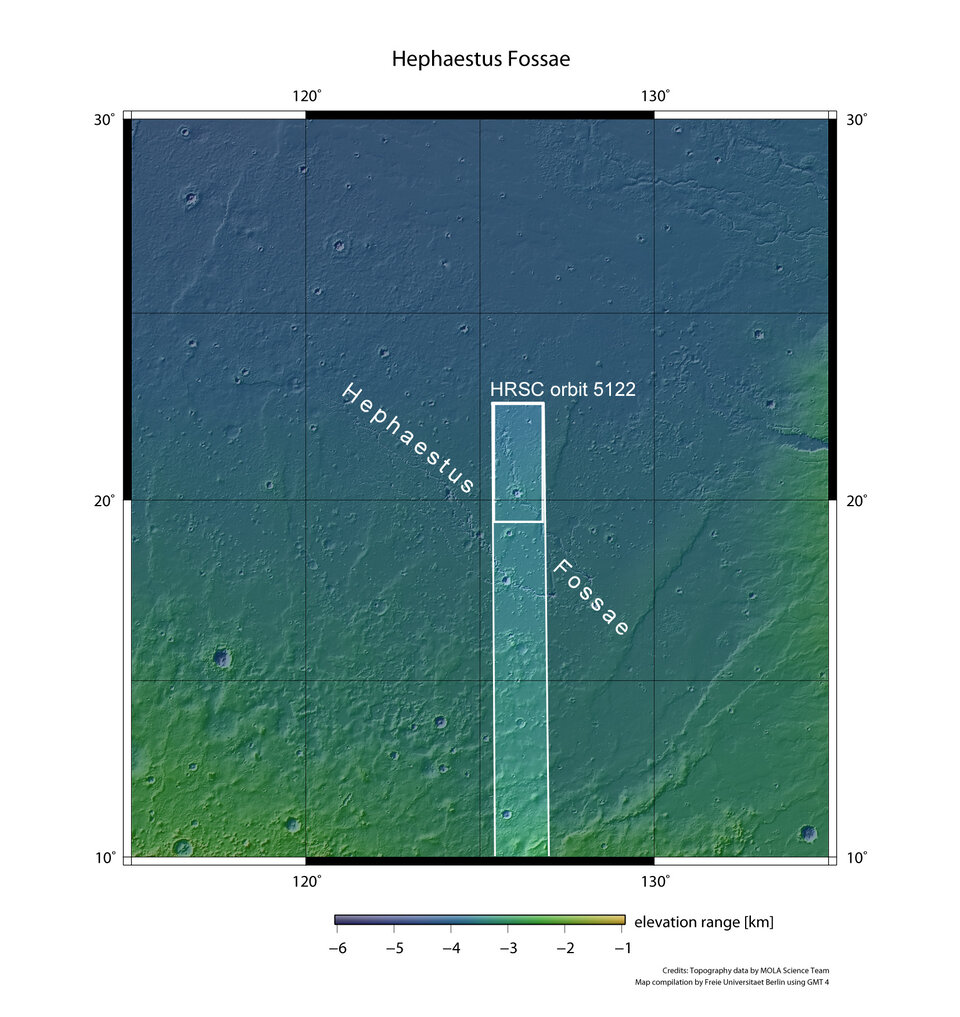
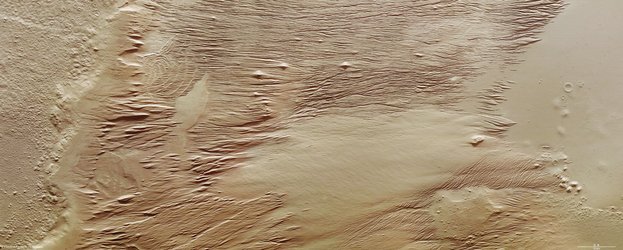
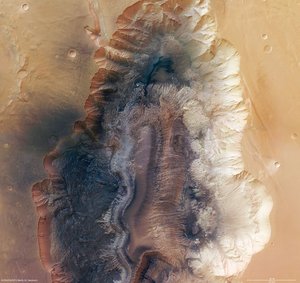
This image of Hephaestus Fossae was obtained by ESA’s Mars Express orbiter on 28 December 2007. The region is dotted with craters and channel systems and lies at about 21°N and 126°E on the Red Planet. Named after the Greek god of fire, Hephaestus Fossae extends for more than 600 km on the western flank of Elysium Mons in the Utopia Planitia region.

This ortho-image was rectified using elevation data derived from a high-resolution Digital Terrain Model, or DTM (obtained from HRSC data), such that distortions introduced during imaging are corrected. Such an image can be used to derive maps. Elevation data from the DTM has been colour-coded and overlain on the ortho-image so that elevation data and the image itself are displayed in a single scene.

The scale is in metres.

Context map of Hephaestus Fossae
 
The region is dotted with craters and channel systems and lies at about 21°N and 126°E on the Red Planet. Named after the Greek god of fire, Hephaestus Fossae extends for more than 600 km on the western flank of Elysium Mons in the Utopia Planitia region. The images cover 170 x 80 km, an area almost as large as Montenegro.

Hephaestus Fossae perspective view
 
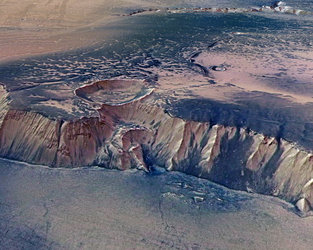
This image of Hephaestus Fossae was obtained by ESA’s Mars Express orbiter on 28 December 2007. The region is dotted with craters and channel systems and lies at about 21°N and 126°E on the Red Planet. Named after the Greek god of fire, Hephaestus Fossae extends for more than 600 km on the western flank of Elysium Mons in the Utopia Planitia region.

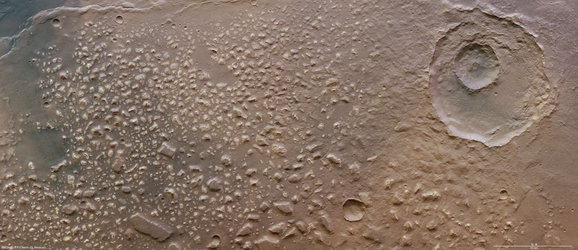
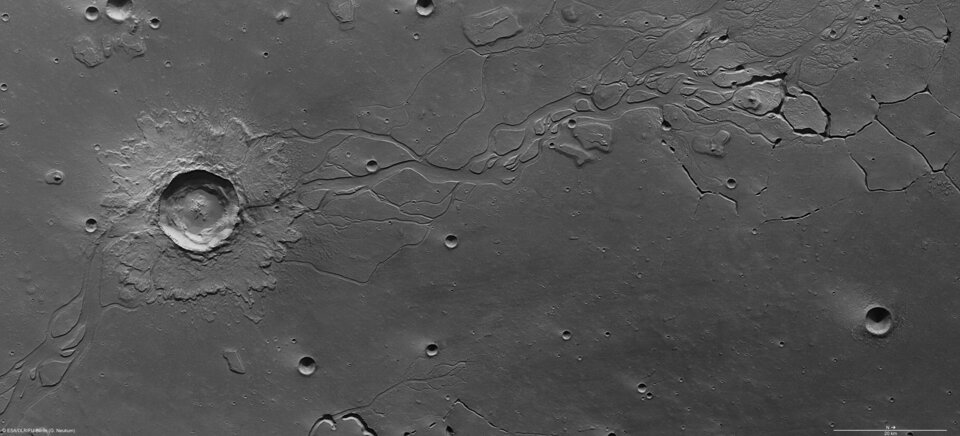
The surface is mostly smooth, and is covered by several small impact craters measuring 800 to 2800 m in diameter. Smaller craters are scattered across the entire region. The left side of the image shows a large impact crater measuring 20 km in diameter. Covering an area of approximately 150 sq km, a crater of this size on Earth could harbour cities such as Bonn or Kiel. In contrast to the smaller craters, it shows a blanket of ejecta with flow forms surrounding the rim.
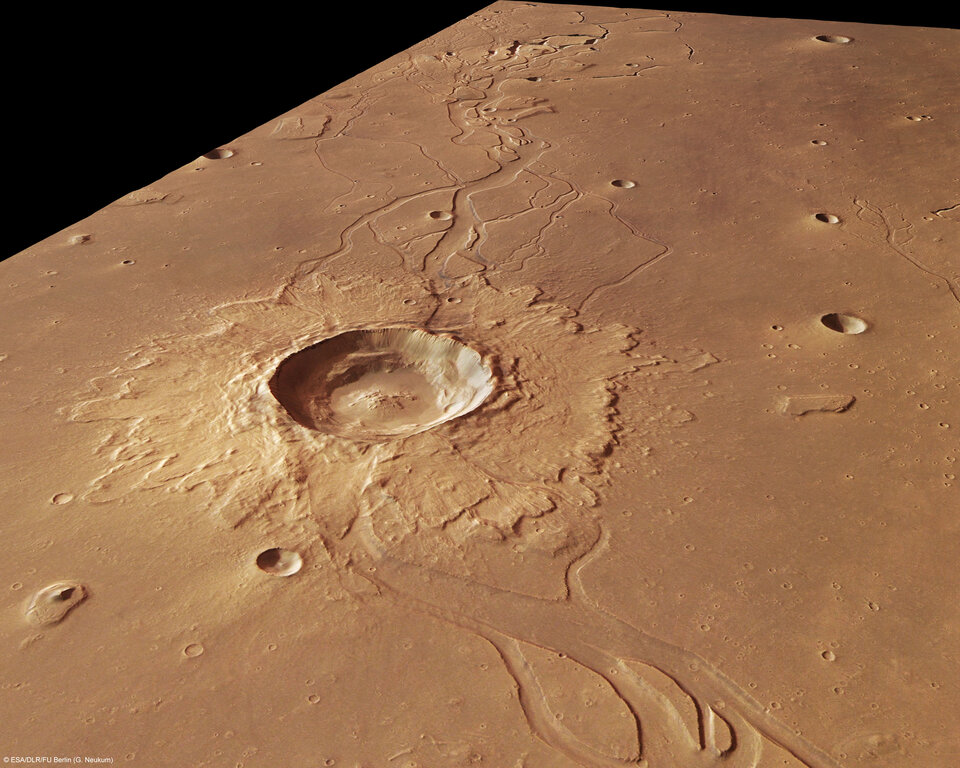
Hephaestus Fossae perspective view
 
This image of Hephaestus Fossae was obtained by ESA’s Mars Express orbiter on 28 December 2007. The region is dotted with craters and channel systems and lies at about 21°N and 126°E on the Red Planet. Named after the Greek god of fire, Hephaestus Fossae extends for more than 600 km on the western flank of Elysium Mons in the Utopia Planitia region.

The surface is mostly smooth, and is covered by several small impact craters measuring 800 to 2800 m in diameter. Smaller craters are scattered across the entire region. The left side of the image shows a large impact crater measuring 20 km in diameter. Covering an area of approximately 150 sq km, a crater of this size on Earth could harbour cities such as Bonn or Kiel. In contrast to the smaller craters, it shows a blanket of ejecta with flow forms surrounding the rim.

Hephaestus Fossae perspective view
 
This image of Hephaestus Fossae was obtained by ESA’s Mars Express orbiter on 28 December 2007. The region is dotted with craters and channel systems and lies at about 21°N and 126°E on the Red Planet. Named after the Greek god of fire, Hephaestus Fossae extends for more than 600 km on the western flank of Elysium Mons in the Utopia Planitia region.

The surface is mostly smooth, and is covered by several small impact craters measuring 800 to 2800 m in diameter. Smaller craters are scattered across the entire region. A larger impact crater measuring 20 km in diameter is a prominent feature. Covering an area of approximately 150 sq km, this crater could harbour cities such as Bonn or Kiel. In contrast to the smaller craters, it shows a blanket of ejecta with flow forms surrounding the rim.

The large craters were formed when loose, soft material was ejected due to impact, and the smaller ones formed due to secondary impacts, when consolidated material was ejected in a ballistic path and impacted the original crater at varying distances. Most martian water exists in the form of subsurface ice. The presence of a blanket of ejecta and outflow channels around the crater suggest that the primary impact may have penetrated the surface enough to melt a buried frozen water reservoir.

Hephaestus Fossae nadir view
 
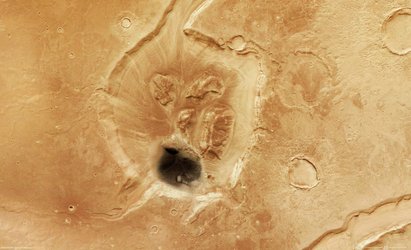
This image of Hephaestus Fossae was obtained by ESA’s Mars Express orbiter on 28 December 2007. The region is dotted with craters and channel systems and lies at about 21°N and 126°E on the Red Planet. Named after the Greek god of fire, Hephaestus Fossae extends for more than 600 km on the western flank of Elysium Mons in the Utopia Planitia region.

Hephaestus Fossae nadir view
 
This image of Hephaestus Fossae was obtained by ESA’s Mars Express orbiter on 28 December 2007. The region is dotted with craters and channel systems and lies at about 21°N and 126°E on the Red Planet. Named after the Greek god of fire, Hephaestus Fossae extends for more than 600 km on the western flank of Elysium Mons in the Utopia Planitia region.

Hephaestus Fossae in 3D
 
This image of Hephaestus Fossae was obtained from data collected by ESA’s Mars Express orbiter on 28 December 2007. The region is dotted with craters and channel systems and lies at about 21°N and 126°E on the Red Planet. Named after the Greek god of fire, Hephaestus Fossae extends for more than 600 km on the western flank of Elysium Mons in the Utopia Planitia region.

This (3D) anaglyph image was calculated from the nadir and one stereo channel. Stereoscopic glasses are required for viewing.

Hephaestus Fossae annotated nadir view
 
This image of Hephaestus Fossae was obtained by ESA’s Mars Express orbiter on 28 December 2007. The region is dotted with craters and channel systems and lies at about 21°N and 126°E on the Red Planet. Named after the Greek god of fire, Hephaestus Fossae extends for more than 600 km on the western flank of Elysium Mons in the Utopia Planitia region.

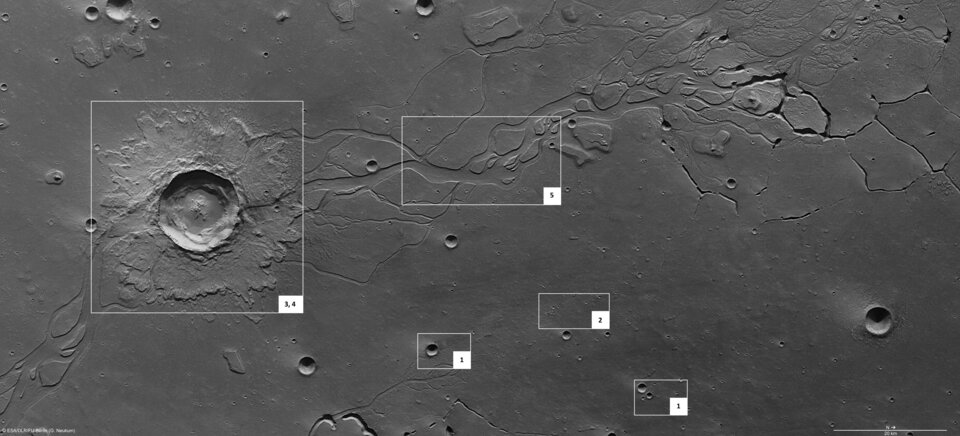
The surface is mostly smooth, and is covered by several small impact craters (1) measuring 800 to 2800 m in diameter. Smaller craters are scattered across the entire region (2). The left side of the image shows a large impact crater (3) measuring 20 km in diameter. Covering an area of approximately 150 sq km, a crater of this size on Earth could harbour cities such as Bonn or Kiel. In contrast to the smaller craters, it shows a blanket of ejecta with flow forms surrounding the rim (4).

The large craters were formed when loose, soft material was ejected due to impact, and the smaller ones formed due to secondary impacts, when consolidated material was ejected in a ballistic path and impacted the original crater at varying distances.

Most martian water exists in the form of subsurface ice. The presence of a blanket of ejecta and outflow channels (5) around the crater suggest that the primary impact may have penetrated the surface enough to melt a buried frozen water reservoir.

Since the smaller impact craters show neither a blanket of ejecta nor any kind of outflow channel, they did not impact the surface strongly enough to reach the subsurface ice. It is possible to calculate the depth of a possible frozen water reservoir beneath the surface by determining the depth of the impact craters.


Release date: 9 October 2009