Where missions come alive
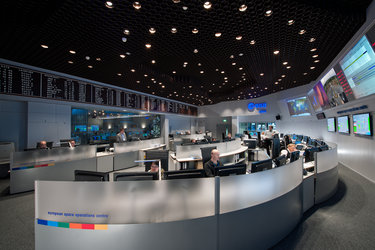
Step inside ESA's Main Control Room at the Operations Centre in Darmstadt, Germany
Photo credit: ESA/J. Mai
ESOC: ESA’s Mission Control Centre, Darmstadt, Germany
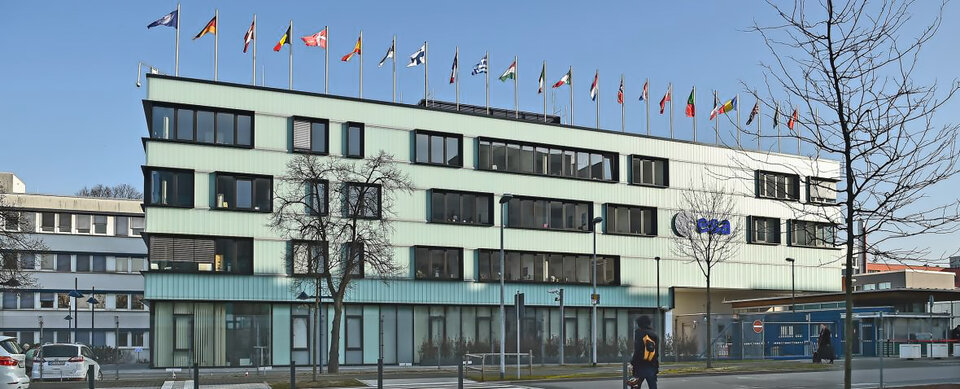
At ESA’s European Space Operations Centre – established in 1967 – teams are trusted to fly the missions that no one else in Europe can: the ‘first-of-their-kind’, experimental flights that explore our planet, missions that provide critical data on climate and the environment, or take Europe beyond Earth – toward the Sun, to the Moon, Mars and far into the Solar System.
The independent capability to fly Europe’s missions for planetary science, Earth observation, astronomy, fundamental physics, exploration and space safety is crucial to European autonomy as a driving force in space science and innovation.
Space Safety
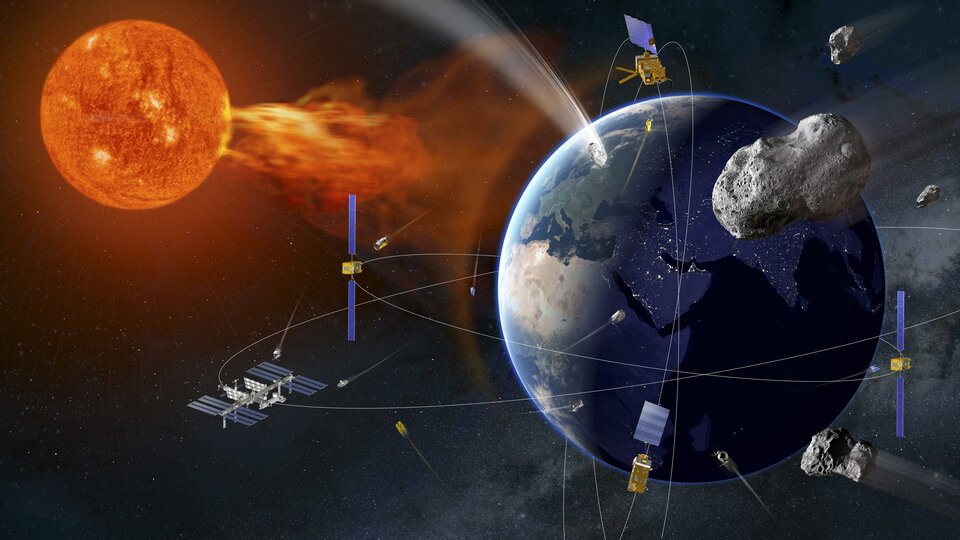
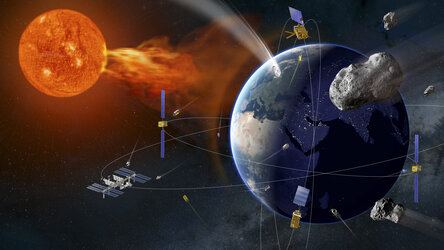
The Centre is home to ESA's Space Safety programme, focussed on mitigating the hazards in space that threaten modern society: space debris could make economically vital Earth orbits unusable and destroy satellites, asteroids could impact our planet, solar activity endangers satellites and astronauts, as well as potentially damaging sensitive civil infrastructure, such as power grids on Earth.
At ESA, the Space Safety Programme is working to learn more about, mitigate and prevent the impacts of the hazards originating in space to protect our Pale Blue Dot, its inhabitants, and the vital infrastructure on Earth and in space on which we have come to depend. ESA’s ambitious Zero Debris approach helps stimulate technology development.
Missions in flight
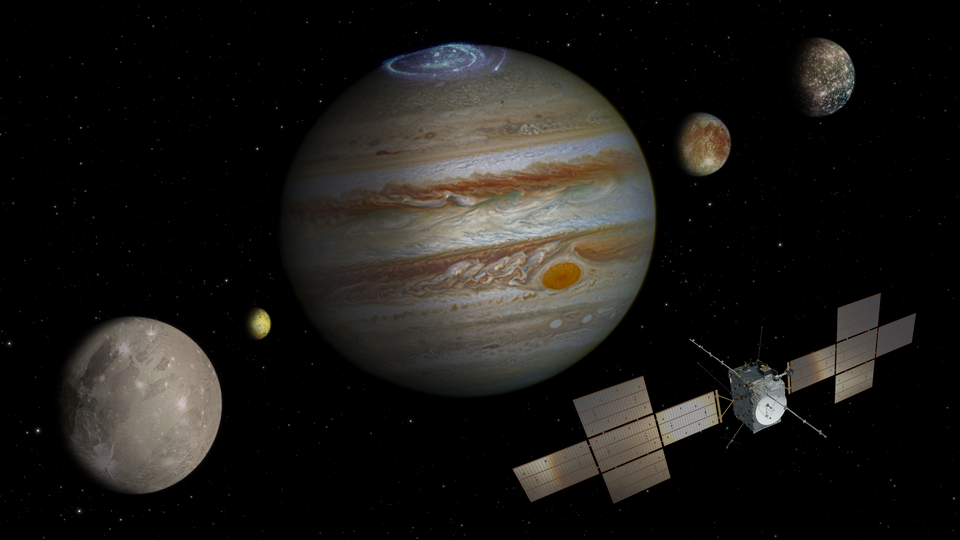
With an enviable heritage of world-first missions such as Rosetta, Herschel, Planck and many others, teams at ESOC today are flying numerous ambitious missions, including:
- Astronomy & fundamental physics: Solar Orbiter, Cluster II, Integral, XMM Newton, Euclid
- Planetary exploration: Mars Express, ExoMars Trace Gas Orbiter, BepiColombo, Jupiter Icy Moons Explorer (Juice)
- Copernicus and Earth sciences: Sentinels, CryoSat, Swarm, EarthCARE, Biomass
- Space Safety: Hera
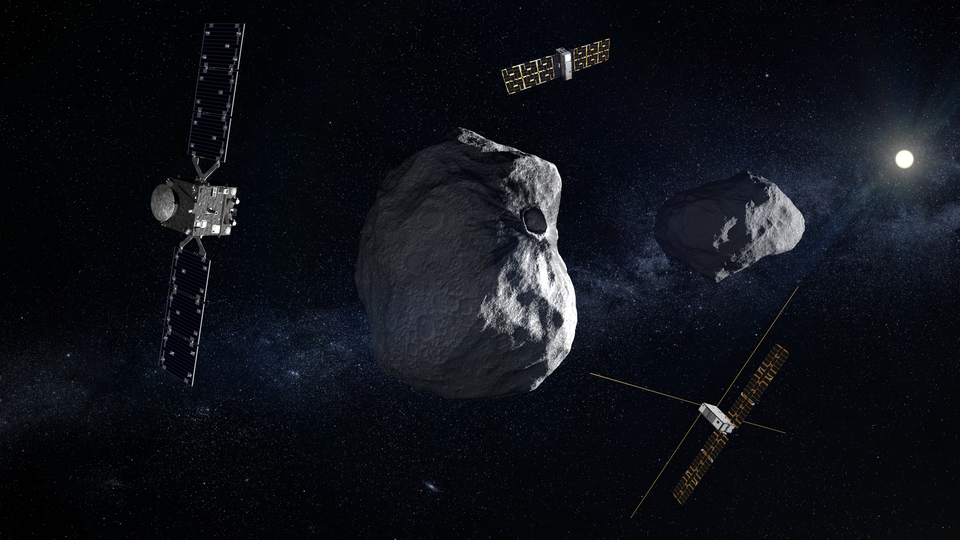
Currently, more than 20 satellites are flown from ESOC, with a dozen new missions now in development for future launch, including Vigil, ESA’s pioneering space weather mission designed to monitor solar activity and protect Earth’s infrastructure. ESOC also supports missions for other European organisations such as the European Commission or Eumetsat, Europe's meteorological satellite agency, international partners, and commercial missions.
Ground Systems Engineering
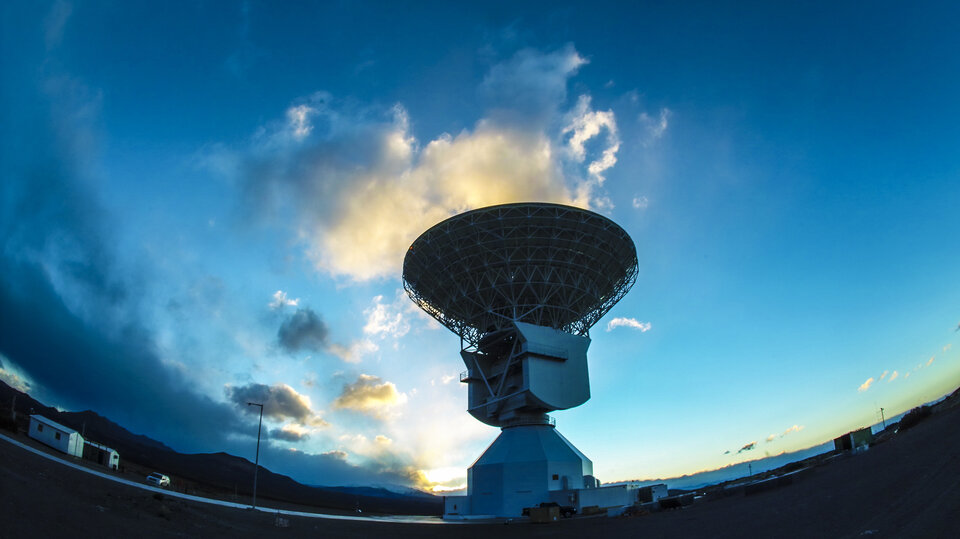
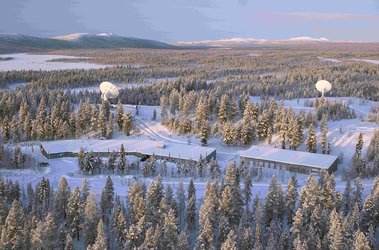
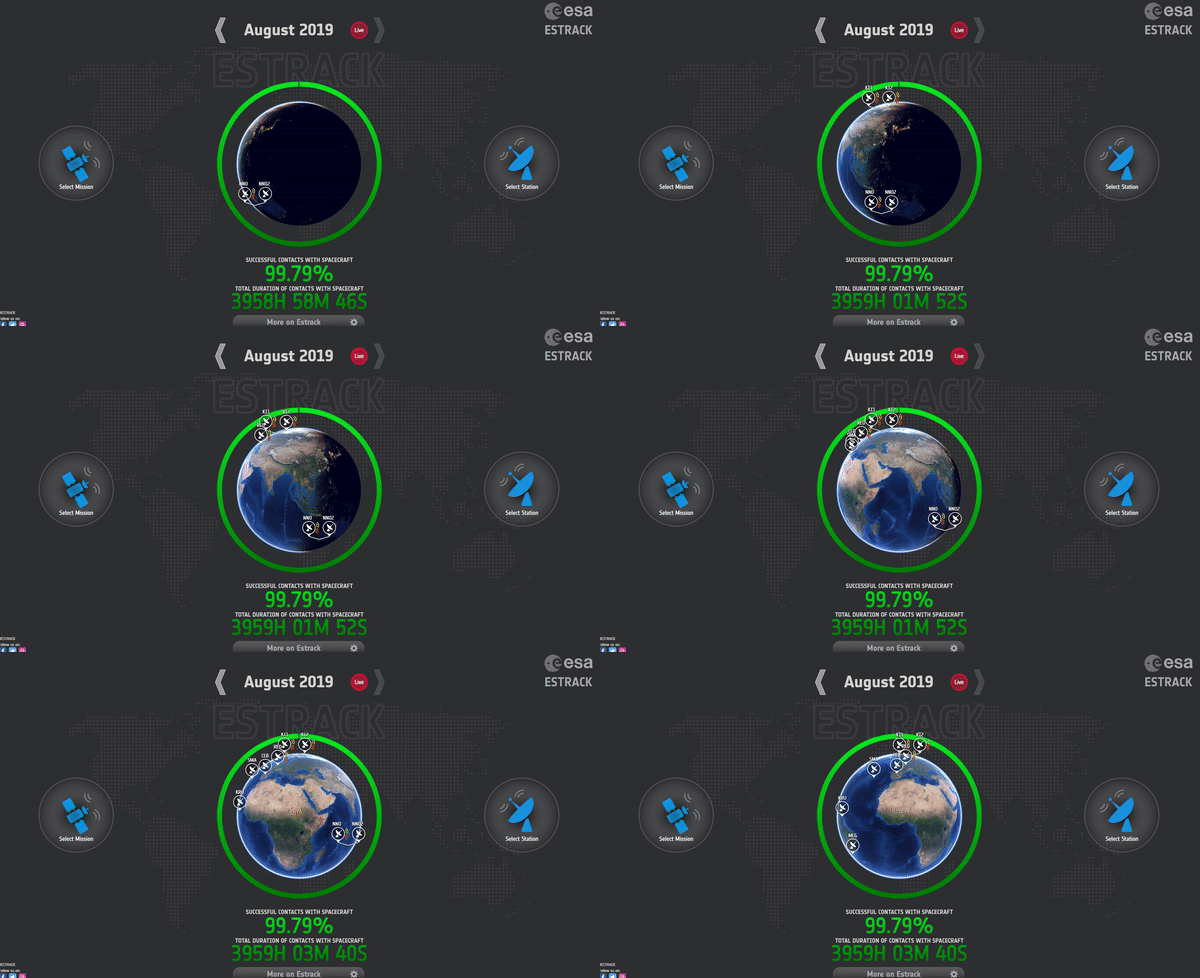
ESA’s expertise has ensured that ‘ESOC mission control’ is recognised internationally as a centre of excellence for spaceflight operations, ground system engineering and satellite astrodynamics. Our teams control spacecraft in orbit, manage ESA’s global ground station network, Estrack, and develop mission control software and techniques. Together these comprise the ‘Mission Operations Infrastructure’ that is a key strategic asset for ESA and its Member States – and is unique in Europe. We oversee the design and development of tailor-made systems on the ground that support missions in space, working with industry to provide innovative, multi-mission solutions for the future.
ESA’s role in developing new ground system infrastructure and deep-space communication capabilities is essential for European competitiveness and leadership. Our expertise in operations and international coordination ensures Europe’s lead in setting global standards for spaceflight.
The independent and secure capacity to operate the full range of ESA missions, present and future, underpins Europe’s autonomy as a space power. ESA’s space operations centre is a centre of excellence, a driver of innovation and an enabler of industry. Increased data downlink capacity, enhanced space-to-ground cybersecurity, highly performant and precise flight dynamics and mission analysis services and sophisticated monitoring, control and simulation capabilities all ensure Europe’s lead in spaceflight.