Galileo moves forward
The GalileoSat development and in-orbit validation phase is well under way and the European Space Agency (ESA) has just released its procurement process to Industry indicating that the first complete civil satellite navigation system is moving forward.
Phases
Several phases will lead to the full operation of Galileo. The definition phase was completed at the end of 2003. During 2003, two contracts were signed for the manufacture of two experimental satellites, fore-runners of the system's in-orbit validation phase.
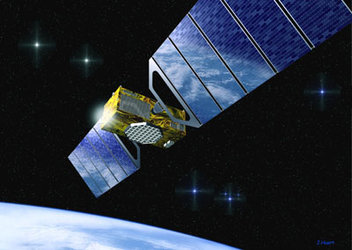
The main purpose of these two satellites is to broadcast the Galileo signals from space by moving in one of the orbits chosen for the constellation. They will allow for the testing of some of the critical technologies on board the satellite such as the atomic clocks and the signal generator.
Development

The present phase is that of Development leading to In-orbit Validation in preparation for full deployment and operations.
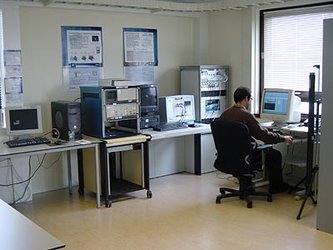
Version 1 of the Galileo System Test Bed (GSTB–V1) has been completed. It supports experimentation on the critical performances behind the services to be delivered to users by the final Galileo system. A European consortium lead by Galileo Industries is carrying out the GSTB-V1 project. The aim is to solve the issues surrounding positioning, timing and integrity by making use of existing navigation data. Indeed, a GSTB-V1 website (www.gstb-v1.esa.int) is now online for specialists.
The second stage (GSTB-V2) consists of two experimental satellites. These are being built by Galileo Industries and Surrey Space Technology Limited respectively. For GSTB–V2 to start, one satellite must be in orbit and sending signals by June 2006.
In-orbit validation
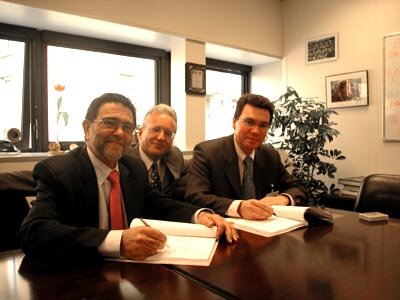
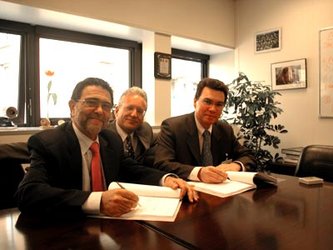
In March 2004, Starsem and Arianespace announced the signing with the European Space Agency (ESA) of the GSTB contract for the launches of the two experimental Galileo satellites by two Soyuz launch vehicles.
The first of the two launches will be performed from the Baikonur cosmodrome by the end of 2005. This marks the first step in the in-orbit validation of the Galileo system, in particular securing the frequencies allocated to Galileo by the International Telecommunications Union (ITU).
The experimental satellite from Galileo Industries will host a Hydrogen Maser clock, that has a stability better than one nanosecond per day. This clock will probably be the best one ever to have flown in space.
This will be Europe’s first satellite placed in a medium-Earth orbit. The benefits outweigh the drawbacks. In this orbit satellites are particularly stable however they are exposed to higher doses of radiation than in traditional geostationary orbits.
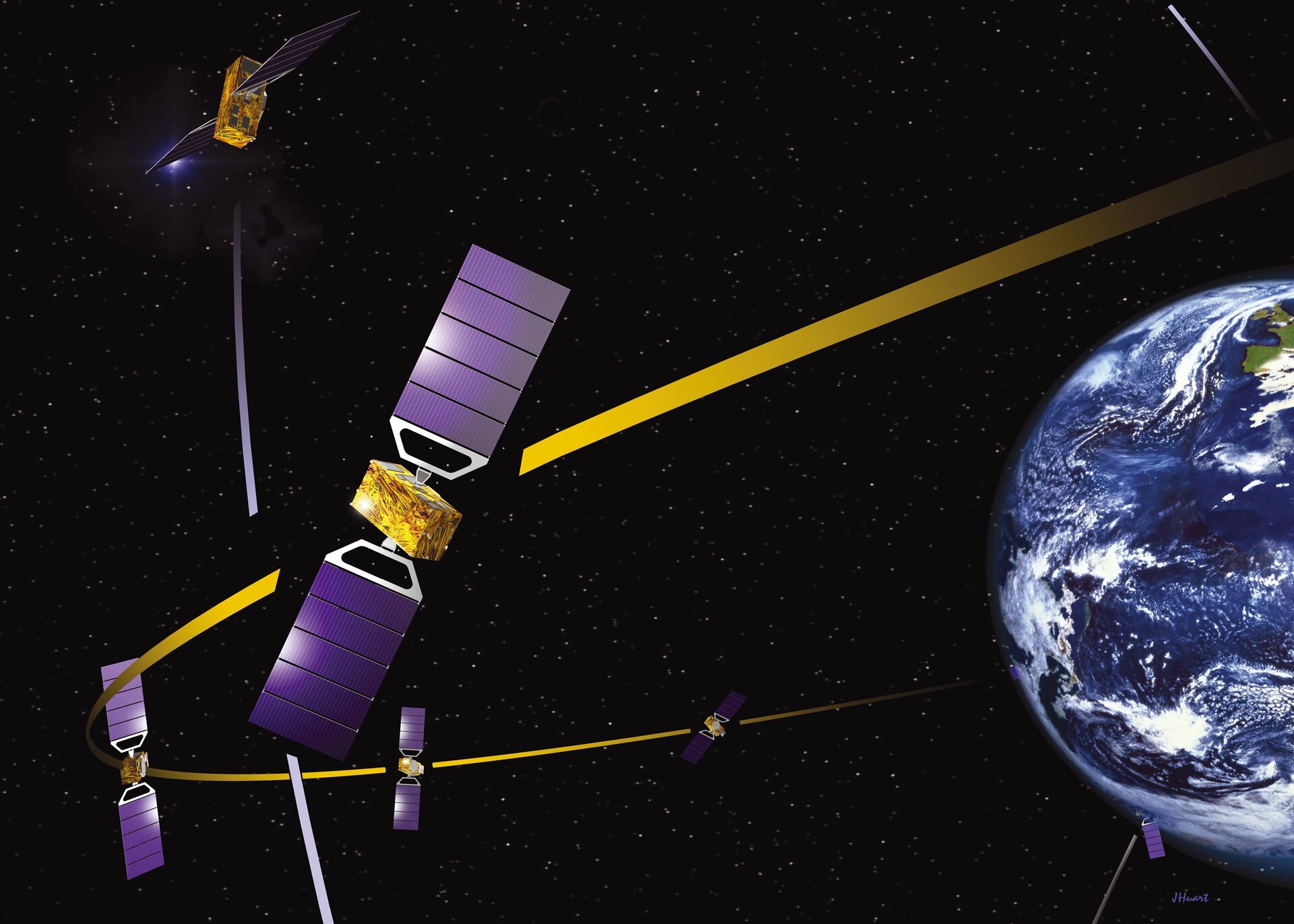
The launch of a mini constellation of 4 satellites in this phase will serve to lay the foundation of the satellite navigation principle. This will enable the verification of the Galileo design using satellites in space, its associated ground segment and initial operations. A true and essential proof of concept.
Full deployment
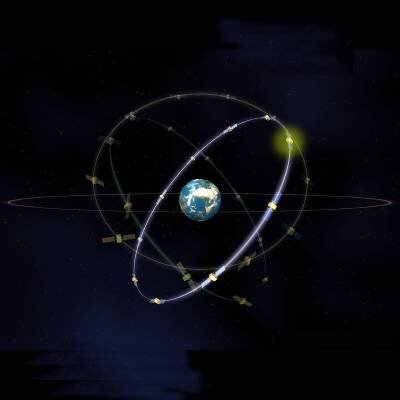
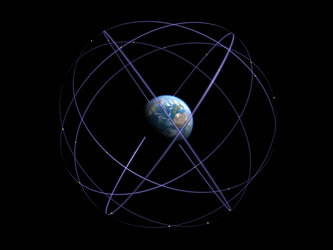
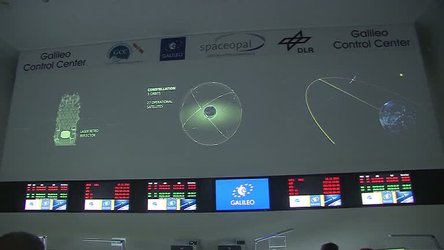
Once fully deployed the Galileo constellation will be built around 30 satellites (27 operational and three in reserve) stationed in three circular medium-Earth orbits (MEO) at an altitude of 23 616 km and inclined at 56° to the equator. To support this there will be an extensive network of ground stations, and local and regional service centres.
In parallel to these technical steps the political aspects of this programme are evolving with the agreement dealt between the European Union and the United States. This agreement was signed in June 2004 at the EU-US summit in Dublin. This allows us to truly envisage the compatibility and interoperability of Galileo and GPS for the benefit of everyone. Galileo with GPS, not forgetting the Russian system GLONASS, should become the world standard for satellite navigation.
At the same time agreements have been signed with third parties such as China, India, Canada and Israel, illustrating the global dimension of Galileo, and other countries like Brazil and Mexico showed their interest in taking part in this world venture.
For its part the Galileo Joint Undertaking, created jointly by the European Commission and ESA, started the process for choosing the concessionaire, the future “Galileo Operating Company” which will take charge of the final deployment then the operations.
All phases of Galileo are advancing in the same direction for the implementation of a system that will revolutionize our daily lives in various sectors, offering Europeans, and indeed the world at large, an accurate and secured means of satellite positioning.