

Introduction to Space Law Training Course 2026 open for application
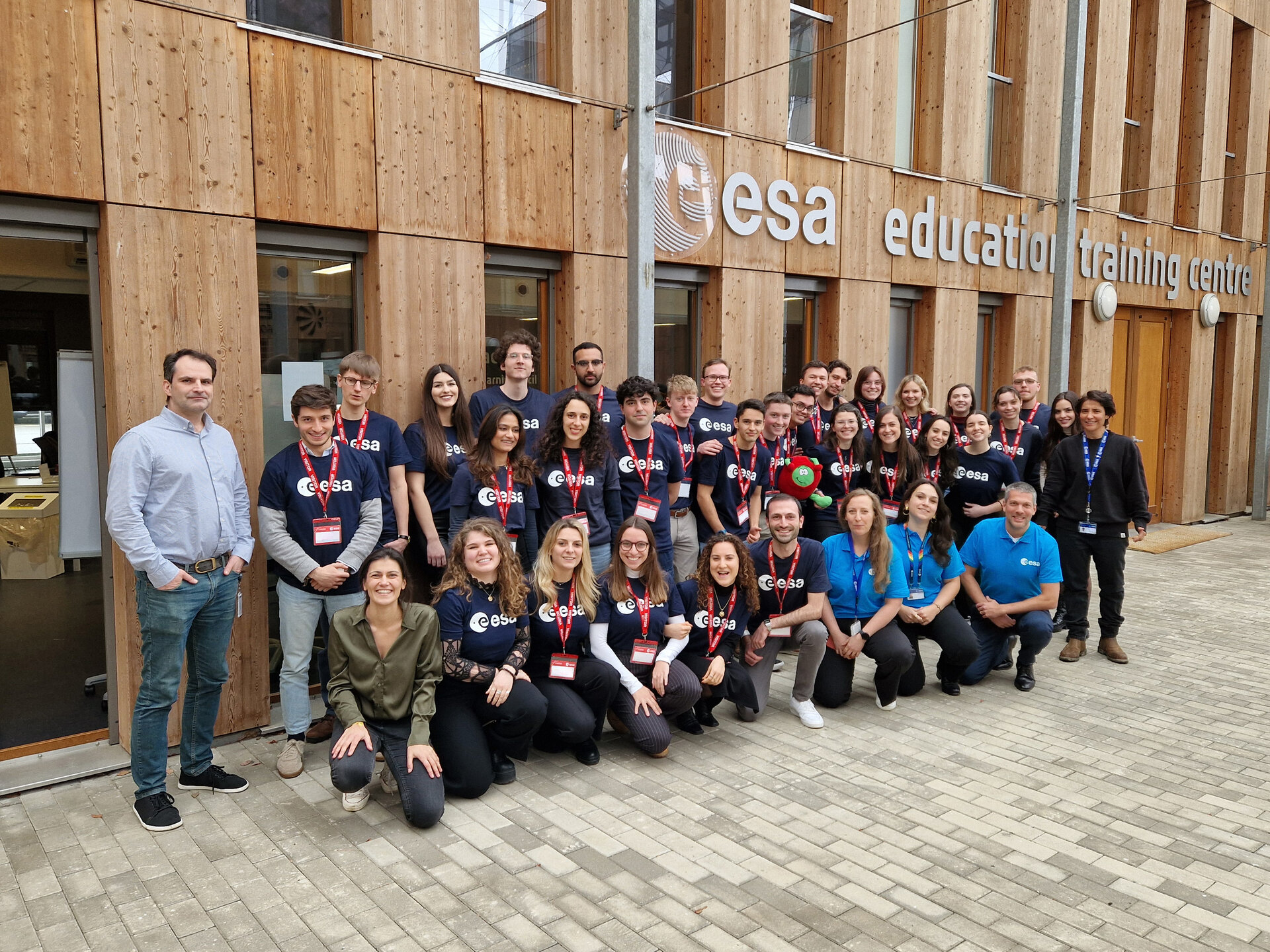
Following the success of previous editions, ESA's Education Office, in collaboration with ESA's Legal Services Department, is once again organising the five-day Introduction to Space Law Training Course. The fourth edition of this course will take place in-person from 2 to 6 March 2026 at ESA Academy’s Training and Learning Facility in ESA’s European Space Security and Education Centre (ESEC), Belgium.

From the smallest student CubeSat to large-scale projects like the International Space Station, all space activities are governed by space law. International space law originated under the auspices of the United Nations, starting right after the launch of Sputnik 1 in 1957 and leading to the Outer Space Treaty, the ‘Magna Charta’ of space law, as entered into force in October 1967. This Treaty is considered the cornerstone of space law and impacts the daily work of space scientists and engineers, touching upon the authorisation of space activities, liability, insurance, and sustainability. Exploring space law is essential for future space professionals, offering insights into the legal landscape shaping their careers and space endeavours.
Furthermore, as humanity looks toward future missions to the Moon and Mars, the evolving space legal landscape will additionally require the definition of aspects not yet fully addressed. The uncharted legal territories will shape the future of space exploration, making space law an indispensable field for venturing beyond Earth.
During the Introduction to Space Law Training Course, students will be taught by world-class experts in space law. They will discover that:
- a space mission is by its very nature an interdisciplinary endeavour involving science and technology but also policy, questions of administration and funding and, quite importantly, law;
- an international legal framework governs space activities from the beginning of a mission to its very end;
- national space laws play an important role in the development of space missions and, more broadly, in the development of the space sector in a country.
With these matters in mind, the students will come to appreciate that law is an integral part of the practical realisation of a space mission from the “cradle to the grave”. They can expect to be introduced to the following topics:
- Foundations of space law: Core principles of international law, UN space treaties, and the role of ESA and regional initiatives.
- International cooperation & governance: The legal frameworks of the International Space Station, UN bodies (COPUOS, UNOOSA), International Consensus, technical standardisation bodies, and the geopolitics of space.
- National & comparative perspectives: The journey of national space law, with a practical case study, and technical assistance to lawmaking.
- Legal lifecycle of space missions: From licensing and mission authorisation to launch, end-of-life, re-entry, and export control.
- Emerging challenges: Space debris mitigation, mega-constellations, commercialisation, and the evolving space sector.
- Practical insights: Mission planning at ESA, technical standardisation, and the future of space policy and international relations.
As part of the course, the students will also be guided to participate in a negotiation exercise and to this end, will be expected to conduct independent research.
Who can apply?
To participate, students must fulfil the following eligibility criteria:
- Enrolled as a university student for the year 2025-2026 in a Bachelor (i.e., BSc or equivalent) or Master (i.e., MSc or equivalent) degree programme with a background in engineering, science, or business. This course is designed for students of engineering or science background, with no previous experience in law or policy.
- Aged minimum 18 years old. ESA Academy and relevant partners will only appraise applications from students who have no or limited professional experience in relevant scientific or other space-related topics.
- Citizen of an ESA Member States, Canada*, or Associate Members.
Selected students will be required to attend the entire 5-day training course at ESEC. They will be sponsored by ESA to cover accommodation and meals, as well as up to 350 Euros for travelling to Belgium.
ESA is committed to achieving diversity and creating an inclusive professional environment. To this end, we welcome proposals and applications from all eligible candidates irrespective of gender, sexual orientation, ethnicity, beliefs, age, disability, or other characteristics. The ESA Academy strongly encourages inclusiveness within its programmes and within participating teams, which contributes to the enrichment of our programme.
Whenever possible, we seek to accommodate individuals with disabilities by providing the necessary support, either digitally or at the location of the training. In case of any questions or specific needs, please reach out to academy.training@esa.int to get assistance or advice during the application process.
To enhance the learning experience, students will actively engage in a group project work throughout the week to apply their newly acquired knowledge. Upon successful completion, participants will be awarded a certificate of participation and a course transcript, enabling them to request ECTS credit(s) from their respective universities.
How to apply?
- Fill in the application form.
- Upload a motivation letter (PDF, maximum 1 page, no images).
- Upload a CV (Europass format, PDF, no images, maximum 2 pages).
- Upload a formal recommendation letter (PDF, maximum 1 page, including signature, no images) from a university professor or an academic supervisor from your current university (if not possible to receive the recommendation letter from your reference, please ask them to send a recommendation email to academy.training@esa.int before the application deadline).
- Upload a copy of your Transcript of Grades from the two previous semesters, or, if not available, the previous academic year (PDF).
All answers and documents should be in English (except Transcript of Grades if not available). The deadline for applications to participate in the Introduction to Space Law Training Course 2026 has been extended to 11 January 2026, 23:55 CET. The selection announcement will be on 19 January 2026.
*Canadian students enrolled in a Canadian post-secondary institution may apply for additional support from the Canadian Space Agency through this Announcement of Opportunity (grant applications should be submitted at least 7 weeks before the course delivery and account creation 3 weeks before the submission deadline – create an account soon!). This additional support is to cover costs that are not already covered by ESA for selected Canadian post-secondary students.
For more information, please contact: academy.training@esa.int