


50 Years of ESA R&D: An Oral History
What has research and development at the European Space Agency (ESA) looked like over the past 50 years? This month, as ESA celebrates its first half century of achievements, the Technology R&D Directorate held an event in Florence, Italy, to mark the technology developments that have proudly enabled most of ESA’s missions.
From innovative electric propulsion to sustainable debris practices, the evolution of ESA’s R&D tells a deeper story: one of continuity, adaptation and revolution. Five veterans of ESA’s technology journey — Heinz Stoewer, Franco Ongaro, Roberto Aceti, Giorgio Saccoccia and Noelia Peinado — reflect below on how ESA has grown from an early research body to one of the planet’s most vital reservoirs of technical competence and innovation.
1970s–1980s: Blueprints to Bluebooks to Strategy 2040

“I joined when it was still ESRO,” recalls Heinz Stoewer. “It was a startup in a certain way. But ESTEC was already the heart — and still is.”
In those early years, ESA’s technological leadership came not just from expertise, but from setting up structures and best practices. Stoewer led an effort to create ESA’s first strategic planning framework for technology development — the Blue Book. “The challenge,” he says, “was aligning brilliant but scattered research into six focused themes. That’s how ESA moved from ideas to direction.”
These early days of the Agency era also saw the establishment of several technology themes that the R&D engineers would focus on, many of which still drive ESA innovation today: telecommunications, optics, Earth observation, re-entry technologies and even early forms of AI. “In 1988 we were already using AI in expert systems,” Stoewer adds. “The themes haven’t changed. It’s the precision and complexity that has evolved.”
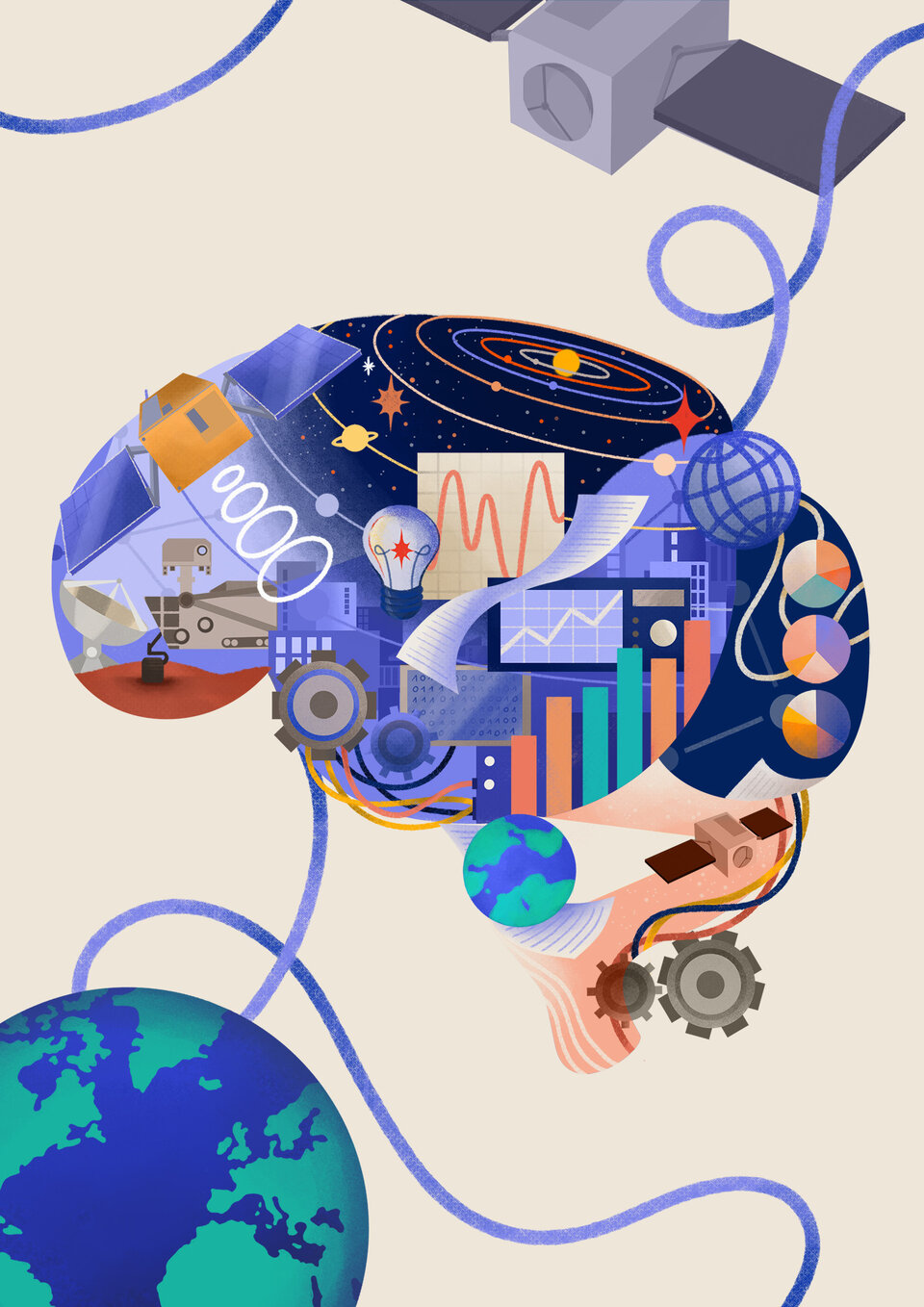
“Things have changed — and haven’t,” Peinado remarks. “We used to have Blue Books. Now we have roadmaps. It’s the same purpose, just a more sophisticated system.”
This balance of continuity and evolution emerged across all five interviews. Many of the core technology themes — optical communications, propulsion, power systems, remote sensing — have been central to ESA R&D since the beginning.
What’s different is how far they've advanced. Optical communication, for instance, first received ESA funding in 1977. “Now we’re testing secure inter-satellite links for Galileo,” says Aceti. “Same theme. Much more impact.”
Stoewer agrees: “The themes endure. But technology evolves. Today’s radar, today’s telescope — they’re far beyond what we had then.”
1990s–2000s: Innovation as a Culture
For Franco Ongaro, who joined ESA in the late 1980s, the real innovation wasn’t just technological — it was cultural. “When I took on the General Studies Programme, we stopped planning behind closed doors,” he continues. “We issued open calls and asked everyone across ESA what the future should look like.”
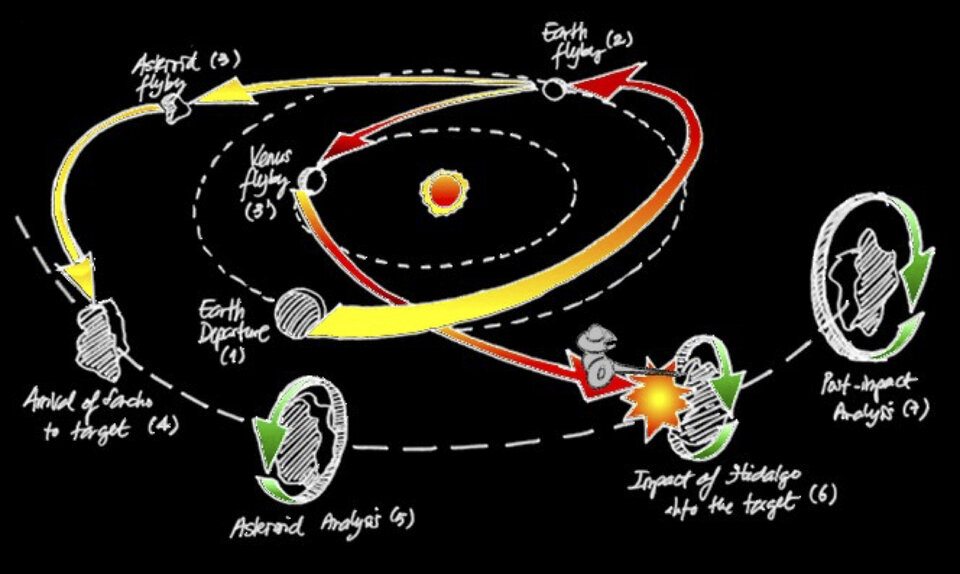
This led to projects like Don Quijote, the first serious European asteroid deflection concept — and the eventual forerunner of NASA’s DART and ESA’s Hera. “Fifteen years later, NASA built their mission around the same idea,” Ongaro notes. “That was a seed we planted.”
He also helped frame Aurora, ESA’s Mars and exploration programme, based on feedback from across the Agency. “Exploration didn’t have to be human-first or Moon-first. We asked, and the answer came back: Mars and life.”
2000s–2020s: Focus themes, past to present
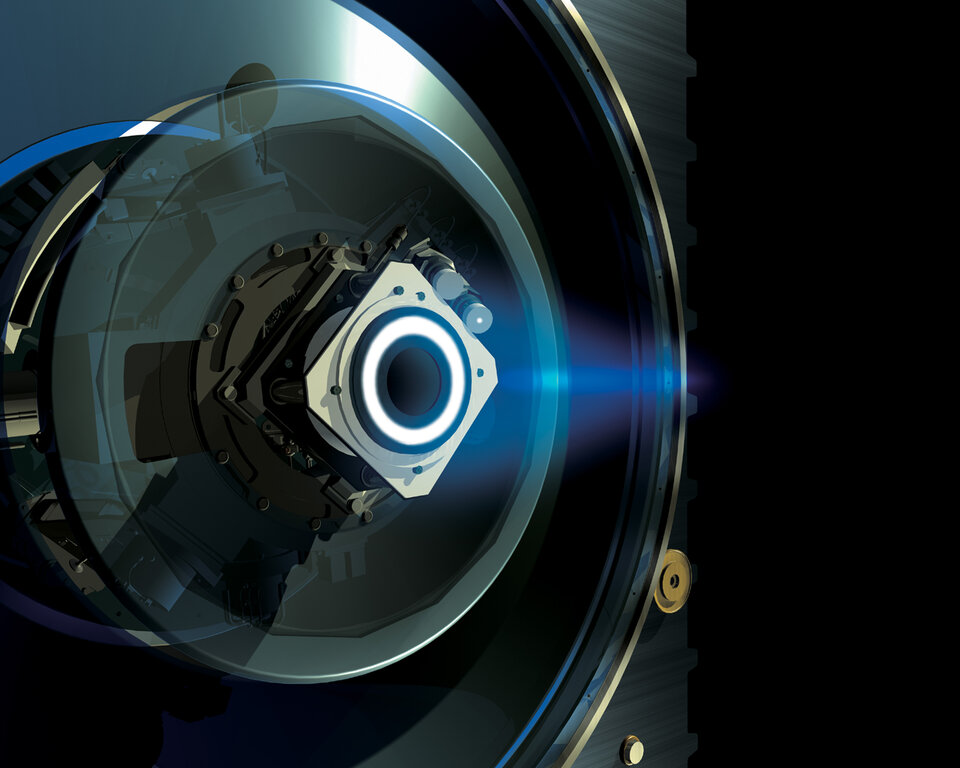
In the 1990s, Giorgio Saccoccia was among the few engineers pushing electric propulsion at ESA. “It was seen as too risky,” he says. “We had the tech in a well advanced status of development already. The challenge was getting it accepted.”
That persistence paid off with SMART-1, ESA’s first lunar mission, powered by electric propulsion. “We delivered the subsystem to the industrial prime as a ESA furnished item funded by the technology program of the Agency ,” he explains. “It opened the door to all the future commercial and operational adoption of electric propulsion on European missions.”
Saccoccia, who is now Head of ESA’s Basic Activities and Advisor to the DG, believes ESA’s unique strength lies in its complete perspective. “We don’t just invent. We orchestrate — matching ideas with need and strategy with capacity.” He also sees the Agency’s acceptance, or fear, of risk evolving. “Failure is now seen, under certain conditions, as part of success — a mindset change that’s essential in today’s faster space economy.”
Meanwhile, Noelia Peinado, a current ESA R&D engineer, sees the pace and pressure increasing. “In the past, we had 10 years to mature a technology,” she says. “Now we’re told: have it ready in three.”
She points to cybersecurity and AI as rising priorities. “Cyber wasn’t even considered 50 years ago,” she notes. “Now it’s critical — both in software and embedded systems. We need encryption on board. We need to trust the data we receive.”
Present and Future: Sustainability, Security, and Speed
Noelia also brings attention to sustainability. “With more satellites, comes more risk,” she says. “We need to meet our zero-debris goals and build tech that keeps space clean.”
One area where ESA still leads is advanced Earth observation. “Better radars, higher-resolution cameras, improved vegetation and fire tracking — these may not sound ‘cool’, but they’re vital,” she says.
For Roberto Aceti, who began at ESA in 1987 and now leads OHB Italia, the enduring challenge is balance. “In ESA, the ambition has always been high,” he says. “But R&D is underfunded. Companies often lose money on early-stage ESA tech contracts. That slows things down.”
His proudest ESA memory? Leading the post-flight analysis of the EURECA platform — one of the few spacecraft to return intact from space. Later, in industry, he led development of the gravitational wave sensor for LISA Pathfinder. “It took 12 years,” he says. “It outperformed specs by 100x. That design is flying again on LISA with no changes.”
Looking ahead, Aceti singles out optical communication, AI and formation flying as game-changers. “These three — especially in combination — will define the next era,” he says. “Formation flying lets small satellites act as one. It’s cost-effective, scalable, and extremely powerful.”
Where would we be without ESA?

ESA’s history of R&D is not one of sudden breakthroughs — but of cumulative, deliberate achievement. As Ongaro puts it, “We are the product of 50 years of European investment. We carry the memory, the expertise, the continuity.”
“People need to understand that space touches their daily lives,” Stoewer insists. “Navigation. Weather. Streaming. Your phone is a satellite receiver.”
That link to everyday tools — especially mobile devices — is something ESA’s experts return to again and again. “When I started, satellite receivers were 30-metre dishes,” Ongaro recalls. “Now everyone carries one in their pocket.”
Stoewer sees parallels with early aviation: “A hundred years ago, planes barely worked. Now they’re infrastructure. Space is following the same arc.”
And Peinado captures the spirit of ESA R&D best: “We don’t just imagine the future — we start building it. Sometimes it’s one step forward, two steps back. But if you want that future to be real in 30 years, you have to start today.”