

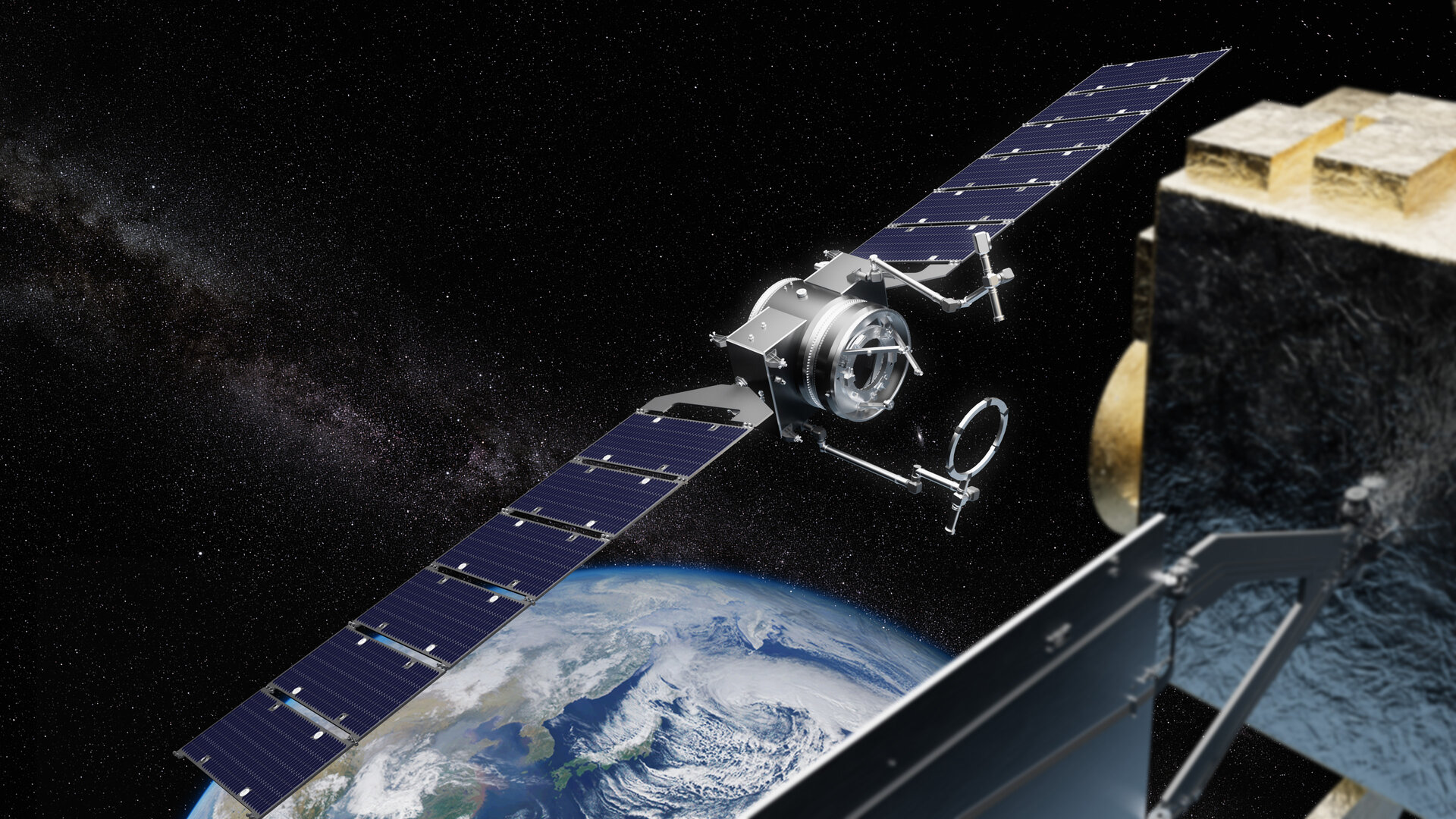
Building a sustainable future in space for Europe
The space debris swirling around Earth poses a threat to our future in space. ESA has committed to its Zero Debris approach to become debris neutral by 2030 and aspires beyond that to true sustainability in space, paving the way to a circular economy in space through new mission preparations.

The ESA Space Safety Programme’s activities, outlined in its Council Ministerial 2025 proposal, are geared towards developing, demonstrating and maturing innovative technologies for the sustainable use of space. Through them, ESA will strengthen the European space sector as a worldwide leader in space sustainability while increasing its competitiveness.
Aside from the further advanced Active Debris Removal & In-Orbit Servicing (ADRIOS) Cornerstone missions, the Space Safety programme works to bring about the sustainable use of space through various innovative in-orbit servicing activities:
The essentials
Zero debris technologies: Developing future ‘zero-debris satellites’ requires progress across multiple areas to ensure they can be safely disposed of at the end of their life, even in case of an unexpected failure. The technologies also need to mature to the point that the new technology can be integrated into European production lines to minimise recurrent costs and increase competitiveness.
Safe removals: For removing satellites that are stranded in their orbit, it is crucial to have the capability to safely grab and remove such a dead-in-the-water satellite from orbit before it collides with anything else – not an easy feat as the average speed of satellites in orbit is over 7 km per second.

Ecodesign: Every step of a mission, from design to launch and operations, can be made more sustainable. ESA has been a pioneer, with by now more than a decade of experience in evaluating the environmental impact of missions, and has now built an Ecodesign roadmap to aid mitigation. Practical tools such as ESA’s lifecycle assessment (LCA) database, unlocks ecodesign for the European space sector.
Circular economy in space: The true gold standard for sustainability is a circular economy that reuses and recycles as much as possible, also in space. It is critical to mature the required in-orbit servicing technologies and to demonstrate them in orbit.
Zero debris spacecraft platforms

The priority is to ensure that future space missions do not add more debris. ESA itself is taking action with its Zero Debris approach, aiming to fully apply it to all its missions from 2030. Yet looking beyond ESA’s own missions only, it is not a matter of if stricter rules will come, but when.
To support the zero-debris paradigm shift, ESA aims to enable adoption of new satellite designs at the system level, instead of expensive one-off solutions per mission. This way, the production lines of system integrators can prepare for future steps of ESA’s Zero Debris plan and policy updates.
The programme is supporting large and small zero-debris satellite designs as well as that of CubeSats, preparing the entire spectrum for a more sustainable future.
Making new concepts commercially viable
The vision of what a sustainable approach to spaceflight looks like sounds futuristic – even if less and less so. Fascinating concepts are to be tested in space, working with users and operators to unlock a more sustainable future and a promising market for Europe:
CleanCubes
ESA will act as an accelerator and foster the commercial development of more sustainable designs of small CubeSats. After selecting the most viable concepts, an in-orbit demonstration supported by ESA will be a commercial opportunity for industry to demonstrate Zero Debris technologies and concepts geared towards the smallest of satellites.
Ecostars
The future EcoStars mission embodies ESA’s approach towards ecodesigning its missions and advancing green technology within the European space sector. Through an open call, the best and most practical ideas to make space systems more sustainable will be collected. The most promising concepts are to be guided through technology readiness levels, finally being tested in space.

Circular economy
In a similar vein, ideas will be collected, developed and demonstrated in space to move away from single-use satellites. Concepts that move us towards refurbishment, manufacturing and recycling in space will have the opportunity to shape a future where space systems and components are reused and repurposed right where they are: in Earth orbit. These concepts will lead to the missions Erase for the removal of large, unprepared low Earth orbit objects and ORUM (Orbital Refurbishment and Upgrade Mission) to showcase refurbishment technologies.
Ensure our future in space

ESA’s Space Safety Programme aims to safeguard the future of space exploration through understanding the problem and developing technologies for the increased space traffic and a more sustainable future in space. From the missions above to its ADRIOS Cornerstone missions RISE (taking over orbit and attitude control), ClearSpace-1 (removing an uncooperative, unprepared object from orbit) and CAT (demonstrating a standardised docking interface and close proximity operations) By developing critical technologies and fostering collaboration with European industry, ESA’s Space Safety activities ensure that space remains a place of opportunity.