Space Safety Programme at 2025 Ministerial Council
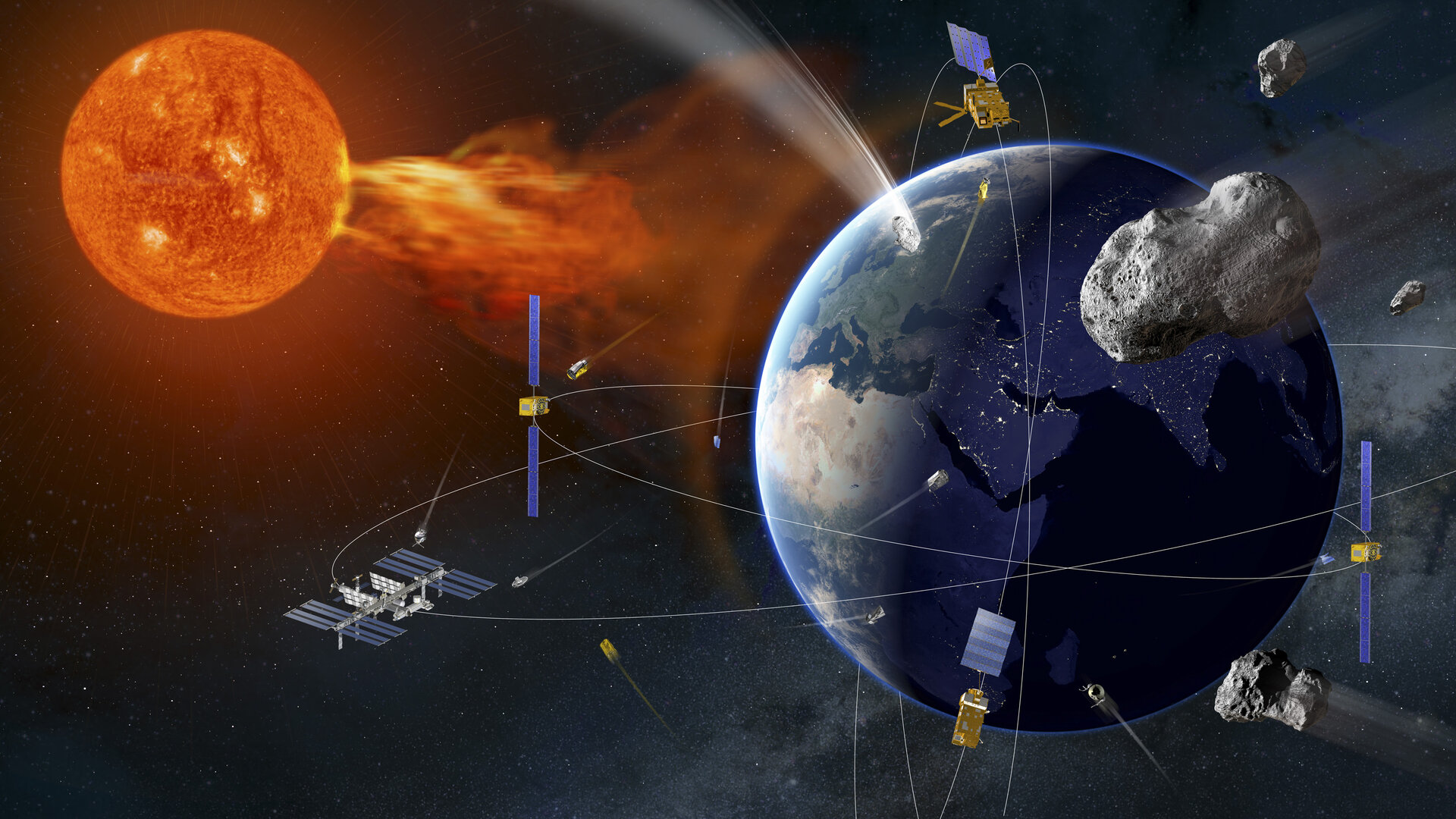
Hazards originating in space carry the risk of sudden disaster and potentially derailing everyday life, from natural threats like asteroids and solar storms to the human-made one of space debris.
ESA’s Space Safety Programme is dedicated to making sure we can detect, predict and mitigate these space hazards in time.
The Programme's plans for the 2025 Council Ministerial ensure Europe is ready to protect its citizens and critical infrastructure while fostering new commercial opportunities for the European space sector – elevating the future of Europe. Download the full ESA Space Safety brochure for CM25 outlining all activities or read the summary below.


How Europe benefits
At ESA’s upcoming 2025 Ministerial Conference, the Space Safety Programme is proposing activities to help ensure independent, continuous access to critical data and satellite services for Europe, imperative in this time of geopolitical instability.
It is also time to act to safeguard the future of spaceflight. We must clean up Earth’s orbits and show European leadership in making sure no more debris is generated if Europe wants to benefit from the exciting new technologies and markets in space.
As it keeps us safe, the Space Safety programme’s activities also help secure Europe’s position at the forefront of new space technologies. Innovation is nurtured to meet our ambitious vision, driving technology adoption and stimulating a competitive European space industry.
Space Safety Cornerstones
The Programme’s highest priority is the continuation of its Cornerstones, with its missions grouped to address three main goals: Planetary Defence, Space Weather and Active Debris Removal & In-Orbit Servicing (ADRIOS). All three Cornerstones feature large-scale involvement from European industry and will demonstrate a range of innovative new technologies.
Planetary Defence Cornerstone

The Planetary Defence Cornerstone of Space Safety aims to develop asteroid deflection capabilities. It is no longer sci-fi, instead it is a skill we must hone before it is needed. The Space Safety Programme’s very first mission Hera, launched in October 2024, will examine the first test of asteroid deflection performed by NASA’s DART. In doing so, Hera demonstrates asteroid ‘scouting’ or reconnaissance technologies.
The entire world will be watching when the Apophis asteroid passes by very, very close to Earth in 2029. Observable with the naked eye in Europe, public interest in planetary defence capabilities will be immense.
Capitalising on the once-in-a-lifetime event, ESA’s Ramses mission – with key support from JAXA – will be the one delivering images from space as it orbits and observes Apophis during its very close approach. The fixed launch window in 2028 mimics the tight time pressure of real reconnaissance missions in the future, testing capabilities in a very realistic way.
Space Weather Cornerstone
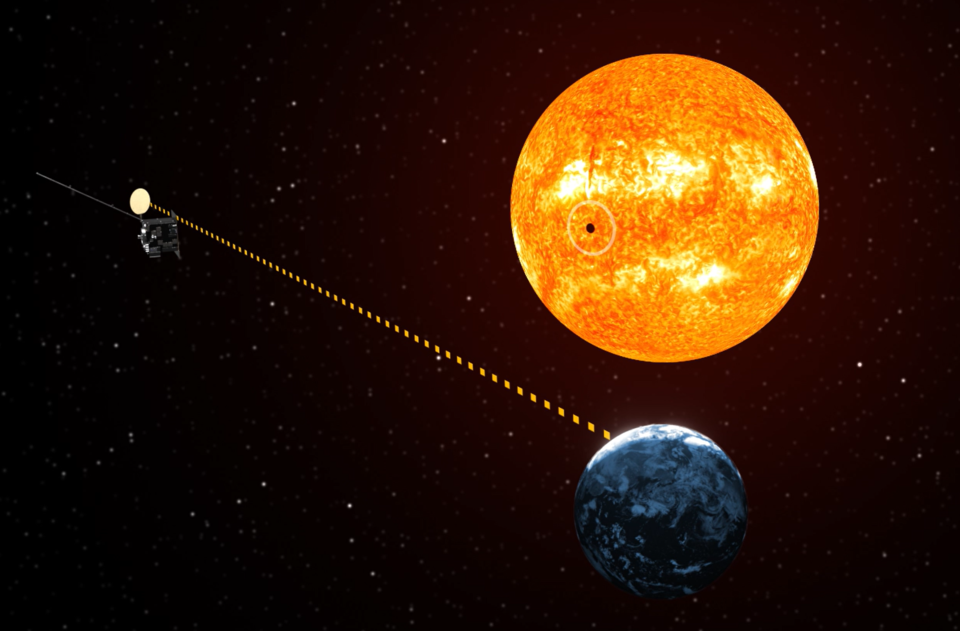
To protect critical infrastructure from space weather effects, experts have long expressed the need for a space weather mission to the Lagrange point five (L5) in deep space. From there, ESA’s Vigil will observe the Sun’s surface before the area turns into view from Earth, adding up to 4-5 days to our forecasting timespan.
The Vigil mission will be the first to stream operational data 24/7 from deep space. Vigil gives us time: advance warnings of oncoming solar storms to protect spacecraft and astronauts in space and infrastructure on the ground.
The game-changing impact of the Space Weather Cornerstone mission is underlined by the contribution by NASA and NOAA of key instruments as well as strong interest in future collaboration from Korean, Japanese and Indian space agencies.
Vigil – and later its next-gen successors – together with the Distributed Space Weather Sensor System (D3S) around Earth will be more than the sum of its parts. It will be an unmatched source of space weather data, ready to protect Europe’s citizens and critical infrastructure.
ADRIOS Cornerstone

The Active Debris Removal & In-Orbit Servicing (ADRIOS) Cornerstone works to bring about the sustainable use of space through innovative in-orbit servicing missions.
ESA’s ClearSpace-1 mission will be the first-ever mission to remove an unprepared and uncooperative piece of space debris from orbit. ClearSpace-1 will demonstrate the complex sensors and technologies needed for active debris removal, including critical relative navigation and close-proximity operations.
ESA’s RISE mission is a commercial in-orbit servicing mission that will demonstrate that it can safely rendezvous with and dock to a geostationary client satellite, and take over its attitude and orbit control.
ESA’s proposed CApTure Payload Bay (CAT) in-orbit demonstration will test a standardised docking interface that will simplify satellite removal operations. The CAT mission will help mature active debris removal technologies to clean up space debris and is part of the Agency's efforts to deliver on its Zero Debris Approach.
With the ADRIOS Cornerstone missions, the Space Safety programme is directly supporting the establishment of active debris removal as well as other in-orbit services like refuelling, refurbishment and assembling within Europe. This ensures that the European space industry will be at the forefront of this exciting new market.
COSMIC Areas
Next to the Cornerstones, the Space Safety Programme also contains COSMIC which is divided into six segments or areas of activity that aim to achieve ESA's space safety ambitions:
- Develop Space Weather Services: Solar storms can’t be stopped, but their effects mitigated with mature space weather monitoring services delivering forecasts and ‘nowcasts’.
- Space Weather Sensors: Space weather services are impossible without accurate, real-time data from varied (nano)satellite missions in space.
- Predict Asteroid Impacts: Determining potential threats in time by improving detection capabilities both in space and on the ground as well as improving risk assessments.
- Technologies For Increased Space Traffic: Space is getting congested and debris is increasing in number and volume, tracking and collision avoidance technologies are key.
- Towards A Clean and Zero Debris Future: ESA’s ambitious Zero Debris approach has stringent standards and policies for its future missions that help stimulate technology development.
- Competitiveness: An open call for innovation has already led to 15 projects of various sizes that speed up how new technologies turn into full-fledged products and services.