Spain to support ESA satellite removal mission CAT
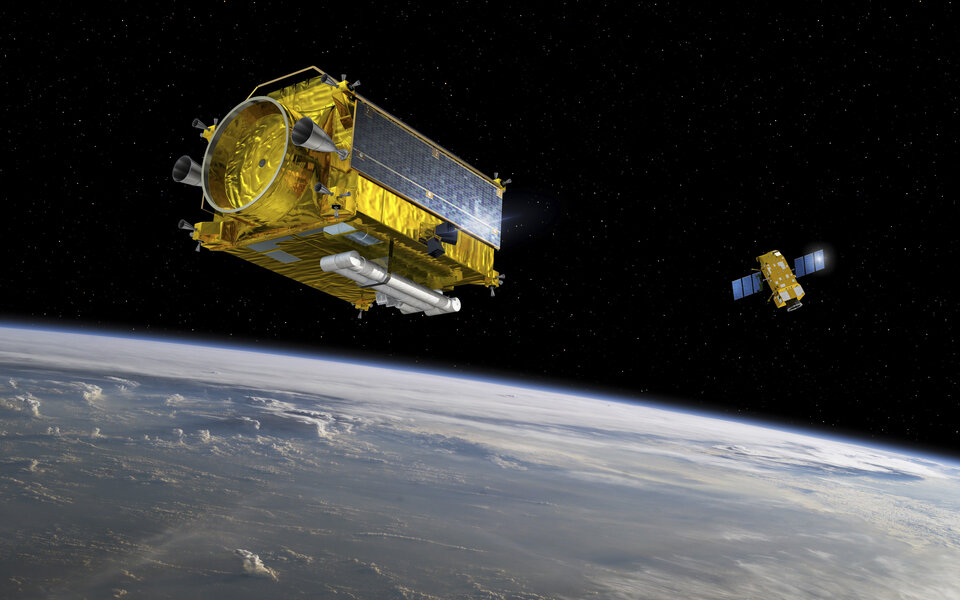
On 16 May 2025, ESA and the Spanish Space Agency (Agencia Espacial Española or AEE) confirmed their intent to collaborate on the proposed CApTure Payload Bay (CAT) in-orbit demonstration. The ESA CAT mission will test a standardised docking interface that will simplify satellite removal operations.
Removing satellites from orbit
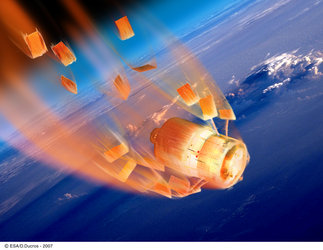
Space debris mitigation guidelines outline that a satellite should be able to manoeuvre itself out of valuable orbits, either to reenter the atmosphere and burn up, or else to park itself in a so-called graveyard orbit. Yet even the most reliable of satellites may fail in orbit and become uncontrollable, becoming a risk to other satellites in the event of a collision.
Active debris removal techniques, where a second satellite captures and removes an incapacitated satellite or other debris, are complex. Approaching and docking to another satellite is always a risk, as any collision can lead to more damage and debris generation. It becomes even more complicated if the spacecraft is unprepared, meaning not designed to rendezvous and be ‘towed’.
Using standardised interfaces
ESA has started to prepare its satellites with standard interfaces for capture and removal to simplify active debris removal missions. As anyone who has experienced the hassle of different charging cables before they were standardised to USB-C knows: for efficient interoperability of hardware, you need matching interfaces.

In September 2024, Spanish company AVS successfully launched their LUR-1 mission that among other new technologies carries the joint technology demonstration with ESA of the Mechanical Interface for Capture at End-of-life (MICE) as well as other navigation aids that will help precise distance and orientation determination needed during the close-proximity navigation.
The MICE interface is a point of attachment put onto the satellite so CAT can easily grab it, similar to how cars have tow hooks. Six navigation aids have also been installed on LUR-1 to support the rendezvous and capture process by helping determine the distance, orientation and any tumbling of the spacecraft.
MICE and the navigation aids are also being installed on four of the future Copernicus Expansion missions to facilitate their removal from orbit in case of a failure that would prevent any of them from leaving orbit under their own steam.
With MICE in space, we must send a CAT

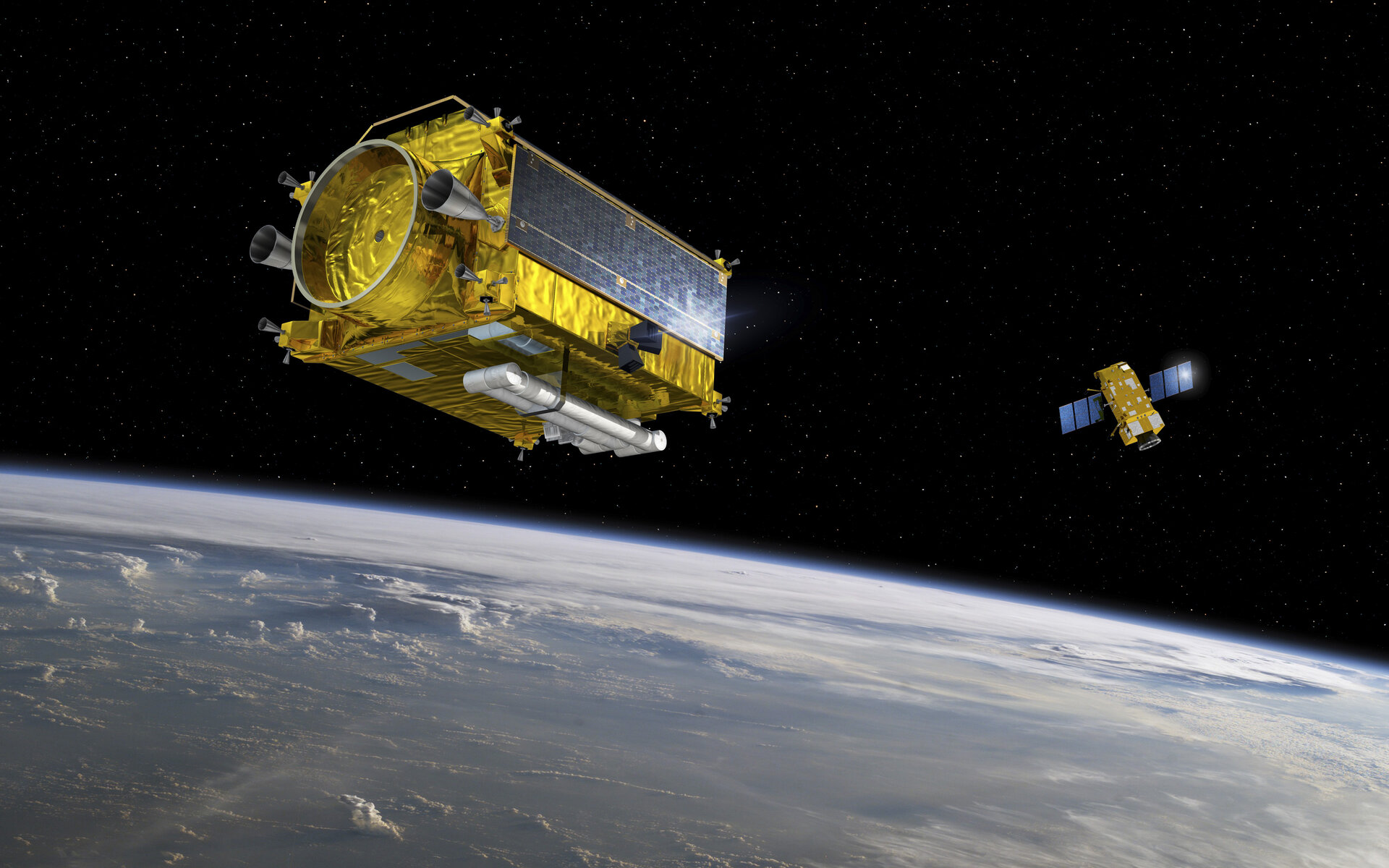
The next step is to demonstrate the removal operations in orbit by sending the CAT side of the standardised interfaces into space as well. The CAT payload is currently being developed under the leadership of GMV in Spain. It is compatible with ESA's design for the removal interface and combines innovative robotics with relative navigation equipment for tight close-proximity operations.
CAT will then undergo end-to-end validation during the ESA CAT in-orbit mission. The demonstration will make active removal a reliable and more affordable option for future ESA satellites, in case of failures in a congested orbit.
The mission is proposed for implementation within the Space Safety Programme Proposal in view of the ESA Council meeting at Ministerial level in November 2025.
ESA and AEE collaboration

ESA and the Spanish Space Agency (AEE) affirmed their intent on 16 May 2025 to collaborate by considering the Spanish LUR-1 satellite as a candidate target for the ESA CAT mission. As LUR-1 already has MICE onboard, ESA’s CAT mission can aim to safely remove the LUR-1 satellite from its low-Earth orbit in a timely manner after it reaches its end-of-mission.
Spain and ESA coming together to collaborate on the CAT in-orbit demonstration would form a key stepping stone to make the ESA Zero Debris goal possible and constitute significant progress in enhancing safety and sustainability in space.