Ecodesign
The growing impact of human activities on the environment is undeniable. For the European Space Agency (ESA), environmental concern is a priority in all its activities – on Earth and in space. The process of ecodesign helps pinpoint possible improvements that lower the environmental impact on Earth of space missions.
Constraints drive innovation
From Earth to orbit and beyond, the space sector depends on a stable, liveable planet. Like every other sector, due to a growing concern relating to the impacts of human activity on the environment, more stringent guidelines and legislation are being put in place, both on the European and international level. Space must reduce its pressure on Earth’s systems to support a thriving society and ensure long-term resilience.

Sustainability is a major priority for ESA, reflected in ESA Strategy 2040 and the ESA Green Agenda (EGA). As part EGA, the Agency aims to reduce the environmental impact of space systems and encourages a more sustainable procurement and supply chain. This commitment builds on ESA’s long-standing leadership in this area, notably through the ESA’s Clean Space initiative, which has been addressing sustainability and environmental impacts of space activities since 2012.
Industrial activities are accounted for 86% of ESA greenhouses gases emissions in 2019. By identifying and addressing potential environmental hotspots within these activities, ESA aims to ensure that space missions are more sustainable.
But this approach goes beyond ESA’s own activities, with the objective to enable more sustainable development throughout the space sector and preparing industry for a smooth transition to comply with other national and international sustainability legislations.
Quantifying sustainability
To improve on something, it needs to be evaluated first. The initial assessment is a baseline that can be used for comparison with the effects of the changes. Evaluating the environmental impacts of a space mission is challenging due to the specificities of the space sector: low production volumes and long research and development activities, specific materials and processes, impacts not only on Earth but on the upper atmosphere too. But it is not impossible.
Across a wide range of industries, the Life Cycle Assessment (LCA) methodology is used to quantitatively assess the environmental impacts of a product, process or service, considering all stages of its life cycle, from design and raw materials extraction and energy consumed during manufacturing to its end-of-life. LCA is a multi-criteria and multi-step methodology based on the ISO 14040:2006. At ESA, more than 15 impact categories are being analysed, such as global warming, human toxicity, mineral resource depletion and more.
To assess the environmental impacts of space missions, ESA has tailored the LCA methodology to space activities. This methodology is available worldwide in the ESA Space Systems LCA Guidelines and is applied to ESA projects, missions, services and technologies.
‘Ecodesigning’ a mission


Access the video
Using LCA to identify environment hotspots in a product's life cycle is the first step towards ‘ecodesign’ – an approach that considers environmental impacts across the full life cycle of projects - from the earliest design stages to the end of mission operations - and guides more-sustainable choices on materials, technologies and processes.
Adopting the ecodesign approach as early as possible in the project cycle allows for a product or mission to be developed with an improved environmental performance in mind. The target is realistic improvements, because it is essential that the sustainability efforts do not significantly increase the cost or reduce the product's final quality or performance. At the same time, ecodesign principles could help ensuring for industry that a development process complies with sustainability targets and policies.
Getting practical
The ecodesign-based, space-tailored LCA developed in the frame of ESA’s Clean Space initiative is designed to support all of the agency’s space activities.
To facilitate the implementation of ecodesign into all European space activities, the Agency has put in place a framework available to any entity from an ESA Member State preparing space activities.
ESA’s LCA framework consists of a regularly updated space-specific LCA handbook and database. The database contains space-specific datasets from different phases of a product development process and is used to support modelling when conducting an LCA.
- The ESA LCA Handbook is publicly available.
- The ESA LCA Database is available upon request through the Space Debris User Portal for all ESA Member State organisations. For more access information, visit the Clean Space blog. Please note that a valid ecoinvent licence is needed for access.
- The ESA Ecodesign policy was published in September 2025. By applying ecodesign from the earliest stages of ESA space projects, costly retrofits can be avoided, making smarter use of resources, increasing opportunities for reuse and recycling, and developing more sustainable technologies. This helps provide the European space ecosystem with a competitive advantage based on innovation and research. It also prepares ESA and the European space sector for upcoming national and international regulations. For practical information, check out the presentation and audio recording of the webinar ESA Ecodesign Policy: what it means for industry and the European space sector (under 'Resources').
- Have not found what you need yet? Check out the answers to our Frequently Asked Questions.
Finding ecodesign 'stars'
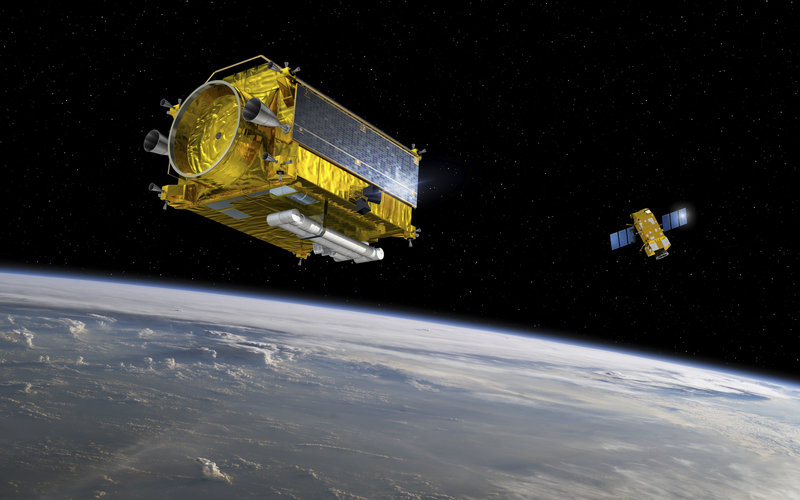
It can be quite a hurdle to test new concepts in space, it requires special expertise and can be risky and expensive. To help European industry cross this gap, ESA is running the EcoStars project: the in-orbit demonstration of a platform which is designed and developed with ecodesign principles as the basis and testing of ecodesigned technologies. In collaboration with European industry partners, ESA will push the ecodesign market forward – a win for all future space activities.