• → European Space Agency

      • Space for Europe
      • Space News
      • Space in Images
      • Space in Videos
    • About Us

      • Welcome to ESA
      • DG's News and Views
      • For Member State Delegations
      • Business with ESA
      • ESA Exhibitions
      • ESA Publications
      • Careers at ESA
    • Our Activities

      • Space News
      • Observing the Earth
      • Human Spaceflight
      • Launchers
      • Navigation
      • Space Science
      • Space Engineering
      • Operations
      • Technology
      • Telecommunications & Integrated Applications
    • For Public

    • For Media

    • For Educators

    • For Kids

    • ESA

    • Human Spaceflight

    • Astronauts

    • International Space Station

    • Research

    • Education

    • About the International Space Station
    • Pushing the boundaries of science and technology
    • Current status
    • Where is the International Space Station?
    • Building the International Space Station
    • International collaboration
    • International Space Station legal framework
    • Europe's partners
    • European participation
    • Space Station elements
    • Control centres
    • How much does it cost?

    ESA > Our Activities > Human Spaceflight > International Space Station

    Columbus laboratory

    Columbus Laboratory (Cutaway view)
    Columbus Laboratory (Cutaway view)

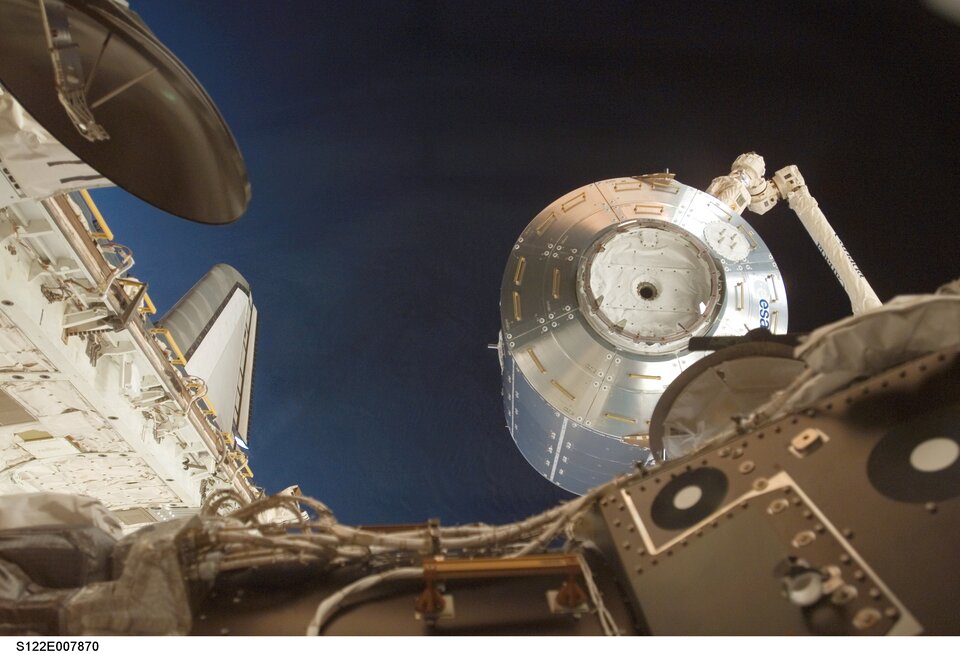
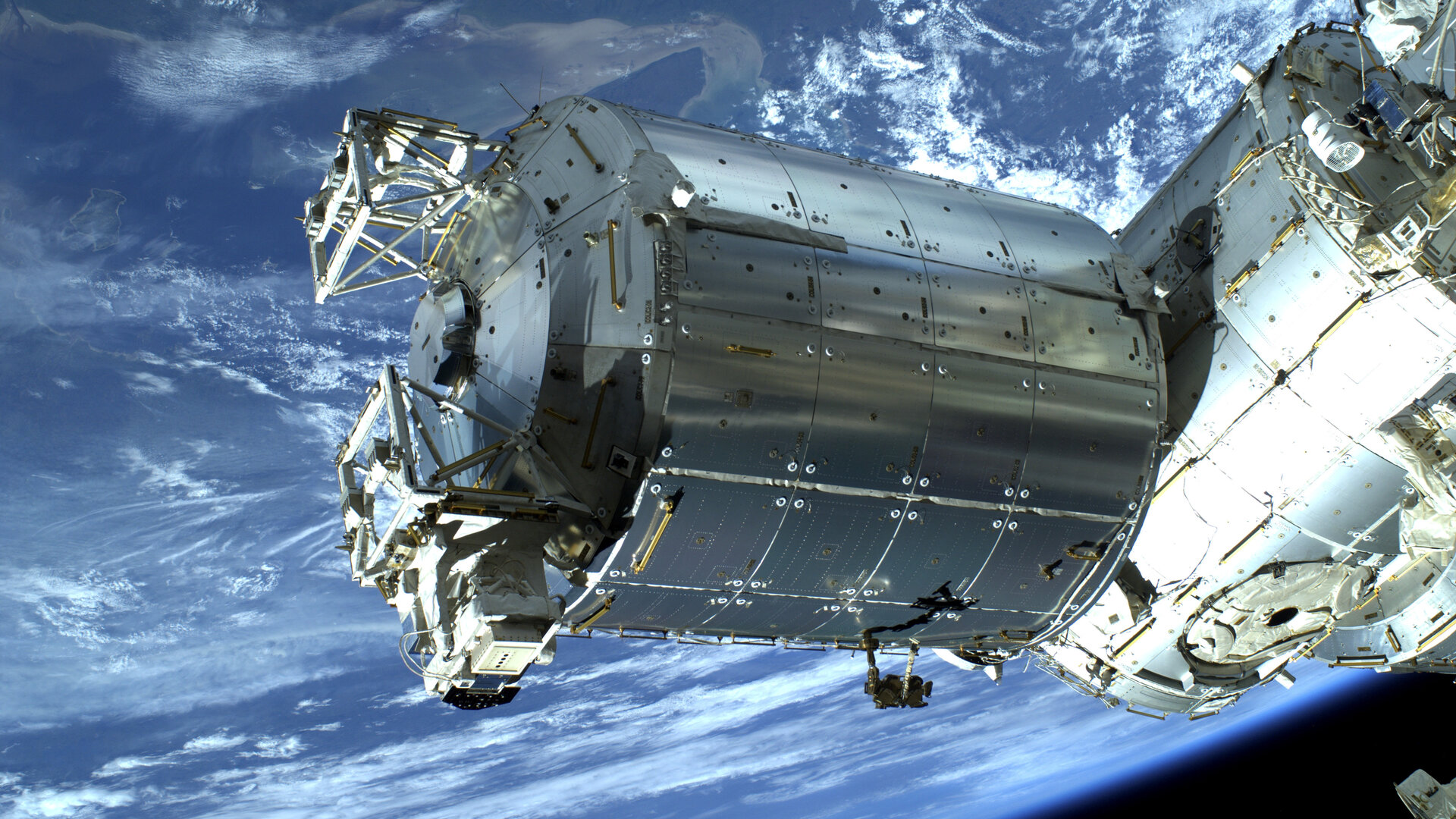
    The Columbus laboratory is ESA's biggest single contribution to the International Space Station. The 4.5-metre diameter cylindrical module is equipped with flexible research facilities that offer extensive science capabilities.

    During its 10-year projected lifespan, Earth-based researchers, together with the Station crew, will conduct thousands of experiments in life sciences, materials science, fluid physics and a whole host of other disciplines, all in weightlessness.

    To keep costs low and reliability high, Columbus shares its basic structure and life-support systems with the Italian space agency's Multi-Purpose Logistics Modules (MPLM). But whereas the MPLM is aptly described as a 'space moving-van' - albeit a very sophisticated van - the 75 cubic metres of space inside Columbus contains an entire suite of science laboratories.

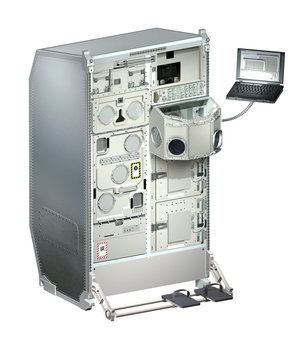
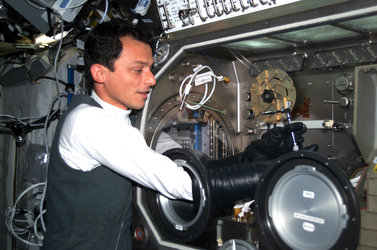
    Biolab

    Payload racks

    The Columbus laboratory has room for ten International Standard Payload Racks, eight in the sidewalls, and two in the ceiling.

    Each rack is the size of a telephone booth and able to host its own autonomous and independent laboratory, complete with power and cooling systems, and video and data links back to researchers on Earth.

    ESA has developed a range of payload racks, all tailored to squeeze the maximum amount of research from the minimum of space and to offer European scientists across a wide range of disciplines full access to a weightless environment that cannot possibly be duplicated on Earth.

    Columbus was fitted with five internal payload racks at launch

    • Biolab - supports experiments on micro-organisms, cells and tissue cultures, and even small plants and small insects.
    • The European Physiology Modules Facility - a set of experiments that will be used to investigate the effects of long-duration spaceflight on the human body. Experiment results will also contibute to an increased understanding of age-related bone loss, balance disorders and other ailments back on Earth.
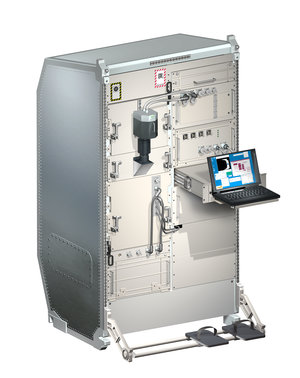
    • The Fluid Science Laboratory - accommodates experiments in the strange behaviour of weightless liquids. Bringing far-reaching benefits on Earth: better ways to clean up oil spills, for example, and improved manufacture of metals.
    • The European Drawer Rack - a modular and flexible experiment carrier system for a large variety of scientific disciplines, providing basic accommodation and resources for experiment modules housed within standardised drawers and lockers.
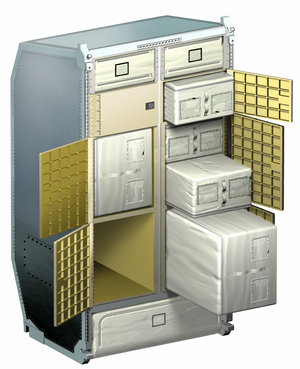
    • The European Transport Carrier - accommodates items for transport and stowage. In orbit it will serve as a workbench and stowage facility.
    Solar and EuTEF
    SOLAR and EuTEF launched with Columbus

    External payloads

    Outside its pressurised hull, Columbus has four mounting points for external payloads. Exposed to the vacuum of space, and with an unhindered view of Earth and outer space, science packages can investigate anything from the ability of bacteria to survive on an artificial meteorite to volcanic activity 400 km below on Earth.

    Two external payloads were attached to the outside of Columbus shortly after the module was attached to the ISS:

    • The European Technology Exposure Facility (EuTEF) - carries experiments requiring exposure to the space environment.
    • SOLAR - a platform with three scientific instruments to study solar-related phenomena.
    Columbus Control Centre

    On the ground

    Columbus on ground involves researchers all over Europe, who are able to control their own experiments directly from several User Centres or even directly from their workplaces.

    Their efforts are channelled through the Columbus Control Centre in Germany, which interfaces with the module itself and also ESA's partners in the United States.

    Like the navigator after whom it was named, Columbus is set for a long journey of exploration. But thanks to broadband telecommunications, hundreds of explorers will be able to work aboard during its 10-year mission.

    Columbus launched on 7 February 2008 with Space Shuttle Atlantis on mission STS-122.

    Rate this

    Views

    Share

    • Currently 4.5 out of 5 Stars.
    • 1
    • 2
    • 3
    • 4
    • 5
    Rating: 4.66/5 (6 votes cast)

    Thank you for rating!

    You have already rated this page, you can only rate it once!

    Your rating has been changed, thanks for rating!

    1767
    Tweet

    Connect with us

    • RSS
    • Youtube
    • Twitter
    • Flickr
    • G+
    • Facebook
    • Livestream
    • Subscribe
    • App Store
    • LATEST ARTICLES
    • · Proba-V opens its eyes
    • · First new Galileo satellite arrive…
    • · Next destination: space
    • · Leak repaired on International Spa…
    • · After Chelyabinsk: European expert…
    • FAQ

    • Jobs at ESA

    • Site Map

    • Contacts

    • Terms and conditions