Radiation: satellites’ unseen enemy
Just like mobile phones and other terrestrial gadgets, satellites keep getting smarter. But the advanced electronics driving this trend run a serious threat in orbit from the invisible onslaught of space radiation.
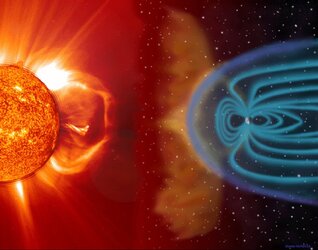
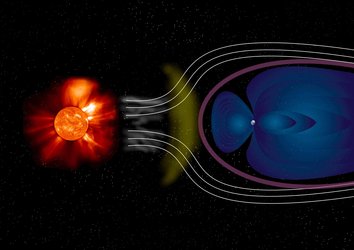
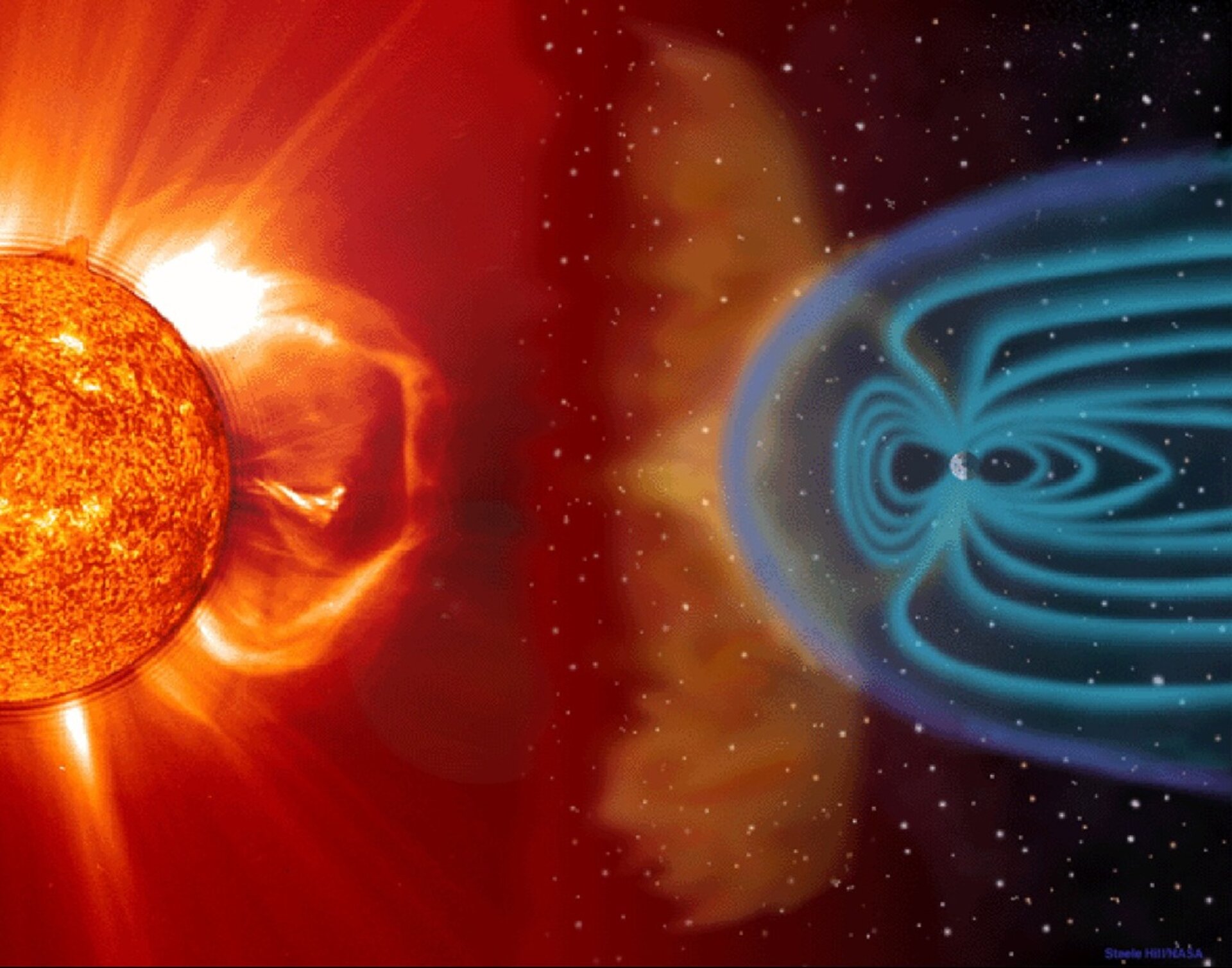
The space beyond Earth is awash with radiation: high-energy particles from the Sun, belts of protons, electrons and ions collected within Earth’s magnetic field and an exotic menagerie of ‘cosmic rays’ – also particles, despite their name – arriving from beyond the Solar System.
ESA’s Space Environment and Effects Section, based at the Agency’s ESTEC technology centre in Noordwijk, the Netherlands, gathers data on ionising particle populations across various Earth orbits, planetary environments and out into interplanetary space – numbers that often vary enormously on a scale of minutes, days, months or years – and their likely consequences for space systems.
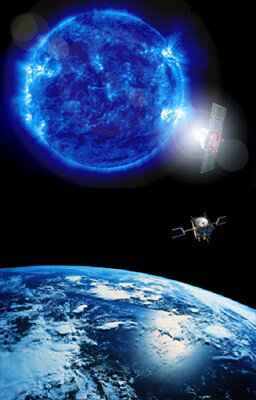
This section works alongside the Components Space Evaluation and Radiation Effects Section, responsible for the Electrical, Electronic and Electromechanical (EEE) component part of the Materials and Electrical Components Laboratories, also at ESTEC, tasked with evaluating radiation effects on components and to assess their suitability for space.
Radiation has always been an issue for satellites. Back in 1962, Telstar 1 was an early high-profile casualty, its transistors suffering degradation by passage through the inner Van Allen radiation belt (its intensity temporarily increased by Cold War high-altitude nuclear detonations).
Standard integrated circuits would gradually degrade or even catastrophically fail when exposed to the space radiation environment; special radiation-hardened components are essential for satellites. Even so, radiation remains one of the leading causes of satellite anomalies – and as technology advances, the risk increases.
Shrinking circuits: powerful but vulnerable

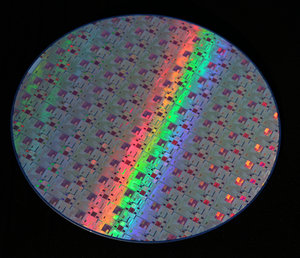
It all comes down to the famous Moore’s Law, recognising that the number of transistors per integrated circuit doubles every 18–24 months.
In the case of satellites, this means each single space component has more transistors than an entire satellite carried 20 years ago, making modern space systems much more powerful and versatile.
Moore’s Law means that circuit features have become smaller and run on less charge, making them more vulnerable to disruption by incoming charged particles.
It is a very real issue for the latest densely packed terrestrial microprocessors – chip maker Intel is investigating the concept of adding an on-chip cosmic ray detector to identify radiation-based errors – so represents a more serious threat for components operating beyond the protective umbrellas of Earth’s atmosphere and magnetosphere.

“In space as on Earth, end-users are demanding more and more processing power,” explained Ali Zadeh of the Components Space Evaluation and Radiation Effects Section.
“Today’s satellites have already got much smarter. For example, the Proba series of technology demonstration missions has sufficient embedded intelligence to automatically line up with their assigned imaging targets.
“But against that, satellites' radiation sensitivity has increased: with reduced feature sizes not only do we have to be concerned with heavy ion-related effects but also increasingly with proton effects. Proton-induced effects are particularly problematic due to their high fluxes in Earth orbit.

“The challenge we face is finding ways to go on applying novel terrestrial technology advances to space in a safe way, to make future missions more capable still while ensuring reliability.”
ESA is therefore continuously assessing new technologies suitable for space applications. Amongst others, ESA is currently researching Deep Sub-Micron technology and its suitability for flight on Agency missions. Deep Sub-Micron technology involves etching transistor gates down to 65 nanometres and below – a fraction the length of a bacterium, only a few hundred atoms across.
Radiation effects and environments

Radiation has three main effects on components, with Single Event Effects (SEEs) most often observed and presenting the biggest headache to sensitive new technologies.
High-energy particles traversing EEE components generate a transient electric charge that can have various consequences: software upsets, memory bit flips, transistor gate ruptures or even ‘latch-up’ – a runaway short circuit phenomena that burns out the entire circuit.
The remaining two effects are cumulative, with sustained particle bombardments creating defects within oxides – known as Total Ionising Dose . Incoming particles also displace atoms in the semiconductor crystal lattice – called Displacement Damage. Both effects cause gradual degradation of the electrical performance of components.

Radiation effects are typically imperceptible visually – although latch-ups cause visible damage, and optical materials and solar arrays can darken over time – but still have serious, even mission-ending, consequences.
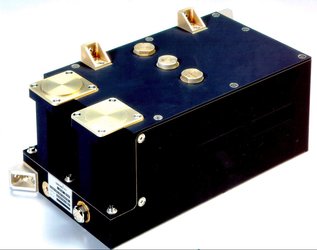
“We use radiation monitors aboard a number of satellites and various software models to predict the radiation environment any proposed mission will experience,” said Eamonn Daly of the Space Environment and Effects Section.
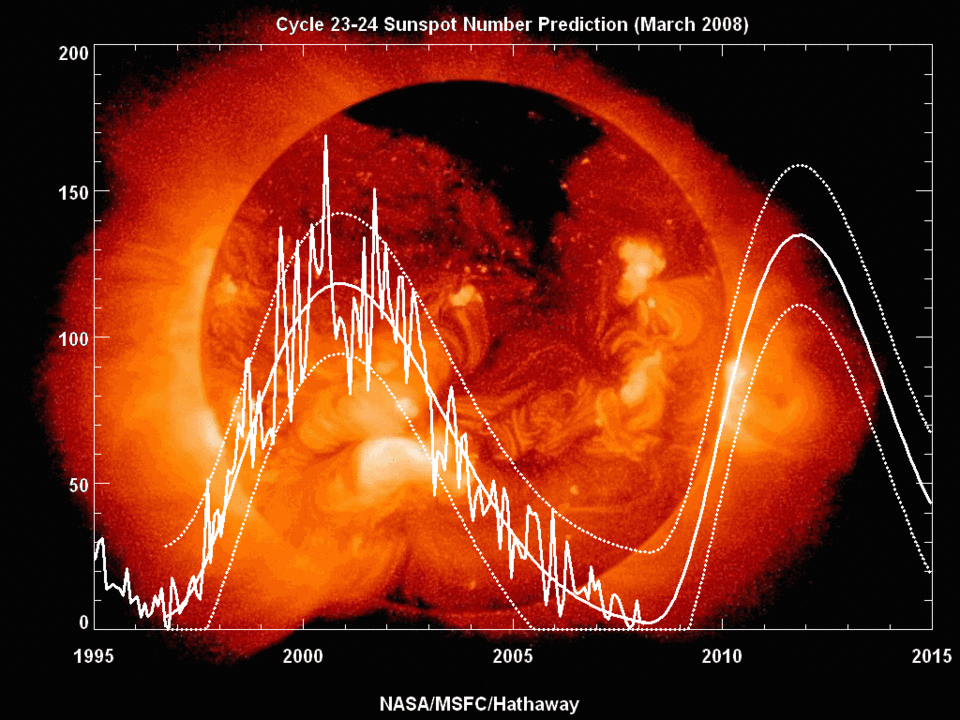
“Particle abundance is related to size: we see more light ions than heavy ions, and much more protons and electrons than light ions. The 11-year cycle of solar activity also plays an important role.
“The Laboratories then apply our data to guide their qualification testing, to verify whether a given component is suitable for an application in a particular environment.”
| This article continues... |
|
Next  |
|