• → European Space Agency

      • Space for Europe
      • Space News
      • Space in Images
      • Space in Videos
    • About Us

      • Welcome to ESA
      • DG's News and Views
      • For Member State Delegations
      • Business with ESA
      • ESA Exhibitions
      • ESA Publications
      • Careers at ESA
    • Our Activities

      • Space News
      • Observing the Earth
      • Human Spaceflight
      • Launchers
      • Navigation
      • Space Science
      • Space Engineering
      • Operations
      • Technology
      • Telecommunications & Integrated Applications
    • For Public

    • For Media

      • Media
      • ESA TV
      • Videos for professionals
      • Photos
    • For Educators

    • For Kids

    • ESA

    • Space Science

    • Our Universe
    • About Space Science
    • ESA's 'Cosmic Vision'
    • Science missions
    • Mission navigator
    • Target groups
    • For Media
    • For Scientists
    • For Kids
    • Multimedia
    • Science images
    • Science videos
    • Animations
    • Downloads
    • Sounds from space
    • Resources
    • Reference section
    • Services
    • FAQs
    • Glossary
    • Help
    • Portal terms of use
    • Comments
    • Follow us
    • RSS feeds
    • ESA Sci on Twitter
    • ESA Space Science Images on Flickr
    • ESA 3D on Flickr

    ESA > Our Activities > Space Science

    Latest animation of Huygens descent

    A simulated view from Huygens

    24 January 2006

    This animation is based on and uses images taken by the Descent Imager/Spectral Radiometer instrument on ESA’s Huygens probe on 14 January 2005.

    It starts with the view from Huygens to the Sun in the early hours of 14 January 2005. The Earth and Moon transit across the Sun, which occurs about once every 15 years, while a central transit like this one occurs only twice per millennium.

    An observer at Saturn would need a telescope with at least 30 times magnification to see the Earth as a black spot on the solar disk. This solar image was taken on 14 January 2005 and is used courtesy of Mees Solar Observatory, University of Hawaii.

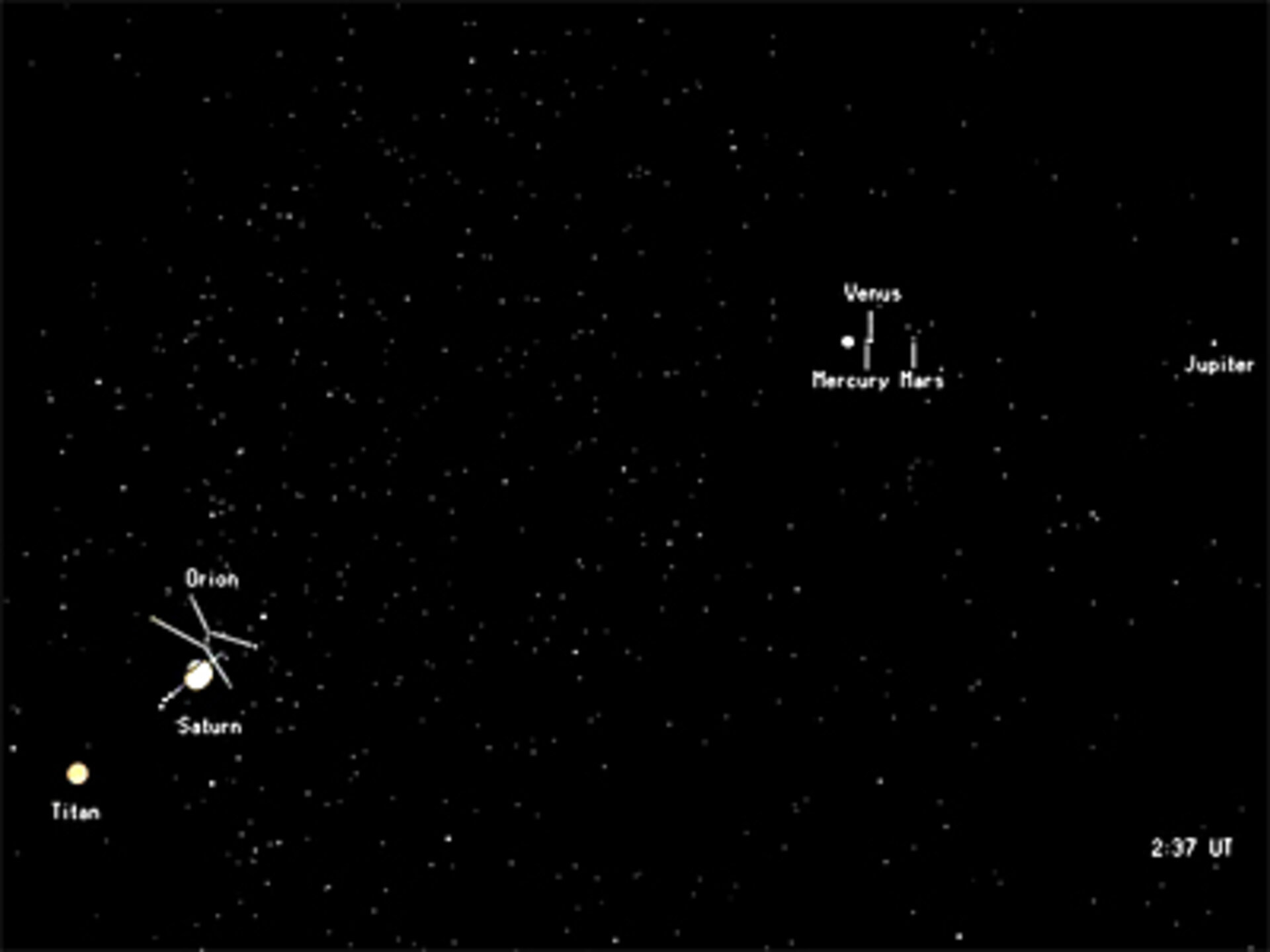
    The second scene zooms out to a wide-angle view with the inner planets close to the Sun (to the right) and the Saturnian system at far left. Saturn is almost as large as the constellation Orion, surrounded by the winter constellations.

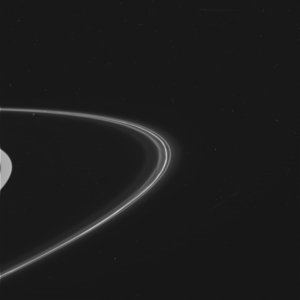
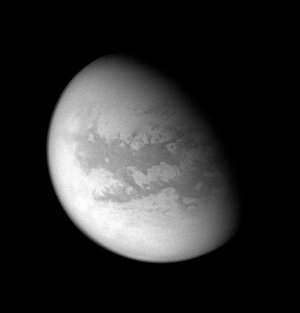
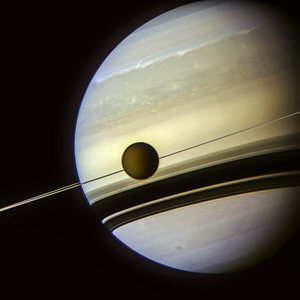
    A few satellites appear as white dots aligned with Saturn's rings, while Saturn's largest satellite, Titan, is already well resolved. The motion of Saturn and its satellites among the stars is calculated based on the orbit of Huygens.

    For the third scene, the altitude above Titan's surface and speed relative to the moon are given at the bottom right. At 4:41 UT, the Huygens probe gets its wake-up call. At 6:51, the support avionics are also powered, ready for the entry into Titan's atmosphere. Shortly after 9:00, the probe enters Titan's atmosphere, as the heat shield reduces the speed some 15-fold within a few minutes.

    At 9:10, the main parachute reduces the speed further. Fifteen minutes later, the stabiliser allows a faster descent at first, but slowing as Huygens enters the lower, denser parts of Titan's atmosphere. The bright area near the centre top is the bright part of Titan's haze below the Sun.

    Further down, more surface features appear as Huygens descends through the haze. At 21 km altitude, the probe moves through a thin haze layer. Below 7 km altitude, the forward, eastward motion reverses into a backward, westward motion, before it reverses again at 1 km altitude.

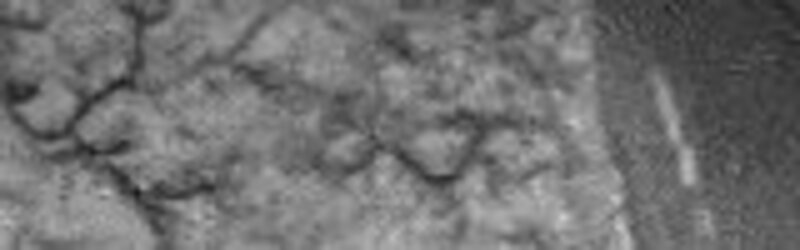
    All the features shown here were imaged by the DISR cameras during the descent. While the original images were black and white, they are ‘colorised’ here based on the spectral data acquired by the DISR spectrometers. As Huygens lands, the view is to the southern horizon with ice rocks visible below. As the view moves down, nearby rocks of some 20 cm size come into sight.

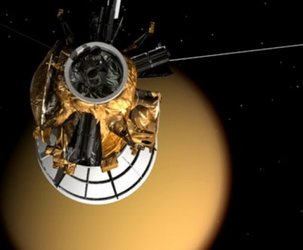
    For Huygens, the day of 14 January 2005 started with Titan as a small disk in the night sky. By noon, centimetre-size pebbles lay in front of Huygens. Finally, Cassini received the last signal from Huygens at 12:50.

    For more information:

    Lori Styles, DISR News Services
    E-mail: lstiles @u.arizona.edu

    Jean-Pierre Lebreton, ESA Huygens Mission Manager
    E-mail: jplebret @ rssd.esa.int
    Rate this

    Views

    Share

    • Currently 0 out of 5 Stars.
    • 1
    • 2
    • 3
    • 4
    • 5
    Rating: 0/5 (0 votes cast)

    Thank you for rating!

    You have already rated this page, you can only rate it once!

    Your rating has been changed, thanks for rating!

    171
    Tweet
    • At Saturn and Titan
    • Huygens raw images
    • First image of Titan
      First image of Titan
    • Sounds of Titan
    • Related articles
      • A simulated view from Huygens
        • Cassini-Huygens mission celebrates anniversary
          • Some Cassini-Huygens science highlights
            • Titan's surface seen from fly-by on 22 August 2005
              • Huygens 3D animation of Titan's surface
                • Saturn's moon Phoebe in 3D
                  • Cassini-Huygens looks at Phoebe's distant past
                    • Cassini finds atmosphere on Enceladus
                      • Cassini's Hyperion fly-by
                      • Related links
                      • NASA JPL Cassini-Huygens site
                      • Italian Space Agency (ASI)
                      • Huygens DISR team

    Connect with us

    • RSS
    • Youtube
    • Twitter
    • Flickr
    • G+
    • Facebook
    • Livestream
    • Subscribe
    • App Store
    • ESA Science Twitter

    Follow ESA science

    • LATEST ARTICLES
    • · Rare merger reveals secrets of gal…
    • · Watching for hazards: ESA opens as…
    • · ESA astronaut Timothy Peake set fo…
    • · Space drives e-mobility
    • · Proba-V opens its eyes
    • FAQ

    • Jobs at ESA

    • Site Map

    • Contacts

    • Terms and conditions