• → European Space Agency

      • Space for Europe
      • Space News
      • Space in Images
      • Space in Videos
    • About Us

      • Welcome to ESA
      • DG's News and Views
      • For Member State Delegations
      • Business with ESA
      • ESA Exhibitions
      • ESA Publications
      • Careers at ESA
    • Our Activities

      • Space News
      • Observing the Earth
      • Human Spaceflight
      • Launchers
      • Navigation
      • Space Science
      • Space Engineering
      • Operations
      • Technology
      • Telecommunications & Integrated Applications
    • For Public

    • For Media

    • For Educators

    • For Kids

    • ESA

    • Space Science

    • Our Universe
    • About Space Science
    • ESA's 'Cosmic Vision'
    • Science missions
    • Mission navigator
    • Target groups
    • For Media
    • For Scientists
    • For Kids
    • Multimedia
    • Science images
    • Science videos
    • Animations
    • Downloads
    • Sounds from space
    • Resources
    • Reference section
    • Services
    • FAQs
    • Glossary
    • Help
    • Portal terms of use
    • Comments
    • Follow us
    • RSS feeds
    • ESA Sci on Twitter
    • ESA Space Science Images on Flickr
    • ESA 3D on Flickr

    ESA > Our Activities > Space Science

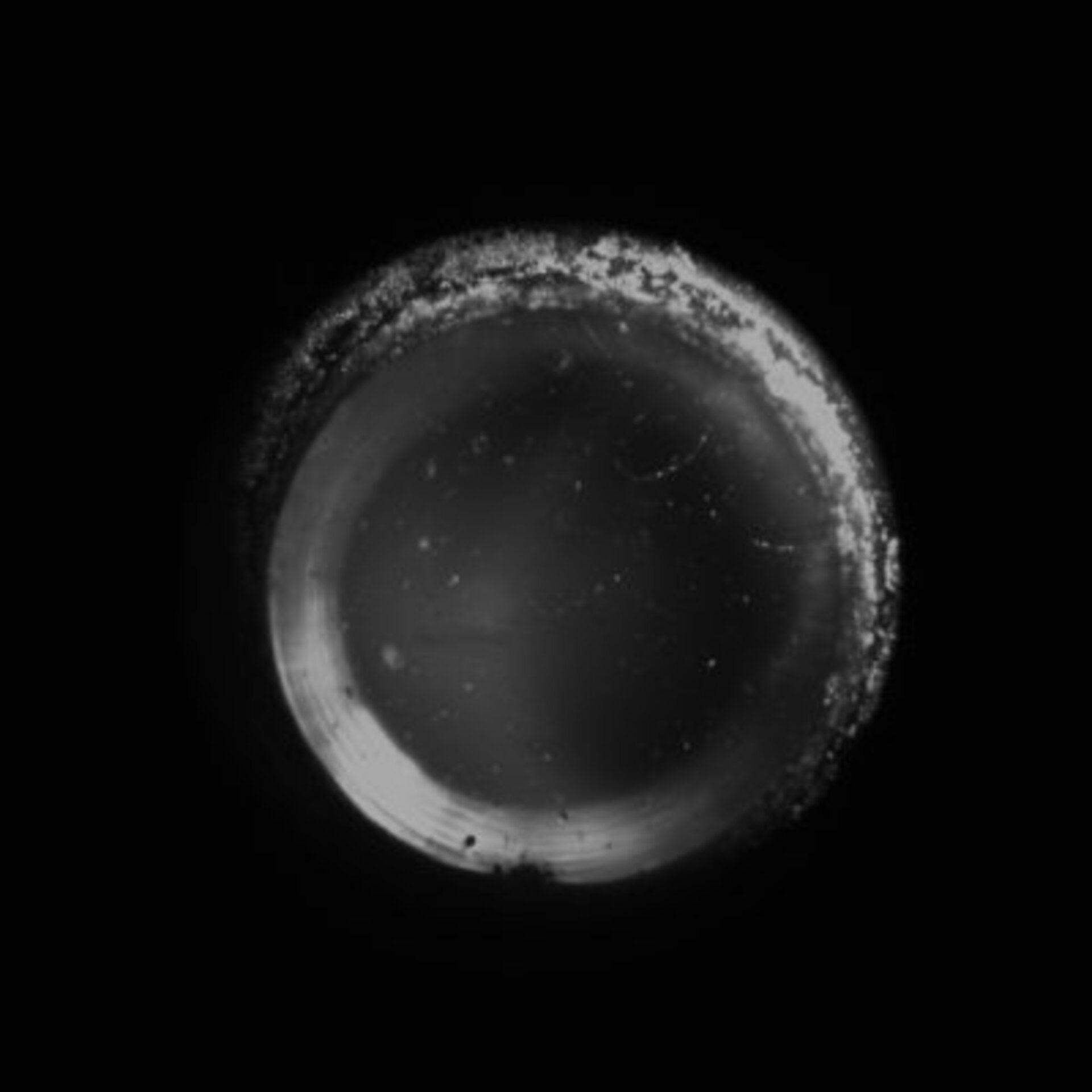
    Cooking on a comet...?

    Looking into one of Rosetta's miniature ovens
    19 August 2004

    One of the ingenious instruments on board Rosetta is designed to ‘smell’ the comet for different substances, analysing samples that have been ‘cooked’ in a set of miniature ovens.

    ESA’s Rosetta will be the first space mission ever to land on a comet. After its lander reaches Comet 67P/Churyumov-Gerasimenko, the main spacecraft will follow the comet for many months as it heads towards the Sun.

    Rosetta's task is to study comets, which are considered the primitive building blocks of the Solar System. This will help us to understand if life on Earth began with the help of 'comet seeding'.

    The Ptolemy instrument is an ‘Evolved Gas Analyser’, the first example of a new concept in space instruments, devised to tackle the challenge of analysing substances ‘on location’ on bodies in our Solar System.

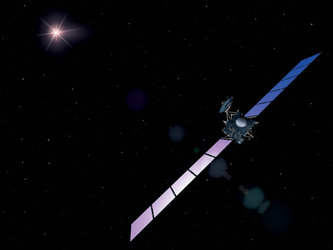
    Rosetta
    Artist's impression of Rosetta orbiter and lander

    Weighing just 4.5 kilograms and about the size of a shoe box, it was produced by a collaboration of the UK’s Rutherford Appleton Laboratory and Open University.

    The analysis of these samples from the surface of the comet will establish what the cometary nucleus is made from, providing valuable information about these most primitive objects.

    After the lander touches down on the comet, the Ptolemy instrument will collect comet nucleus material, believed to be a frozen mixture of ices, dust and tar, using the Sampling, Drilling and Distribution system (SD2) supplied by Tecnospazio Milano (now part of Galileo Avionica SpA) of Italy. SD2 will drill for small cores of ice and dust from depths of down to 250 millimetres.

    SD2 will drill and collect samples from the comet subsurface and distribute them, by means of a carousel equipped with 26 ovens, to the instrumentation (including Ptolemy) for in-situ analysis. The carousel is part of the SD2 system supplied by Tecnospazio. The ovens are supplied by Tecnospazio (10 medium temperature ovens) and by Germany's MPAe (16 high temperature ovens).

    Of the four Ptolemy ovens, three are for solid samples collected and delivered by SD2 while the fourth will be used to collect volatile materials from the near-surface cometary atmosphere.


    By heating the solid samples to 800 °C, the oven converts them into gases which then pass along a pipe into Ptolemy. The gas will then be separated into its constituent chemical species using a gas chromatograph.

    Ptolemy can then determine which chemicals are present in the comet sample, and hence help to build up a detailed picture of what the comet is made from.

    It does this using the world’s smallest ‘ion-trap mass spectrometer’, a small, low-power device built with the latest miniature technology. This device will find out what gases are present in any particular sample and measure stable isotope ratios.

    Rate this

    Views

    Share

    • Currently 0 out of 5 Stars.
    • 1
    • 2
    • 3
    • 4
    • 5
    Rating: 0/5 (0 votes cast)

    Thank you for rating!

    You have already rated this page, you can only rate it once!

    Your rating has been changed, thanks for rating!

    27
    Tweet
    • ESA's comet chaser
    • More about...
      • Rosetta factsheet
        • XMM-Newton factsheet
          • Hubble factsheet
          • NASA Deep Impact
          • ESO Deep Impact news
          • Related articles
            • Life of a comet
              • Tempel 1: Biography of a comet
                • Rosetta monitors Deep Impact
                  • XMM-Newton to observe Deep Impact
                    • Hubble sees outburst from Deep Impact comet
                      • ESA observes Deep Impact from Earth
                        • Dust and gas from Comet 9P/Tempel 1 seen by ESA OGS
                          • Tempel 1 is weak X-ray source, XMM-Newton confirms

    Connect with us

    • RSS
    • Youtube
    • Twitter
    • Flickr
    • G+
    • Facebook
    • Livestream
    • Subscribe
    • App Store
    • ESA Science Twitter

    Follow ESA science

    • LATEST ARTICLES
    • · ESA astronaut Timothy Peake set fo…
    • · Space drives e-mobility
    • · Proba-V opens its eyes
    • · First new Galileo satellite arrive…
    • · Next destination: space
    • FAQ

    • Jobs at ESA

    • Site Map

    • Contacts

    • Terms and conditions