ESA chooses three scientific missions for further study
Dark energy, habitable planets around other stars, and the mysterious nature of our own Sun, have been chosen by ESA as candidates for two medium-class missions to be launched no earlier than 2017.
On Thursday 18 February, ESA’s Science Programme Committee (SPC) approved three missions to enter the so-called definition phase. This is the next step required before the final decision is taken as to which missions are implemented. The three proposals chosen to proceed are Euclid, PLAnetary Transits and Oscillations of stars (PLATO), and Solar Orbiter.

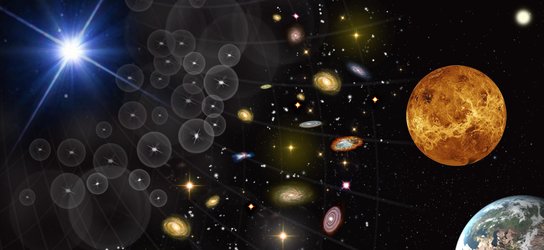
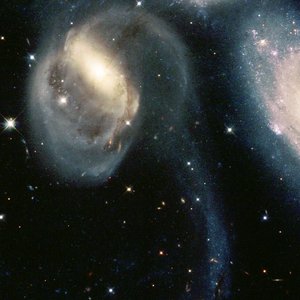
Euclid would address key questions relevant to fundamental physics and cosmology, namely the nature of the mysterious dark energy and dark matter. Astronomers are now convinced that these substances dominate ordinary matter. Euclid would map the distribution of galaxies to reveal the underlying ‘dark’ architecture of the Universe.
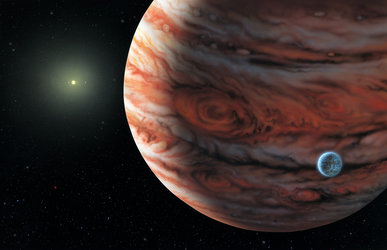
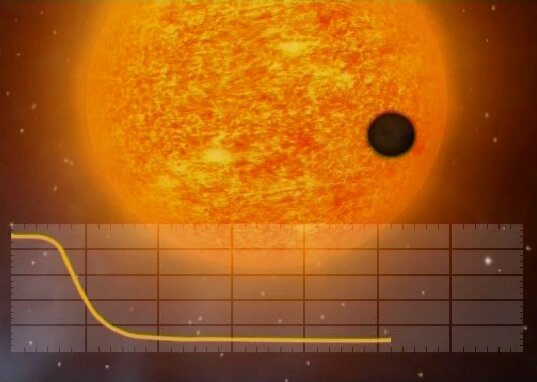
The PLATO mission would address one of the most timely and long-standing questions in science, namely the frequency of planets around other stars. This would include terrestrial planets in a star’s habitable zone, so-called Earth-analogues. In addition, PLATO would probe stellar interiors by detecting the gaseous waves rippling their surfaces.
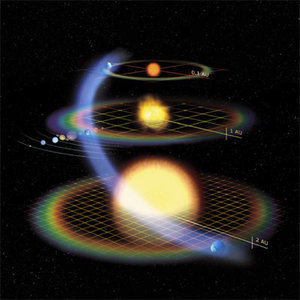
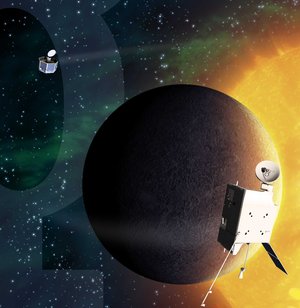
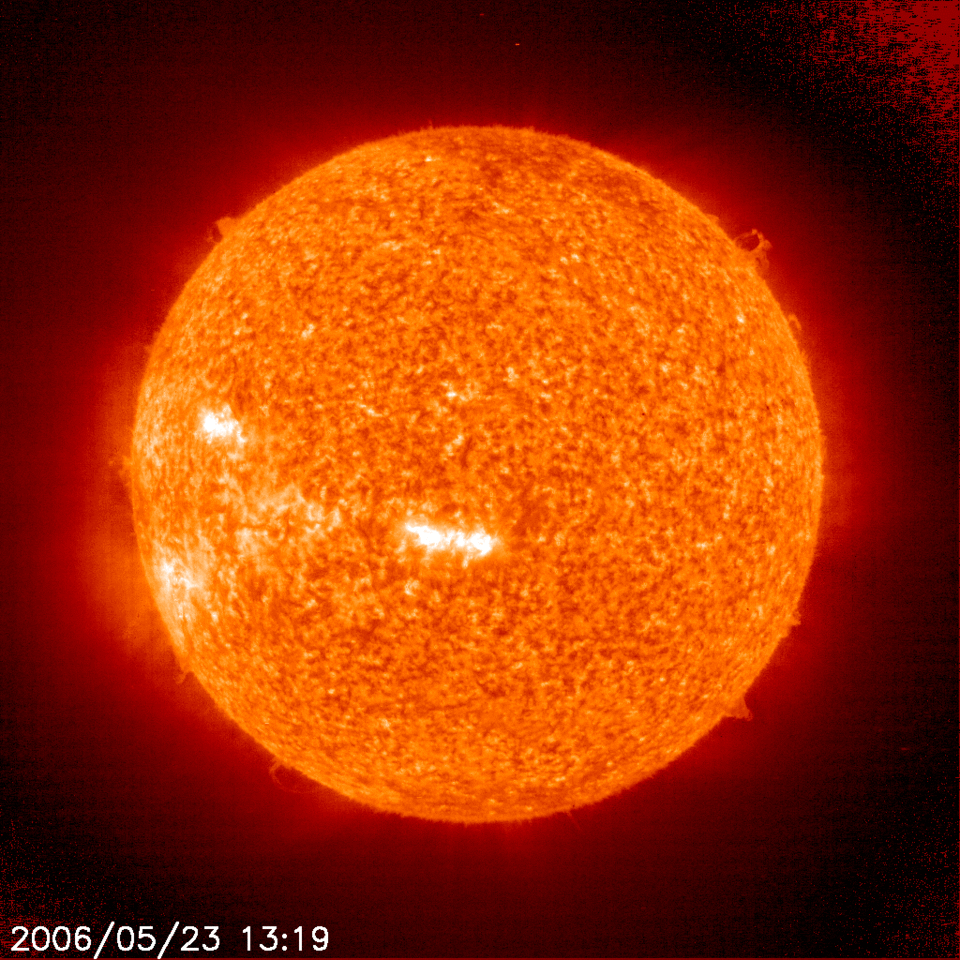
Solar Orbiter would take the closest look at our Sun yet possible, approaching to just 62 solar radii. It would deliver images and data that include views of the Sun’s polar regions and the solar far side when it is not visible from Earth.
These three missions are the finalists from 52 proposals that were either made or carried forward in 2007. They were whittled down to just six mission proposals in 2008 and sent for industrial assessment. Now that the reports from those studies are in, the missions have been pared down again. “It was a very difficult selection process. All the missions contained very strong science cases,” says Lennart Nordh, Swedish National Space Board and chair of the SPC.
And the tough decisions are not yet over. Only two missions out of three of them: Euclid, PLATO and Solar Orbiter, can be selected for the M-class launch slots. All three missions present challenges that will have to be resolved at the definition phase. A specific challenge, of which the SPC was conscious, is the ability of these missions to fit within the available budget. The final decision about which missions to implement will be taken after the definition activities are completed, which is foreseen to be in mid-2011.
In addition, the SPC has decided to consider at its next meeting in June, whether to also select a European contribution to the SPICA mission.
These missions continue the European commitment to world-class space science
SPICA would be an infrared space telescope led by the Japanese Space Agency JAXA. It would provide ‘missing-link’ infrared coverage in the region of the spectrum between that seen by the ESA-NASA Webb telescope and the ground-based ALMA telescope. SPICA would focus on the conditions for planet formation and distant young galaxies.
“These missions continue the European commitment to world-class space science,” says David Southwood, ESA Director of Science and Robotic Exploration, “They demonstrate that ESA’s Cosmic Vision programme is still clearly focused on addressing the most important space science.”