• → European Space Agency

      • Space for Europe
      • Space News
      • Space in Images
      • Space in Videos
    • About Us

      • Welcome to ESA
      • DG's News and Views
      • For Member State Delegations
      • Business with ESA
      • ESA Exhibitions
      • ESA Publications
      • Careers at ESA
    • Our Activities

      • Space News
      • Observing the Earth
      • Human Spaceflight
      • Launchers
      • Navigation
      • Space Science
      • Space Engineering
      • Operations
      • Technology
      • Telecommunications & Integrated Applications
    • For Public

    • For Media

    • For Educators

    • For Kids

    • ESA

    • Space Science

    • Our Universe
    • About Space Science
    • ESA's 'Cosmic Vision'
    • Science missions
    • Mission navigator
    • Target groups
    • For Media
    • For Scientists
    • For Kids
    • Multimedia
    • Science images
    • Science videos
    • Animations
    • Downloads
    • Sounds from space
    • Resources
    • Reference section
    • Services
    • FAQs
    • Glossary
    • Help
    • Portal terms of use
    • Comments
    • Follow us
    • RSS feeds
    • ESA Sci on Twitter
    • ESA Space Science Images on Flickr
    • ESA 3D on Flickr

    ESA > Our Activities > Space Science

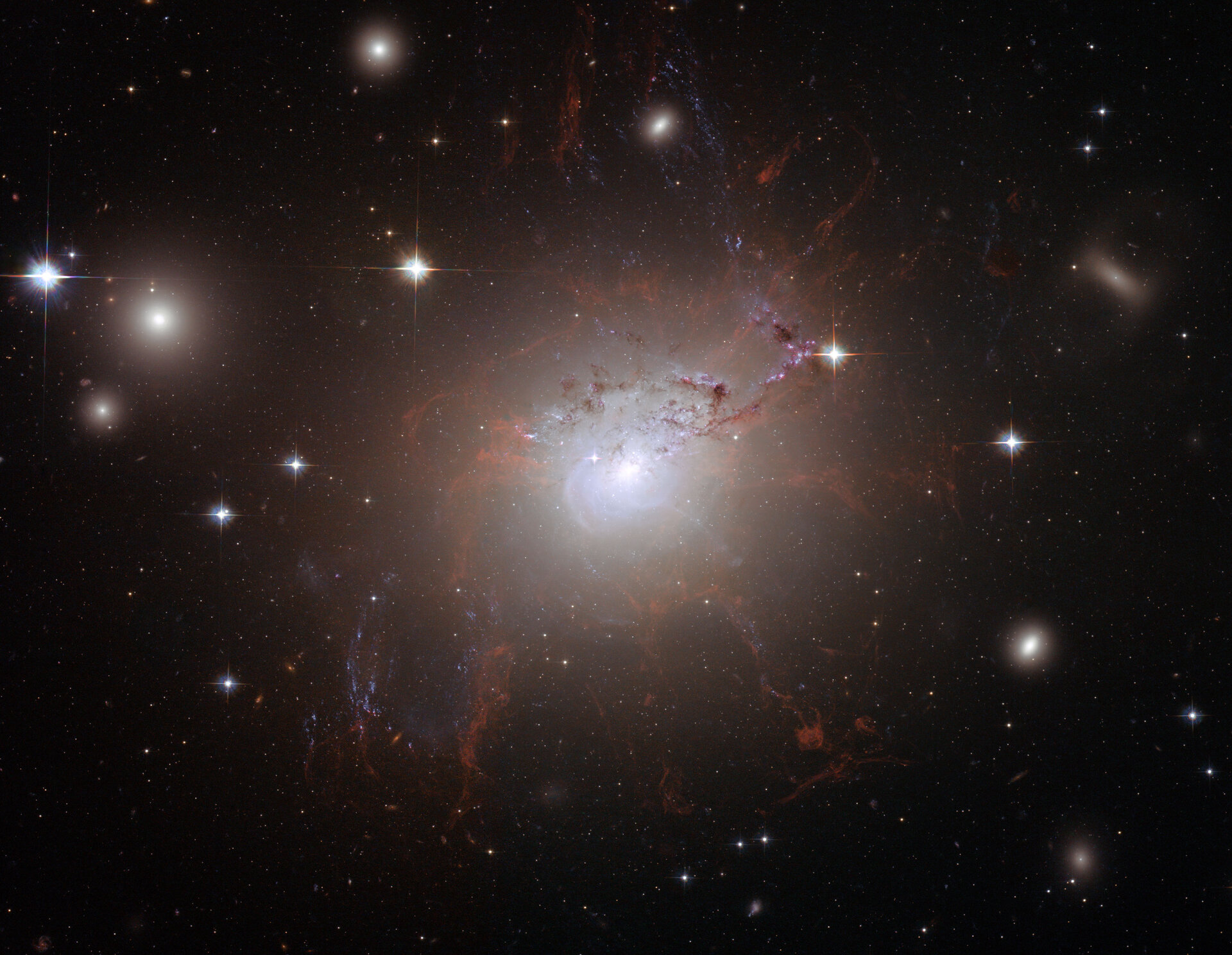
    Magnetic monster in erupting galaxy as seen by Hubble

    Hubble sees magnetic monster in erupting galaxy

    21 August 2008

    The Hubble Space Telescope has found the answer to a long-standing puzzle by seeing the details of giant but delicate filaments shaped by a strong magnetic field around the active galaxy NGC 1275.

    These filaments are the only visible-light manifestation of the intricate relationship between the black hole hosted at the centre of the galaxy and the surrounding cluster gas. They provide important clues about how giant black holes affect their surrounding environment.

    NGC 1275 is one of the closest giant elliptical galaxies. It is an active galaxy lying at the centre of the Perseus Cluster of galaxies. The supermassive black hole at its core blows bubbles of radio-wave emitting material into the surrounding cluster gas. Its most spectacular feature is the lacy filigree of gaseous filaments reaching out beyond the galaxy into the multi-million degree X-ray emitting gas that fills the cluster.


    The full release is available on ESA's Science and Technology pages.

    Notes for editors:

    The Hubble Space Telescope is a project of international cooperation between NASA and ESA.

    For more information:

    Andy Fabian, Institute of Astronomy, University of Cambridge, UK
    E-mail: acf @ ast.cam.ac.uk

    Lars Lindberg Christensen, Hubble/ESA, Garching, Germany
    E-mail: lars @ eso.org

    Rate this

    Views

    Share

    • Currently 0 out of 5 Stars.
    • 1
    • 2
    • 3
    • 4
    • 5
    Rating: 0/5 (0 votes cast)

    Thank you for rating!

    You have already rated this page, you can only rate it once!

    Your rating has been changed, thanks for rating!

    61
    Tweet
    • More about...
    • Hubble overview
    • Hubblecast
    • Related articles
      • Plethora of interacting galaxies on Hubble’s birthday
        • Black hole found in Omega Centauri
          • Exploding star in nearby galaxy
            • Hubble finds first organic molecule on extrasolar planet
              • Hubble discovers 67 gravitationally-lensed galaxies in the distant universe
                • Hubble: One of the youngest and brightest galaxies found
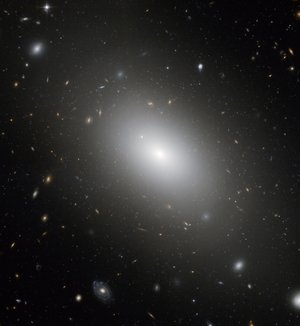
                  • Gargantuan galaxy NGC 1132 - a cosmic fossil?
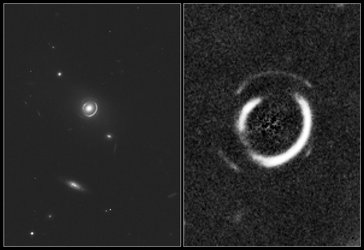
                    • Hubble finds double Einstein ring, and other results
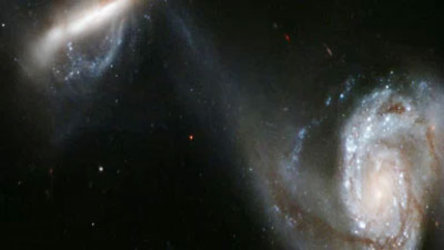
                      • Hubble - graceful dance of interacting galaxies
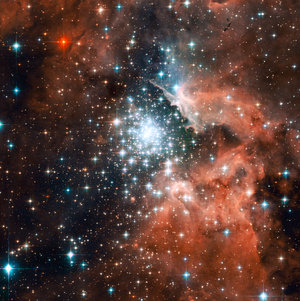
                        • Extreme star cluster in new Hubble images
                        • In depth
                        • This article in depth

    Connect with us

    • RSS
    • Youtube
    • Twitter
    • Flickr
    • G+
    • Facebook
    • Livestream
    • Subscribe
    • App Store
    • ESA Science Twitter

    Follow ESA science

    • LATEST ARTICLES
    • · ESA astronaut Timothy Peake set fo…
    • · Space drives e-mobility
    • · Proba-V opens its eyes
    • · First new Galileo satellite arrive…
    • · Next destination: space
    • FAQ

    • Jobs at ESA

    • Site Map

    • Contacts

    • Terms and conditions