• → European Space Agency

      • Space for Europe
      • Space News
      • Space in Images
      • Space in Videos
    • About Us

      • Welcome to ESA
      • DG's News and Views
      • For Member State Delegations
      • Business with ESA
      • ESA Exhibitions
      • ESA Publications
      • Careers at ESA
    • Our Activities

      • Space News
      • Observing the Earth
      • Human Spaceflight
      • Launchers
      • Navigation
      • Space Science
      • Space Engineering
      • Operations
      • Technology
      • Telecommunications & Integrated Applications
    • For Public

    • For Media

    • For Educators

    • For Kids

    • ESA

    • Integral

    • ESA Science

    • Integral in brief
    • Integral overview
    • Integral factsheet
    • A truly international mission
    • About Integral
    • The spacecraft
    • The launcher
    • The launch site - Baikonur
    • The journey
    • Integral's mission

      • What's special?
      • Why do we observe gamma rays?
      • Observations: Seeing in the gamma-ray wavelengths
      • The atoms that make us
      • The densest objects in the Universe
      • Giant black holes
      • Gamma-ray bursts (GRBs)
    • Multimedia
    • Image gallery
    • Pre-launch images, Sept 2002
    • Pre-launch images, October 2002
    • Video gallery
    • 3D Flash 'model'
    • Make a model

    ESA > Our Activities > Space Science > Integral

    ESA’s ‘rapid reaction force’

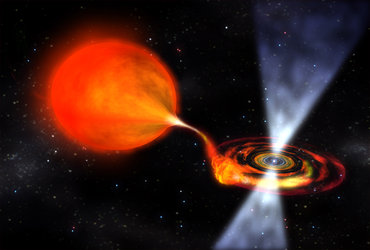
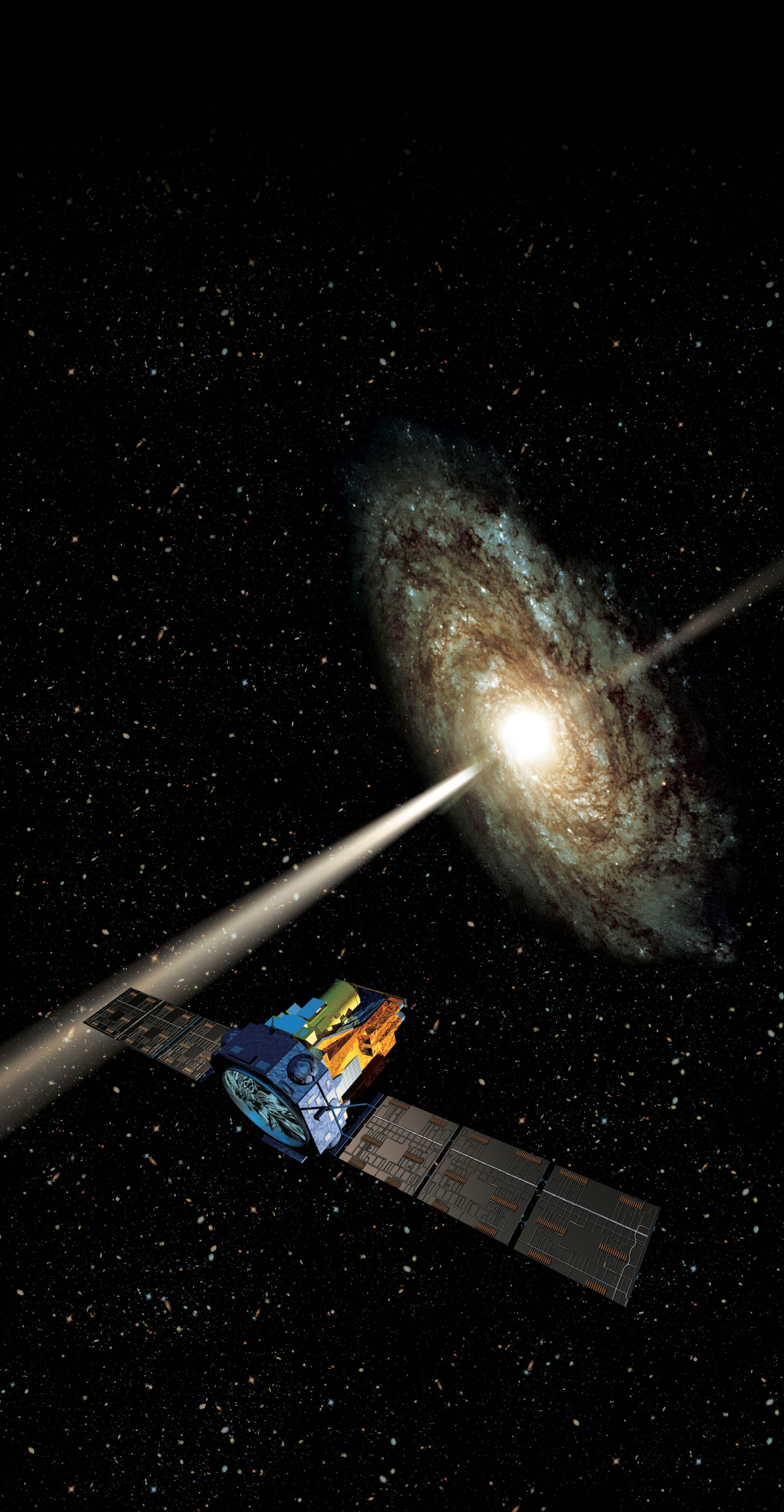
    An artist's impression of the Integral spacecraft
    28 January 2004

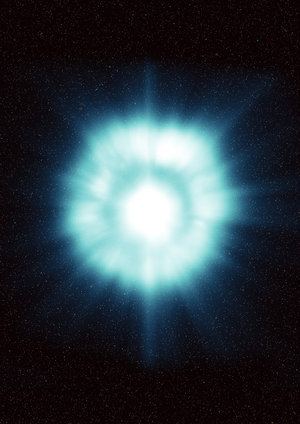
    On 3 December 2003, at 22:01 UT, the blast from a massive cosmic explosion washed over the Earth and ESA’s orbiting gamma-ray observatory, Integral. Seconds later, thanks to some ingenious computer software, astronomers knew about the explosion and exactly where to point their telescopes.

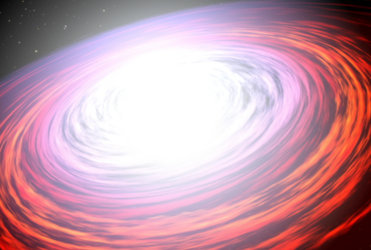
    Gamma-ray bursts explode at random throughout the Universe. They usually last for less than a minute and astronomers believe that they are produced when massive stars explode in distant galaxies.

    Rapid follow-up observations of gamma-ray bursts are crucial because of the speed with which they fade.

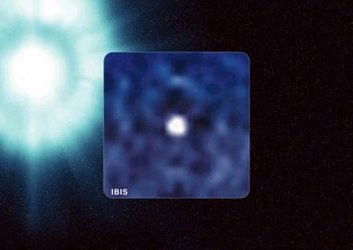
    ESA has set a new record for speed and accuracy with the latest performance of the Integral Burst Alert System (IBAS). As well as the 3 December burst, which IBAS located in 18 seconds, another burst on 6 January 2004 was detected, localised and an alert sent to astronomers in just 12 seconds.

    In both cases, the localisation accuracy was of only three arcminutes, a precision which, using data from other satellites, has so far only been achieved after much longer time delays.


    The IBAS software is the brainchild of Sandro Mereghetti, Istituto di Astrofisica Spaziale e Fisica Cosmica (IASF), Milano, and his collaborators. Although Integral was not originally conceived to be a gamma-ray burst ‘watchdog’, scientists realised that it could perform this task if assisted by sufficiently powerful software.

    The IBAS software, running at the Integral Science Data Centre (ISDC) in Versoix, Switzerland, automatically scans the Integral data, recognising gamma-ray bursts and determining their precise location. Then it instantaneously e-mails the news to astronomers, observatories and automated telescopes around the world.

    It also sends an SMS text message to the cell phones of Mereghetti and other astronomers at both the IASF-Milano and the ISDC. They analyse the data manually, extracting even more information, such as the brightness of the burst, and the way it is fading. On 3 December, Mereghetti was just climbing into bed when his phone rang, signalling that his working day was not yet over!

    Artist's impression of XMM-Newton
    Artist's impression of XMM-Newton

    Many more scientists have already reaped the benefits of such a rapid response. The December burst information was immediately sent also to astronomers controlling another ESA orbiting observatory, XMM-Newton.

    They set about reprogramming the X-ray observatory with a new sequence of observations and commands to study the gamma-ray burst. As a result, within a few hours, they found expanding rings of X-rays around the gamma-ray burst that no one had seen before.

    a flash of X-rays
    EPIC camera shows the expanding rings caused by a flash of X-rays

    During the first year of Integral’s scientific operation, IBAS has seen eight bursts. “We want to see more than that,” says Mereghetti.

    So, the next step for the team is to make the system more sensitive because there are more faint gamma-ray bursts than bright ones.

    IBAS will continue to run throughout Integral’s operational lifetime, which will be until at least 2008.
    Rate this

    Views

    Share

    • Currently 0 out of 5 Stars.
    • 1
    • 2
    • 3
    • 4
    • 5
    Rating: 0/5 (0 votes cast)

    Thank you for rating!

    You have already rated this page, you can only rate it once!

    Your rating has been changed, thanks for rating!

    35
    Tweet
    • Artist's view of Integral
      Artist's view of Integral
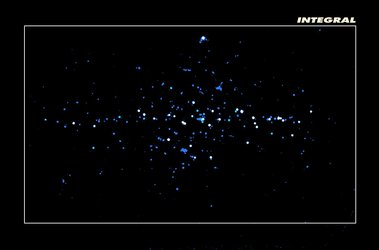
      ESA's gamma-ray astronomy mission
    • More about...
      • Integral factsheet
      • Related articles
        • Observations: Seeing in the gamma-ray wavelengths
          • Observations: Seeing in X-ray wavelengths
            • Observations: Seeing in microwave wavelengths
              • Three satellites needed to bring out ‘shy star’
                • A gamma-ray burst bonanza
                  • Integral's first look at the gamma-ray Universe
                    • Integral rolls back history of Milky Way's super-massive black hole
                      • ESA's Integral solves thirty-year old gamma-ray mystery

    Connect with us

    • RSS
    • Youtube
    • Twitter
    • Flickr
    • G+
    • Facebook
    • Livestream
    • Subscribe
    • App Store
    • LATEST ARTICLES
    • · Rare merger reveals secrets of gal…
    • · Watching for hazards: ESA opens as…
    • · ESA astronaut Timothy Peake set fo…
    • · Space drives e-mobility
    • · Proba-V opens its eyes
    • FAQ

    • Jobs at ESA

    • Site Map

    • Contacts

    • Terms and conditions