• → European Space Agency

      • Space for Europe
      • Space News
      • Space in Images
      • Space in Videos
    • About Us

      • Welcome to ESA
      • DG's News and Views
      • For Member State Delegations
      • Business with ESA
      • ESA Exhibitions
      • ESA Publications
      • Careers at ESA
    • Our Activities

      • Space News
      • Observing the Earth
      • Human Spaceflight
      • Launchers
      • Navigation
      • Space Science
      • Space Engineering
      • Operations
      • Technology
      • Telecommunications & Integrated Applications
    • For Public

    • For Media

      • Media
      • ESA TV
      • Videos for professionals
      • Photos
    • For Educators

    • For Kids

    • ESA

    • Space Science

    • Our Universe
    • About Space Science
    • ESA's 'Cosmic Vision'
    • Science missions
    • Mission navigator
    • Target groups
    • For Media
    • For Scientists
    • For Kids
    • Multimedia
    • Science images
    • Science videos
    • Animations
    • Downloads
    • Sounds from space
    • Resources
    • Reference section
    • Services
    • FAQs
    • Glossary
    • Help
    • Portal terms of use
    • Comments
    • Follow us
    • RSS feeds
    • ESA Sci on Twitter
    • ESA Space Science Images on Flickr
    • ESA 3D on Flickr

    ESA > Our Activities > Space Science

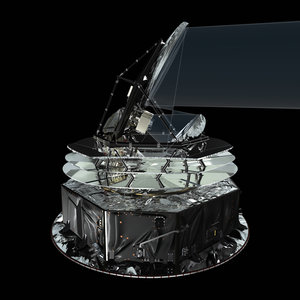
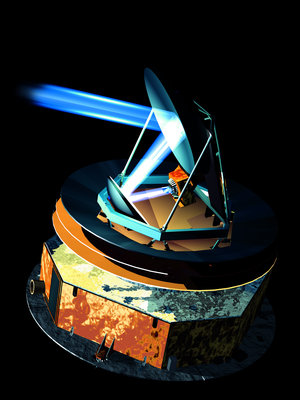
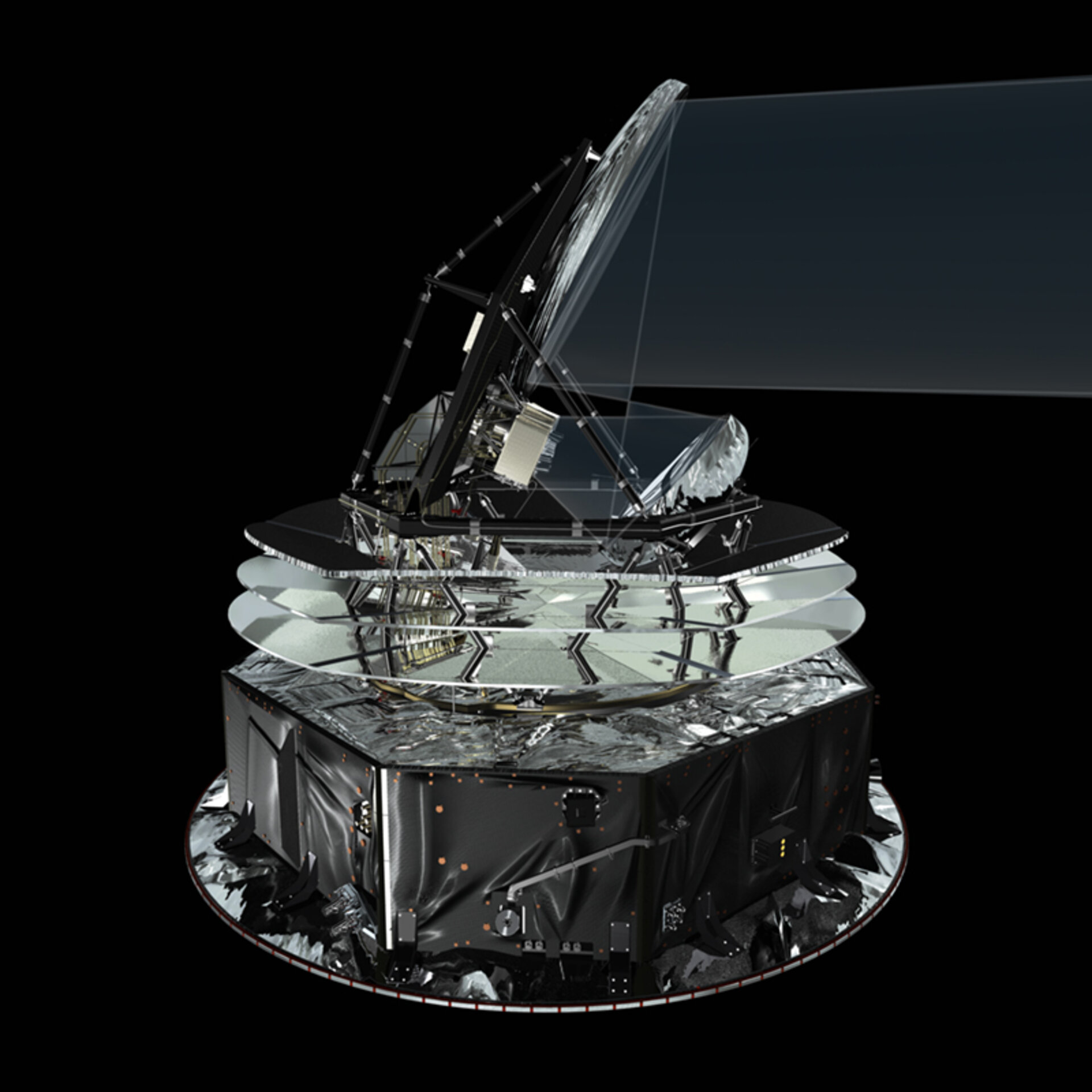
    Planck satellite on view

    Planck satellite and telescope
    31 January 2007

    ESA’s Planck satellite, due to study relic radiation from the Big Bang, is on display for the media tomorrow in Cannes. Images of the spacecraft in all its glory will be published on the web at the end of the press conference.

    The press conference is organised by ESA and Alcatel Alenia Space (AAS), at the AAS facilities in Cannes, France, on 1 February, to mark the completion of the integration of Planck and to present its technological achievements and scientific objectives.

    About Planck

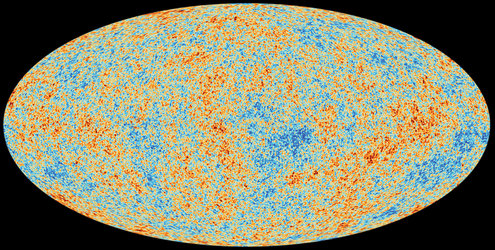
    Planck will make the most accurate maps yet of the microwave background radiation that fills space. It will be sensitive to temperature variations of a few millionths of a degree and will map the full sky in nine wavelengths.

    The immediate outcome of the Big Bang and the initial conditions for the evolution in the universe’s structure are the primary target of this important mission. From the results, a great deal more will be learnt not only about the nature and amount of dark matter, the ‘missing mass’ of the universe, but also about the nature of dark energy and the expansion of the universe itself.

    To address such challenging objectives, Planck will need to operate at very low, stable temperatures. Once in space, its detectors will have to be cooled to temperature levels close to absolute zero (-273.15ºC), ranging from -253ºC to only a few tenths of a degree above absolute zero. The Planck spacecraft thus has to be a marvel of cryotechnology.

    After integration, Planck will start a series of tests that will continue into early-2008. It will be launched by end-July 2008 in a dual-launch configuration with Herschel, ESA’s mission to study the formation of galaxies, stars and planetary systems in the infrared.


    Note to editors

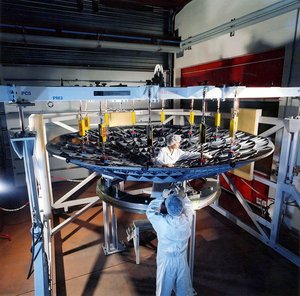
    The Planck spacecraft was built by AAS Cannes, the prime contractor, leading a consortium of industrial partners with the AAS industry branch in Turin, Italy, responsible for the satellite’s service module. ESA and the Danish National Space Centre (Copenhagen, Denmark) are responsible for the hardware provision of Planck’s telescope mirrors, manufactured by EADS Astrium (Friedrichshafen, Germany).

    AAS Cannes is also responsible for the payload module, the platform that hosts the telescope and the two onboard instruments, HFI and LFI. The instruments themselves are being supplied by a consortium of scientists and institutes led by the Institut d'Astrophysique Spatiale at Orsay (France) in the case of HFI, and by the Istituto di Astrofisica Spaziale e Fisica Cosmica (IASF) in Bologna (Italy) in that of LFI.

    There are also numerous subcontractors spread throughout Europe, with several more in the USA.

    For further information, please contact:

    ESA Media Relations Office
    Tel: +33(0)1.53.69.7155
    Fax: +33(0)1.53.69.7690

    Rate this

    Views

    Share

    • Currently 5 out of 5 Stars.
    • 1
    • 2
    • 3
    • 4
    • 5
    Rating: 5/5 (1 votes cast)

    Thank you for rating!

    You have already rated this page, you can only rate it once!

    Your rating has been changed, thanks for rating!

    37
    Tweet
    • More about...
      • Herschel overview
        • Planck overview
        • Related articles
          • Planck satellite to be presented to media
            • Planck instruments integrated – a leap towards launch
              • Planck instruments ready for integration
                • ESA’s Planck satellite builds on Nobel-prize-winning science
                  • ESA’s Herschel and Planck launcher contract signed
                    • Planck telescope behaves well in cold vacuum
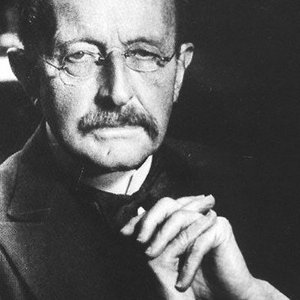
                      • Max Planck: Originator of quantum theory
                        • Travelling back in time
                          • Is the Universe finite or infinite? An interview with Joseph Silk
                            • Observations: Seeing in microwave wavelengths
                              • What are Lagrange points?
                                • Cosmic Microwave Background (CMB) radiation
                                  • The largest telescope mirror ever put into space
                                    • Why infrared astronomy is a hot topic
                                      • Caroline and William Herschel: Revealing the invisible
                                        • L2, the second Lagrangian Point
                                        • Related links
                                        • Integration of Planck's Two Instruments
                                        • Arianespace
                                        • About Ariane 5 ECA
                                        • Ariane 5 ECA

    Connect with us

    • RSS
    • Youtube
    • Twitter
    • Flickr
    • G+
    • Facebook
    • Livestream
    • Subscribe
    • App Store
    • ESA Science Twitter

    Follow ESA science

    • LATEST ARTICLES
    • · Rare merger reveals secrets of gal…
    • · Watching for hazards: ESA opens as…
    • · ESA astronaut Timothy Peake set fo…
    • · Space drives e-mobility
    • · Proba-V opens its eyes
    • FAQ

    • Jobs at ESA

    • Site Map

    • Contacts

    • Terms and conditions