• → European Space Agency

      • Space for Europe
      • Space News
      • Space in Images
      • Space in Videos
    • About Us

      • Welcome to ESA
      • DG's News and Views
      • For Member State Delegations
      • Business with ESA
      • ESA Exhibitions
      • ESA Publications
      • Careers at ESA
    • Our Activities

      • Space News
      • Observing the Earth
      • Human Spaceflight
      • Launchers
      • Navigation
      • Space Science
      • Space Engineering
      • Operations
      • Technology
      • Telecommunications & Integrated Applications
    • For Public

    • For Media

      • Media
      • ESA TV
      • Videos for professionals
      • Photos
    • For Educators

    • For Kids

    • ESA

    • Rosetta

    • ESA Science

    • About Rosetta

      • Europe's comet chaser
      • Why 'Rosetta'?
    • About the spacecraft

      • The Rosetta orbiter
      • Orbiter: Instruments
      • The Rosetta lander
      • Lander: Instruments
    • About the journey

      • The long trek
      • Debris of the Solar System: Asteroids
      • Asteroid (2867) Steins: a portrait
      • Life and survival in deep space
      • Long-distance communication
      • The Rosetta ground segment
    • About the arrival

      • Comets - an introduction
      • Comet 67P/Churyumov- Gerasimenko
      • Comet rendezvous
      • Giotto - ESA's first comet mission
    • Meet the team
    • Mission Manager
    • Project Scientist
    • Multimedia
    • VideoTalk
    • 3D Flash 'model'
    • Rosetta images
    • Rosetta videos
    • Rosetta Animations
    • Rosetta wallpaper
    • Life of a comet
    • Services
    • Frequently asked questions
    • Comments

    ESA > Our Activities > Space Science > Rosetta

    Tempel 1: Biography of a comet

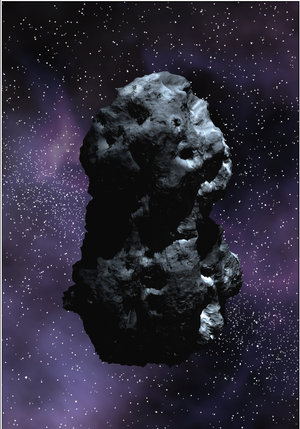
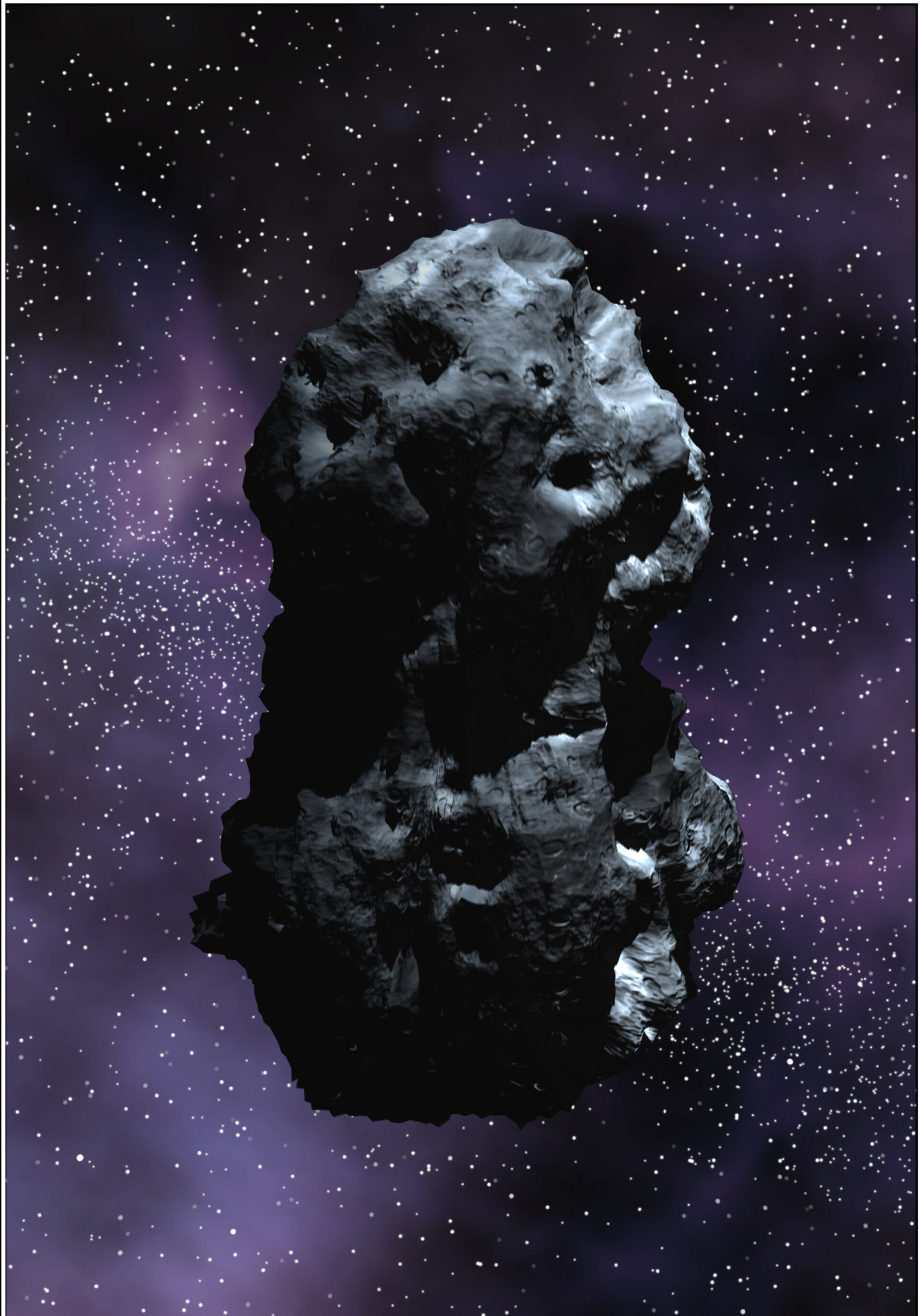
    Artist’s impression of comet 9P/Tempel 1.
    3 June 2005

    NASA’s Deep Impact mission will explore the interior Comet Tempel 1 by creating a crater with an ‘impactor’ probe. But the nature of Tempel 1 is still virtually unknown…

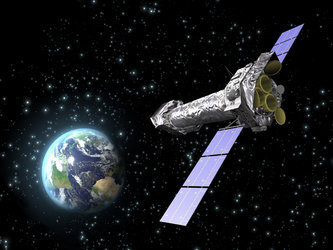
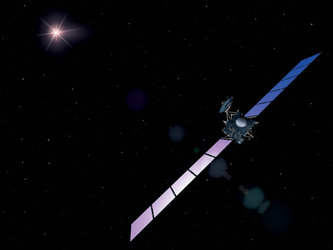
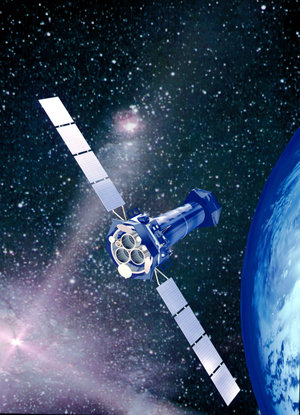
    With the strong community of European comet experts, ESA will jointly watch the comet and the impact event with its Rosetta comet-chaser spacecraft, its XMM-Newton space observatory, its Optical Ground Station in Tenerife, Spain, and the NASA/ESA Hubble Space Telescope.

    Discovery

    The Deep Impact mission's target, full name Comet 9P/Tempel 1, was discovered on 3 April 1867 by German Ernst Tempel while working in Marseilles, France, visually searching for comets.

    Tempel was born on 4 December 1821 in Saxony, one of 12 children. He began work as a lithographer in Copenhagen, but became interested in astronomy and his first discovery occurred on 2 April 1859 when he discovered the comet of 1859.

    In March 1860, Tempel moved to Marseilles and remained attached to the Observatory there until the end of 1861. Later became assistant to Italian astronomer Giovanni Schiaparelli at the Brera Observatory, Milan.

    Tempel observed and recorded a number of nebulae and, along with the American Horace Tuttle, he discovered the parent comet of the Leonid meteors in 1866 (Comet 55P/Tempel-Tuttle).

    Among his other comet discoveries were three more periodic comets, 11D/Tempel-Swift in 1869 and comets 9P/Tempel 1 and 10P/Tempel 2 in 1873. As well as discovering a total of 13 comets, Tempel also discovered five minor planets.


    Characteristics

    Comet 9P/Tempel 1 as seen by ESO telescope

    Tempel 1 is a short-period comet, meaning that it moves around the Sun in an elliptical orbit between the planets Mars and Jupiter in a relatively short time. It was the ninth periodic comet to be recognised as such, hence the 9P.

    The comet has made many passages through the inner Solar System, which makes it a good target to study evolutionary changes in the ‘mantle’, or upper crust.

    Tempel 1’s orbit lies between the orbits of Mars and Jupiter. The orbit of the comet has varied in the past and will change in the future because of close approaches with the planet Jupiter. When it was discovered, the period was 5.68 years, now it is about 5.5 years
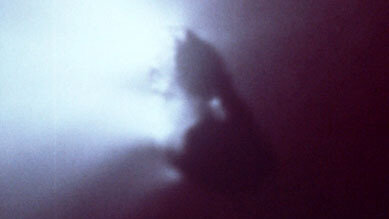
    Comet Halley's nucleus as seen by Giotto
    Comet Halley's nucleus as seen by Giotto

    While we can calculate the orbital parameters, determining the size and shape of the nucleus has been difficult because we can't see the nucleus. However, based on a variety of observations, we believe the nucleus is roughly 14.4 by 4.4 kilometres in size, more elongated than spherical.

    Earth-based observations indicate it makes one full rotation about its axis every 41 hours. It has mass somewhere between 10 000 and 250 000 million tons, and a density of probably between 300 and 900 kilograms per cubic metre (between 3/10 and 9/10 the density of water on Earth).

    In fact, we've only seen the nuclei for three comets - Halley, Borrelly and Wild 2. In July 2005, we hope to add to this small collection with a very detailed view of the nucleus of Tempel 1!

    For more information:

    Gerhard Schwehm, ESA Rosetta Project Scientist
    E-mail: gerhard.schwehm @ esa.int

    Rate this

    Views

    Share

    • Currently 0 out of 5 Stars.
    • 1
    • 2
    • 3
    • 4
    • 5
    Rating: 0/5 (0 votes cast)

    Thank you for rating!

    You have already rated this page, you can only rate it once!

    Your rating has been changed, thanks for rating!

    126
    Tweet
    • ESA's comet chaser
    • More about...
      • Rosetta factsheet
        • XMM-Newton factsheet
          • Hubble factsheet
          • NASA Deep Impact
          • ESO Deep Impact news
          • Related articles
            • Life of a comet
              • Tempel 1: Biography of a comet
                • Rosetta monitors Deep Impact
                  • XMM-Newton to observe Deep Impact
                    • Hubble sees outburst from Deep Impact comet
                      • ESA observes Deep Impact from Earth
                        • Dust and gas from Comet 9P/Tempel 1 seen by ESA OGS
                          • Tempel 1 is weak X-ray source, XMM-Newton confirms

    Connect with us

    • RSS
    • Youtube
    • Twitter
    • Flickr
    • G+
    • Facebook
    • Livestream
    • Subscribe
    • App Store
    • LATEST ARTICLES
    • · Rare merger reveals secrets of gal…
    • · Watching for hazards: ESA opens as…
    • · ESA astronaut Timothy Peake set fo…
    • · Space drives e-mobility
    • · Proba-V opens its eyes
    • FAQ

    • Jobs at ESA

    • Site Map

    • Contacts

    • Terms and conditions