Some Cassini-Huygens science highlights
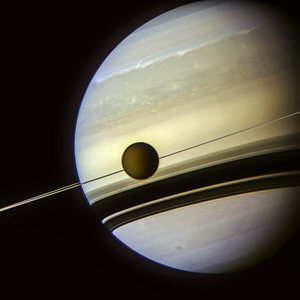
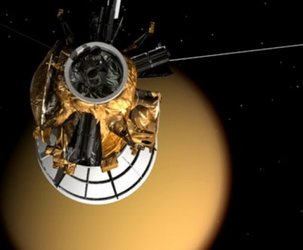
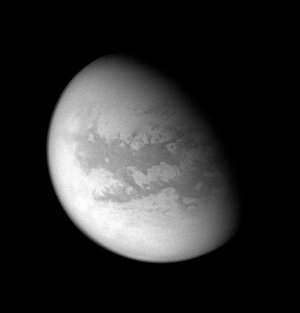
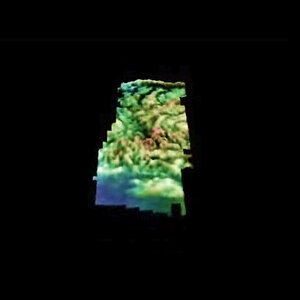
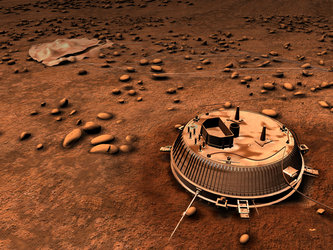
One of the major highlights of the mission so far is clearly the lifting of the veil on smog-covered Titan by ESA's Huygens probe, but here are some other highlights from Cassini-Huygens.
'Spiral arm' ring and spokes

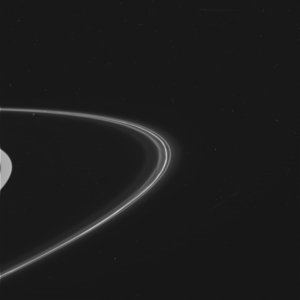
Cassini scientists studying Saturn's rings have made new findings. One of their biggest surprises is that a spiral ring encircles the planet like a spring. This unexpected ‘spiral arm’ feature exists in near the F ring and actually crosses the F ring's orbit.
There are straw-like clumps several kilometres long in the A ring, an oxygen atmosphere just above the rings, and evidence for slowly rotating ring particles.
‘Spokes’ in Saturn's B ring, as seen by NASA's Voyager spacecraft, had disappeared but by the end of August were seen again. The spokes returned earlier than expected by current models (2007), and their early return is challenging our understanding of the mechanisms that create them.
Clouds below atmosphere's surface

Cassini scientists have discovered an unexpected menagerie of clouds lurking in the depths of Saturn's complicated atmosphere. These clouds are deep in the atmosphere, about 30 kilometres underneath the upper clouds usually seen on Saturn.
They come in a large variety of sizes and shapes, including circular and donut shapes, and also behave differently from those in the upper atmosphere. They are made of either ammonium hydrosulphide or water, but not ammonia, as in the upper clouds.
Phoebe is a captured moon
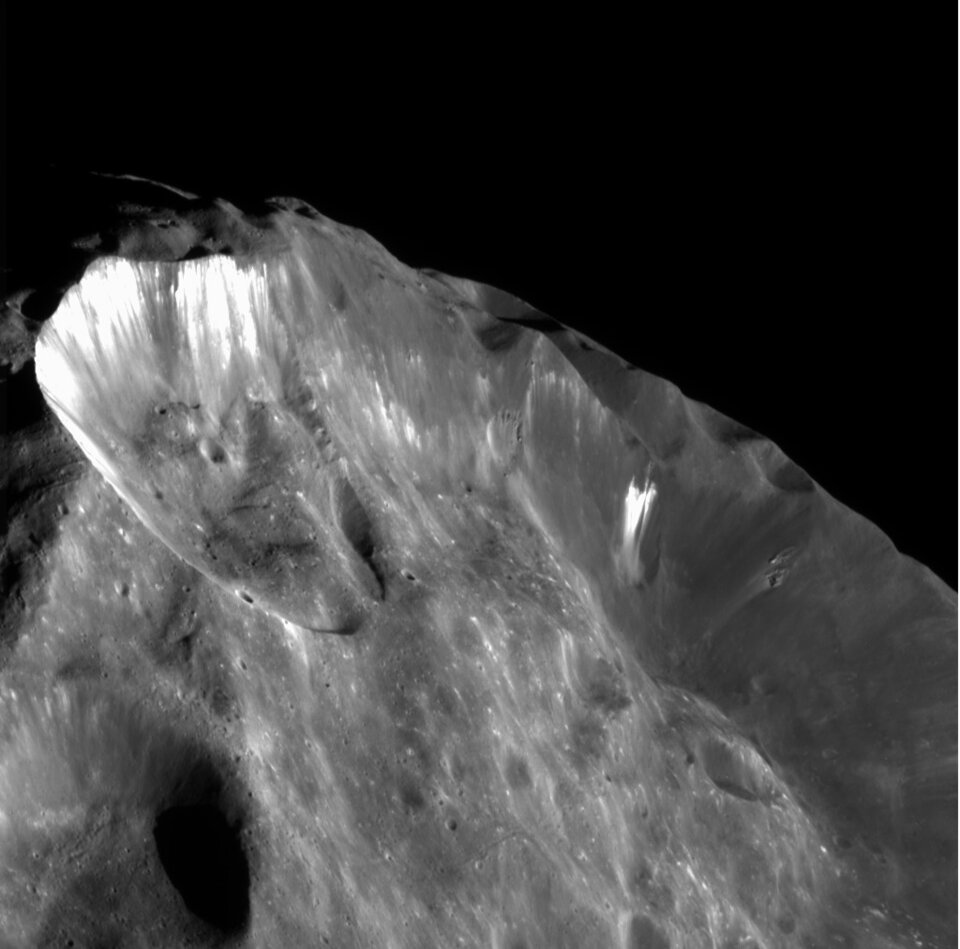
Cassini returned our first close-up view of Phoebe, a crater-scarred moon. It has large landslides revealing bright water ice on crater walls and patchy clustering of silicate and organic material.
The volatile ices tell scientists that Phoebe must have formed in the outer Solar System and then was captured by Saturn's gravity.
Northern hemisphere is blue

The entire northern hemisphere of Saturn has a completely new look since the Voyager encounters. It now appears deep blue, much like the deep, clear atmospheres of Uranus and Neptune.
The shadow of the rings on the northern hemisphere probably cools it down, so the tan clouds sink to depths where they are no longer visible. Nothing like this had ever been suspected from previous observations.
Powerful lightning storms - ten thousand times stronger than on Earth - occur in huge, deep thunderstorm columns nearly as large as the entire Earth.
Enceladus has atmosphere

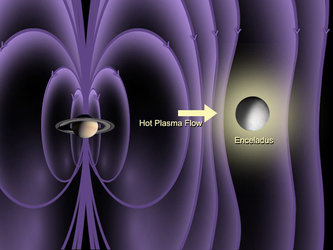
The tiny moon Enceladus seems to have a tenuous atmosphere which may imply internal activity.
It was first discovered in magnetic field data, but confirmed later by other data obtained during the lowest ever fly-by made by Cassini (175 kilometres altitude).
Cassini then spotted a dramatic warm spot centred on the south pole of Enceladus, that is probably a sign of internal heat leaking out of the icy moon.
Iapetus and Dione

Iapetus, the two-faced moon, has an equatorial mountain range on the dark side, that is 20 kilometres high in some places, more than twice the height of Mount Everest.
Dione's mysterious wispy terrain is revealed to be tectonic fractures.
New objects and changes in rings

Saturn's F ring continues to change. A nearby moon, Prometheus, was imaged stealing particles from the ring's strands. A new moon was discovered lying in, and causing, the Keeler Gap.
A number of objects have been found (and lost) in the F ring region, which may be transient clumps of debris. Clumpy ringlets in the Encke Gap also evolve as they interact with Pan, the Encke moonlet, and probably other local objects.
Magnetic rotation slowing down

Saturn’s magnetic rotation appears to be slowing down. Measurements of Saturn’s kilometric radiation, used by Voyager and Cassini to determine an internal rotation rate for Saturn, show that Saturn's rotation rate today appears to be six minutes slower than the rate measured by Voyager.
The actual slowing down of the planet is not likely, so this observation is thought to mean that the Saturn kilometric radiation might be only loosely coupled to the deep rotation rate, leaving scientists uncertain as to just what it is.
New radiation belt
A new and completely unexpected radiation belt was discovered around Saturn between the inner edge of the D ring and the top of Saturn's atmosphere.
For more information:
Jean-Pierre Lebreton, ESA Huygens Mission Manager
E-mail: jplebret @ rssd.esa.int
Enrico Flamini, ASI Programme Manager
E-mail: enrico.flamini @ asi.it
Carolina Martinez, NASA Jet Propulsion Laboratory, Pasadena, California, USA
Tel: 001 818 354 9382