Movie of Saturn's two-faced moon
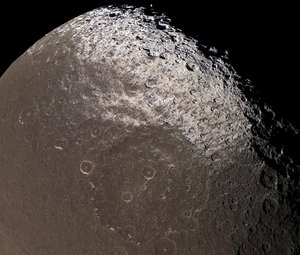
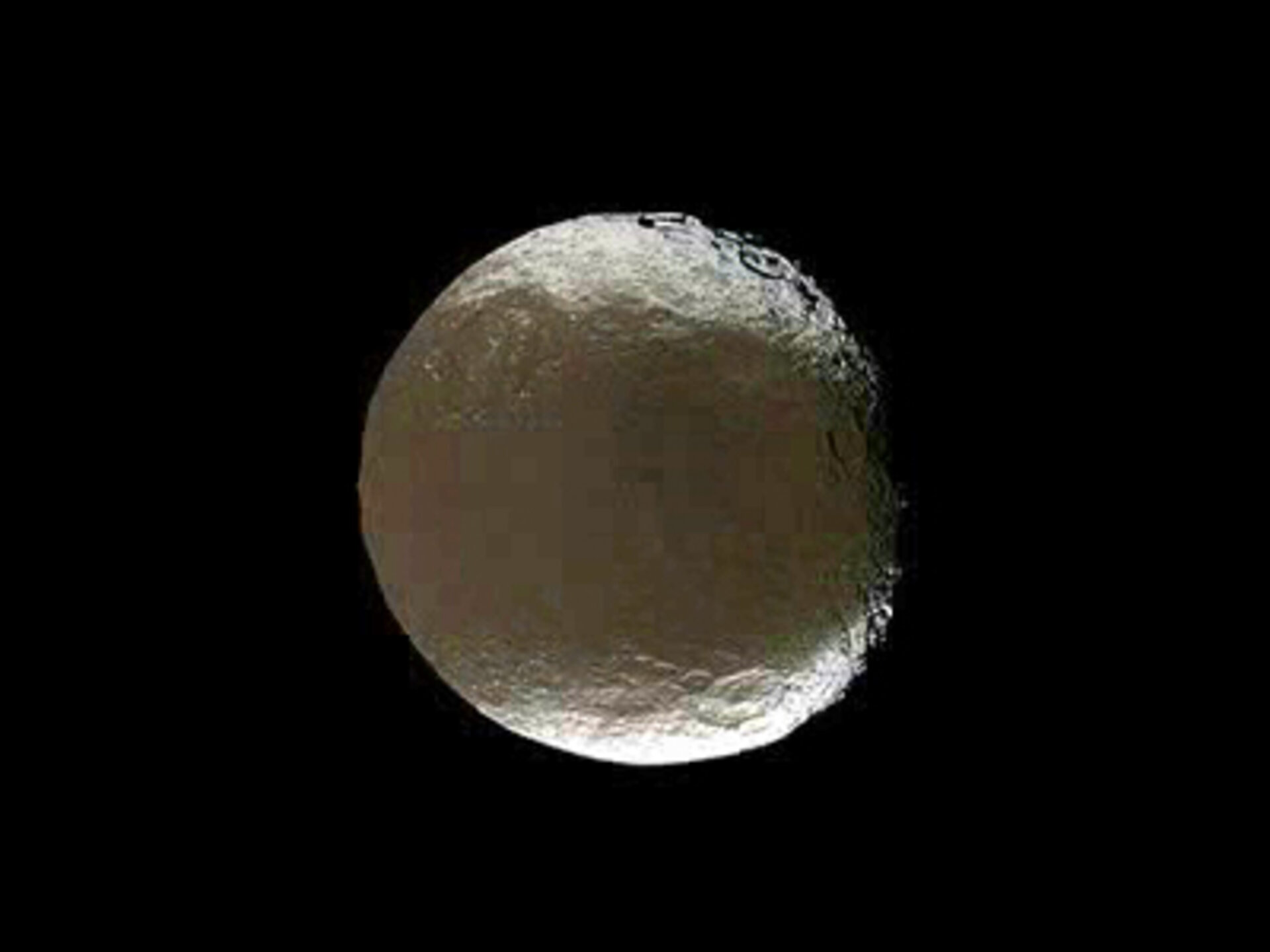
Saturn's two-faced moon Iapetus tilts and rotates in this mesmerizing movie sequence of images acquired during the NASA/ESA/ASI Cassini spacecraft's close encounter on 12 November 2005.
The encounter begins with Cassini about 850 000 kilometres from Iapetus. Cassini approached over the moon's northern hemisphere, allowing excellent views of a 575-kilometre-wide impact basin in north-eastern Cassini Regio.
Also prominent in these images is a 380-kilometre-wide basin to the north-west of the larger basin, in the transition zone between Cassini Regio and a brighter Roncevaux Terra, with its 150-kilometre-wide crater Roland (top, with prominent central peak).
The movie takes Cassini to its closest approach, at about 415 000 kilometres from Iapetus, and then looks back at the moon's receding crescent. The sequence ends with Cassini at a distance of about 460 000 kilometres from the moon. Iapetus is 1468 kilometres across.
The Cassini-Huygens mission is a co-operative project between NASA, ESA and ASI, the Italian space agency.