Rosetta comet probe enters hibernation in deep space
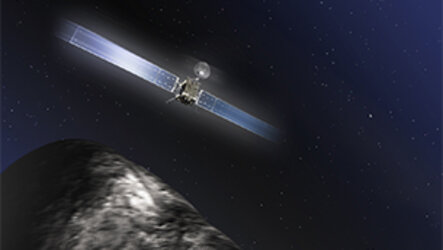
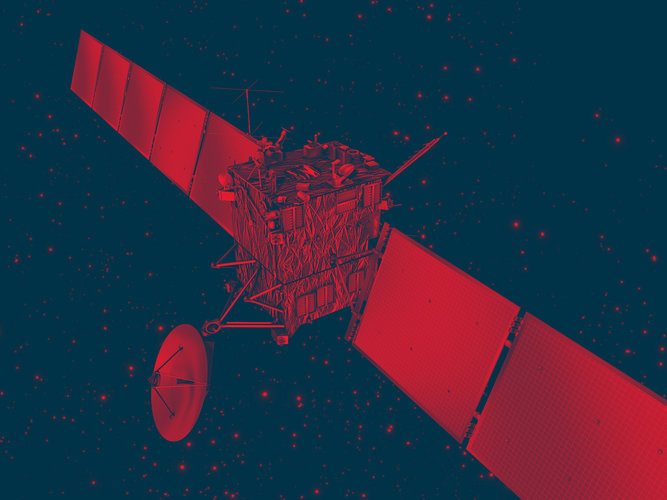
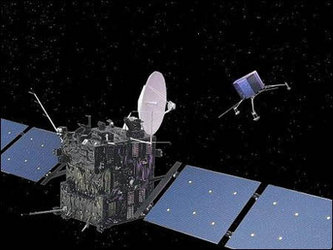
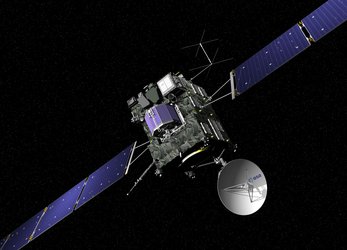
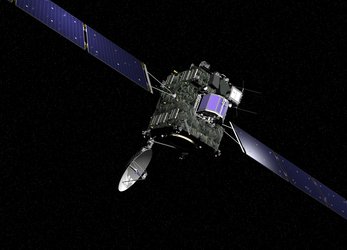
The final command placing ESA's Rosetta comet-chaser into deep-space hibernation was sent earlier today. With virtually all systems shut down, the probe will now coast for 31 months until waking up in 2014 for arrival at its comet destination.
Today's dramatic event marks the end of the hugely successful first phase of Rosetta's ten-year cruise and the start of a long, dark hibernation during which all instruments and almost all control systems will be silent.
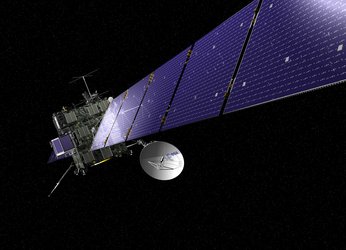
The deep sleep is made necessary by the craft's enormous distance from the Sun and the weakness of the sunlight falling on its solar panels, which cannot produce enough electricity to power the probe fully.
Arcing through millions of kilometres of space
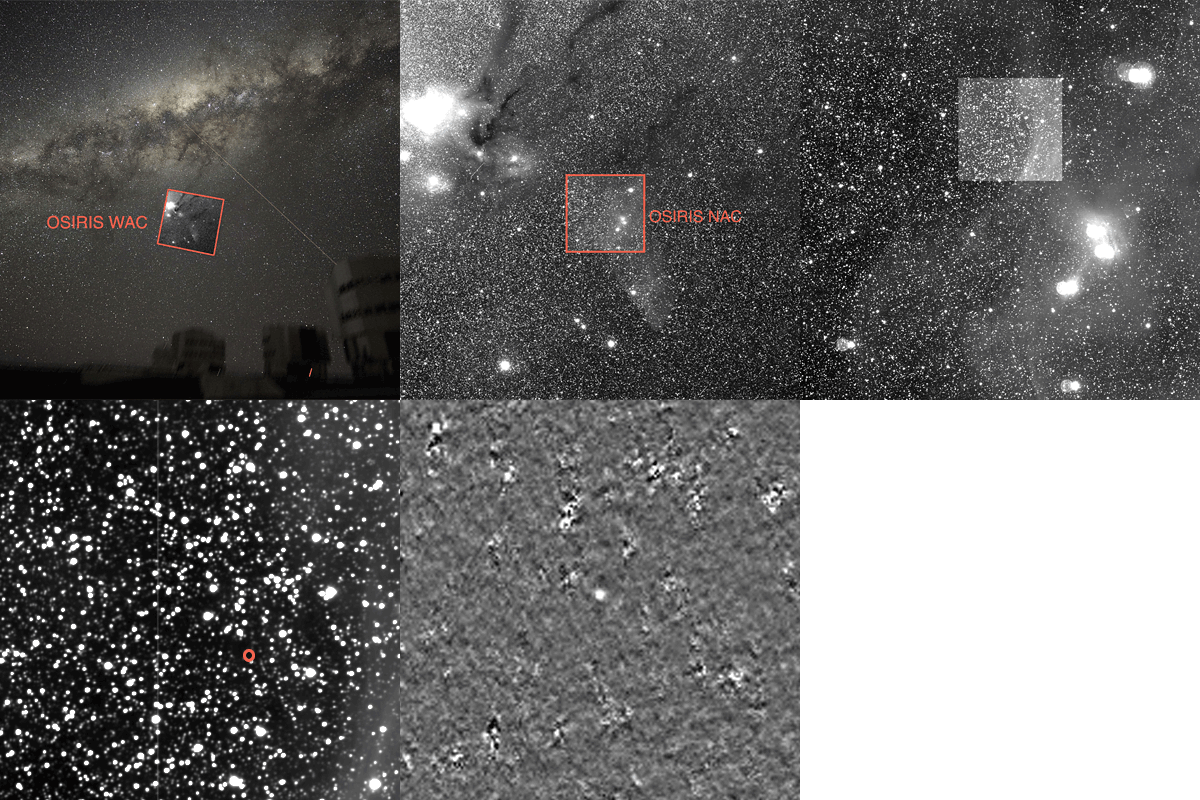
Between now and January 2014, Rosetta will arc unattended through millions of kilometres of cold, distant space, heading toward a rendezvous with 67-P/Churyumov-Gerasimenko.
Only the computer and several heaters will remain active. These will be automatically controlled to ensure that the entire satellite doesn't freeze as its orbit takes it from 660 million km from the Sun out to 790 million km and back between now and 2014.
"We sent the command via NASA's 70 m Deep Space Network station in Canberra, Australia, ensuring the signal was transmitted with enough power to reach Rosetta, which is now 549 million km from Earth," said ESA's Spacecraft Operations Manager Andrea Accomazzo.
"We'll monitor via ESA's 35 m station at New Norcia in Australia for a few days to see if any problems occur, but we expect to receive no radio signal until 2014. Rosetta's on her own now."
Wake up call in 2014
On 20 January 2014, a timer will wake the slumbering spacecraft, which will then transmit a signal to Earth to announce its revival.
Mission controllers will then spend several weeks gradually warming up and reactivating the spacecraft in preparation for its rendezvous with the comet in July 2014.
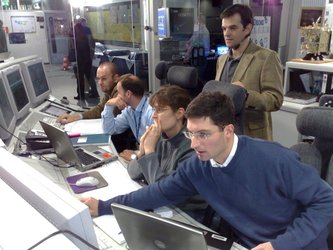
Mission controllers at ESOC, ESA's Space Operations Centre, Darmstadt, have spent most of the past year preparing for hibernation.
A special hibernation mode of the spacecraft was designed by engineers at EADS Astrium, the main industrial prime contractor that built Rosetta, to allow it to survive the large distances from the Sun during its cruise.
All of the scientific instruments were switched off by the end of March. In April and May, with Rosetta orbiting at more than 600 million km from the Sun, tests were conducted with the solar arrays to confirm that sufficient power would be available for today's hibernation.
Final shut-down command sent today
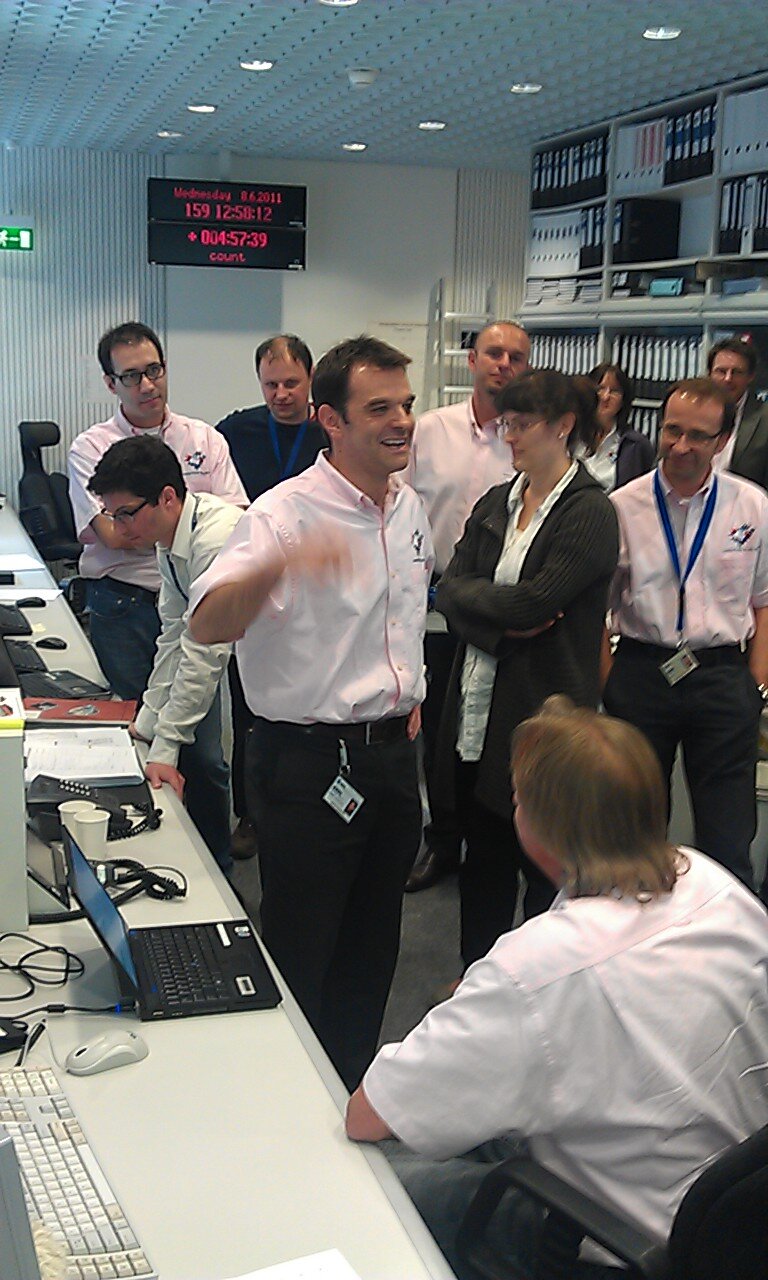
At 08:00 UT (10:00 CEST) today, Rosetta automatically started spinning, which will stabilise the probe while the normal attitude control system is off throughout hibernation, and at 12:58 UT (14:58 CEST) the final shut-down command was sent. Confirmation of successful entry into hibernation came at 14:13 UT (16:13 CEST) when radio contact was lost, as expected.
"With flybys of asteroids Steins in 2008 and Lutetia in 2010, Rosetta has already delivered excellent scientific results," says Paolo Ferri, Head of ESOC's Solar and Planetary Mission Operations Division.
"Hibernation is a necessary step to reach the final target. We are now looking forward to 2014, when Rosetta becomes the first spacecraft to track the life of a comet as it arcs in toward the Sun."