XMM-Newton detects water on Tempel 1
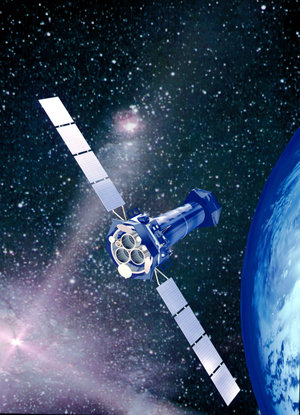
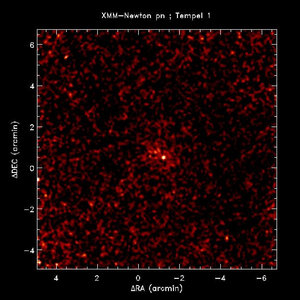
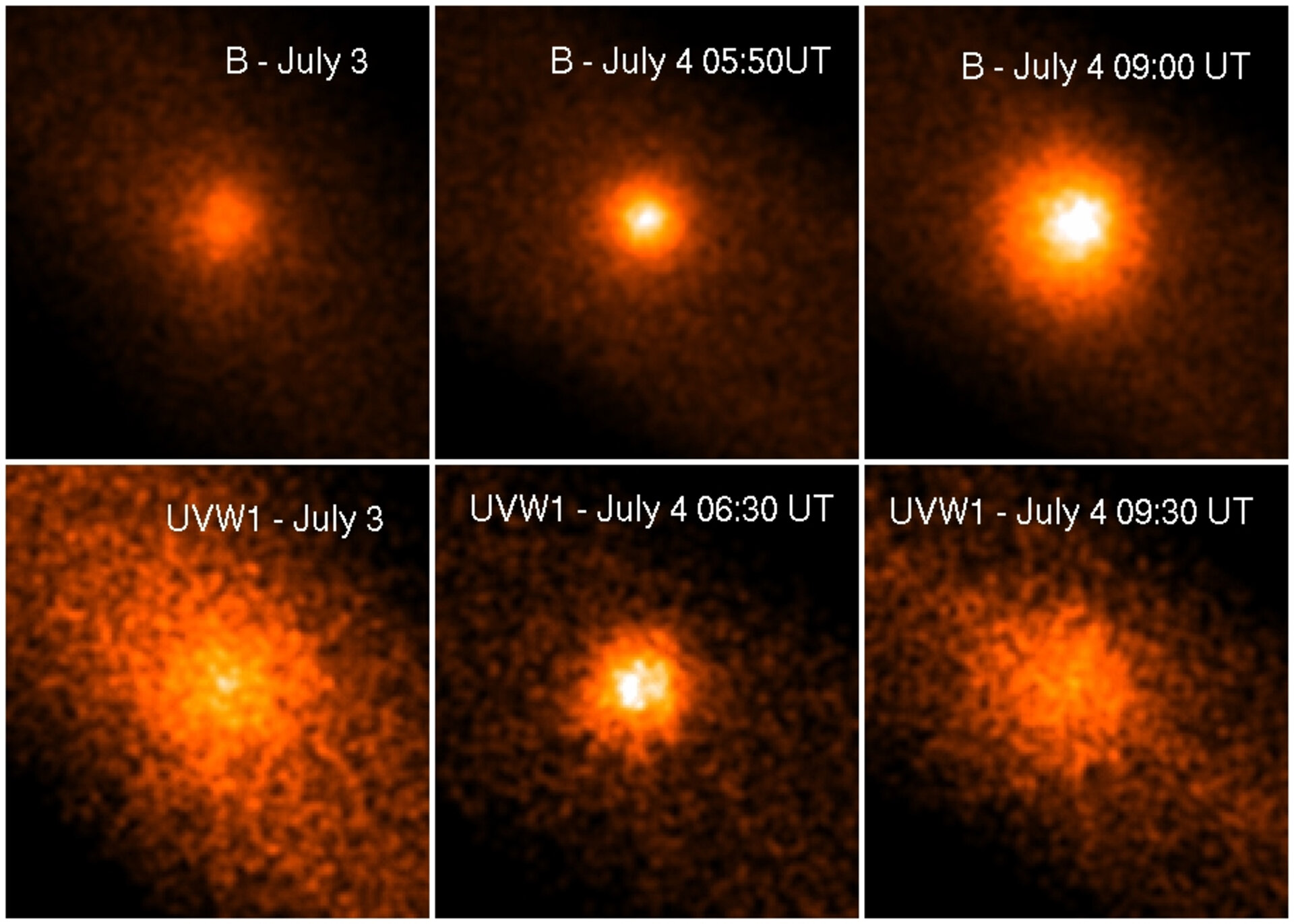
These images, taken by the Optical Monitor on board ESA's XMM-Newton observatory on 3 and 4 July 2005, show a comparison between the states of the comet before and just after impact.
The images were taken in the blue (top) and ultraviolet channels (bottom) of the instrument. The ultraviolet images show the emissions of hydroxyl ions, the direct decay product of water.
About 1.5 hours after the impact, the brightness of hydroxyl groups is increased by a factor of about five. Later, about 4.5 hours after the impact the ultraviolet emission is decreased again which indicates that the peak has passed.
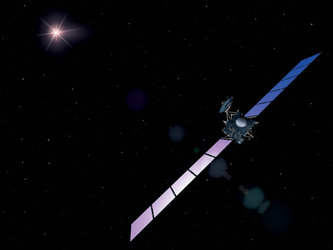
The presence of water in Tempel 1 is consistent with preliminary measurements of the composition of the comet made last week by the ALICE instrument on ESA's Rosetta spacecraft.
For more information:
Rita Schulz, Principal Investigator for XMM-Newton Tempel 1 observations, ESA-ESTEC (The Netherlands)
E-mail: rita.schulz @ esa.int
Norbert Schartel, ESA XMM-Newton Project Scientist, ESAC (Spain)
E-mail: norbert.schartel @ sciops.esa.int