|  |  |  |  |
| |  | |  | |
 |
| About Rosetta About the spacecraft About the journey About the arrival Meet the team Project ManagerProject ScientistMultimedia VideoTalk3D Flash 'model'Rosetta imagesRosetta videosRosetta AnimationsRosetta wallpaperLife of a cometServices Frequently asked questionsComments
|  |  |  |  | | | News |  | Smile! Rosetta's self-portrait
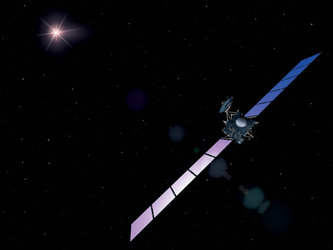
Rosetta's self-portrait in space 18 June 2004 ESA's Rosetta comet-chaser has photographed itself in space at a distance of 35 million kilometres from Earth. The CIVA imaging camera system on the Philae lander returned this image as part of its testing in May 2004. The back of a solar panel is seen here, with contours on the panel are illuminated by sunlight and surfaces of the spacecraft main body are recognisable at lower right.
The CIVA imaging system consists of six identical micro-cameras which will take panoramic pictures of the comet's surface, when Rosetta arrives at its target in ten years' time. A spectrometer will also study the composition, texture and albedo (reflectivity) of samples collected from the surface.
| |
|  | ESA's comet chaser More about... Rosetta factsheetXMM-Newton factsheetHubble factsheetNASA Deep ImpactESO Deep Impact newsRelated articles Life of a cometTempel 1: Biography of a cometRosetta monitors Deep ImpactXMM-Newton to observe Deep ImpactHubble sees outburst from Deep Impact cometESA observes Deep Impact from EarthDust and gas from Comet 9P/Tempel 1 seen by ESA OGSTempel 1 is weak X-ray source, XMM-Newton confirms
|