ESA’s Integral and XMM-Newton missions extended
ESA’s Science Programme Committee has extended operations of the highly successful astronomical observatories Integral and XMM-Newton for four years, until 16 December 2010 and 31 March 2010 respectively.
As usual, there will be a review of the scientific performance and of the missions status in another two years' time, around autumn 2007.
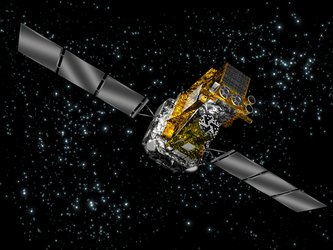
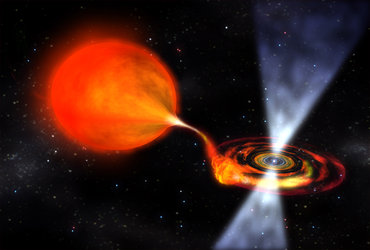
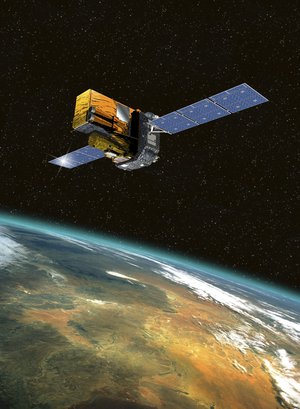
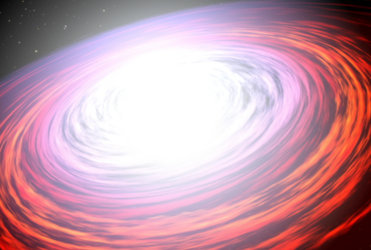
The Integral gamma-ray observatory was launched on 17 October 2002, and has been providing ever since an increasingly detailed insight into some of the most energetic phenomena in the Universe. These include the births and deaths of stars, supermassive black holes, neutron stars, the annihilation of matter and anti-matter, and gamma-ray bursts.
Integral is also conducting of the first detailed gamma-ray mapping of the galactic plane, and studying extra-galactic gamma-ray sources with unprecedented sensitivity.
Having already amassed a large number of scientific results and publications, the latest extension will provide even more opportunities for the scientists hoping to investigate many of the scientific issues being addressed by Integral.
With its four instruments (a gamma-ray imager and spectrometer, an X-ray monitor and an optical camera), the Integral observatory displays a unique combination of outstanding sensitivity to faint details, spectral resolution and imaging capability.

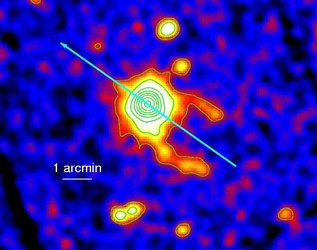
The X-ray observatory XMM-Newton was launched on 10 December 1999. Thanks to its large effective area and high throughput, it is providing important scientific results which continue to break new ground in many key areas of X-ray astrophysics.
It provides observations of all kinds of astronomical objects starting from comets and planets in our Solar System up to the most distant quasars, which are observed at a time when the Universe was only 7% of its current age (13 700 million years).
With its six instruments (three X-ray cameras, two spectrometers and a UV/Optical monitor), which operate simultaneously, the XMM-Newton observatory provides a state-of-the-art high-throughput facility featuring high spectral resolution and excellent sensitivity to provide high-quality spectra of both point and spatially extended sources.
For more information:
Chris Winkler, ESA Integral Project Scientist
E-mail: christoph.winkler @ esa.int
Norbert Schartel, ESA XMM-Newton Project Scientist
E-mail:norbert.schartel @ esa.int