Planck satellite to be presented to media
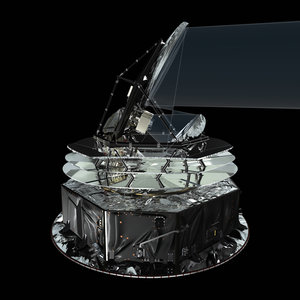
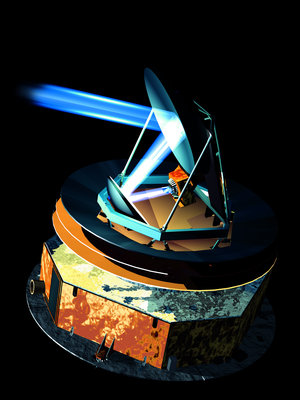
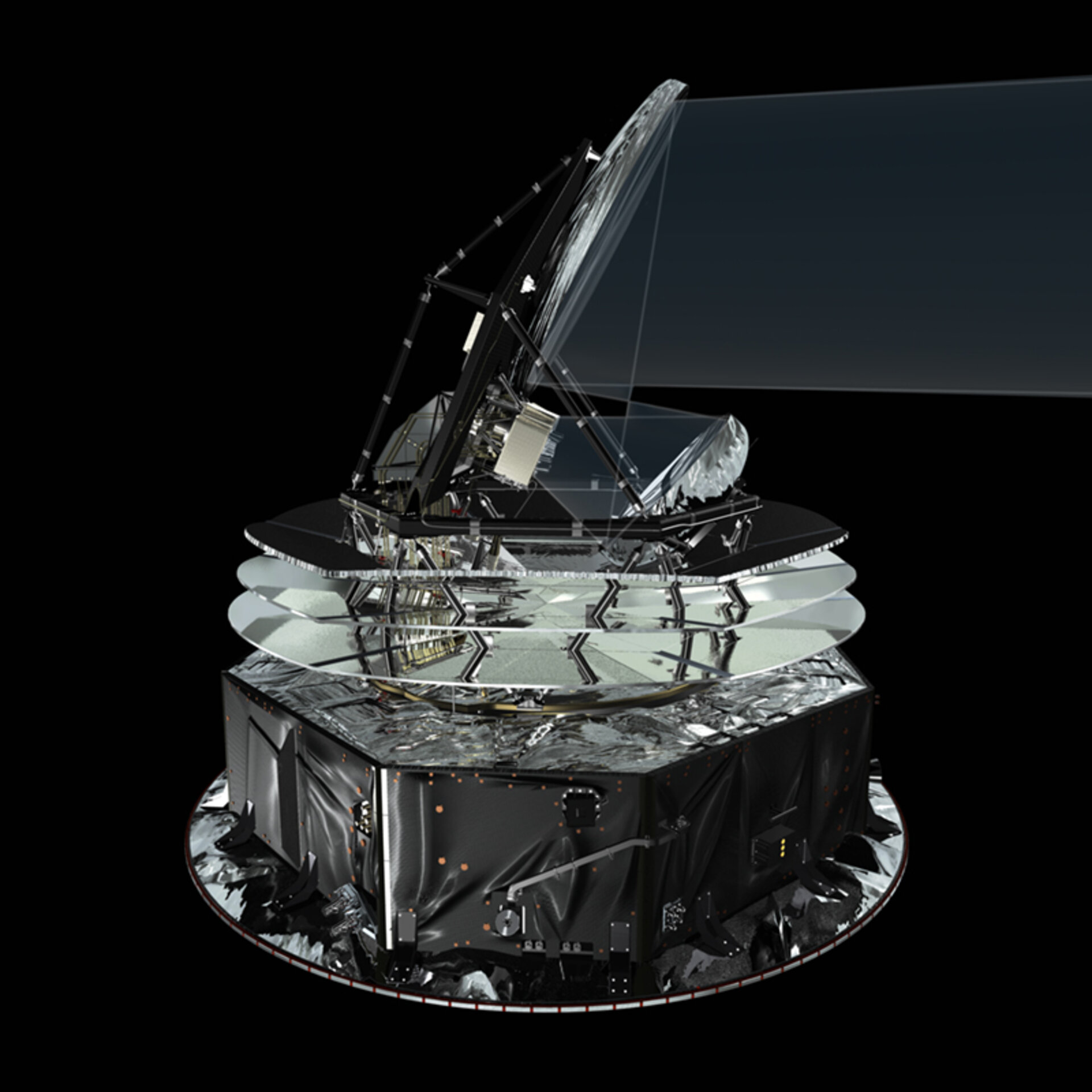
ESA PR 04-2007. By the end of February, integration of Planck, the ESA spacecraft due to study relic radiation from the Big Bang, will have been completed - and so too will a major step towards launch. ESA and Alcatel Alenia Space (AAS) are jointly inviting the media to a press conference to be held at the AAS facilities in Cannes, France, on 1 February to hear about the mission’s technological achievements and scientific objectives and to view the spacecraft in all its splendour.
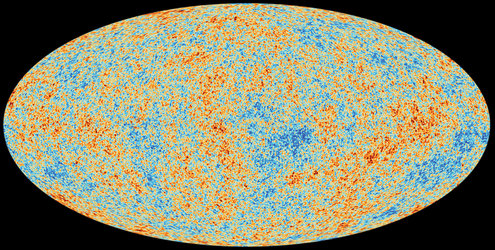
Planck will make the most accurate maps yet of the microwave background radiation that fills space. It will be sensitive to temperature variations of a few millionths of a degree and will map the full sky in nine wavelengths.
The immediate outcome of the Big Bang and the initial conditions for the evolution in the universe’s structure are the primary target of this important mission. From the results, a great deal more will be learnt not only about the nature and amount of dark matter, the ‘missing mass’ of the universe, but also about the nature of dark energy and the expansion of the universe itself.
To address such challenging objectives, Planck will need to operate at very low, stable temperatures. Once in space, its detectors will have to be cooled to temperature levels close to absolute zero (-273.15ºC), ranging from -253ºC to only a few tenths of a degree above absolute zero. The Planck spacecraft thus has to be a marvel of cryotechnology.
After integration, Planck will start a series of tests that will continue into early-2008. It will be launched by end-July 2008 in a dual-launch configuration with Herschel, ESA’s mission to study the formation of galaxies, stars and planetary systems in the infrared.
Interested media are invited to fill in the reply form (linked on right of page).
Note to editors
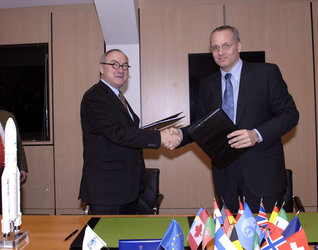
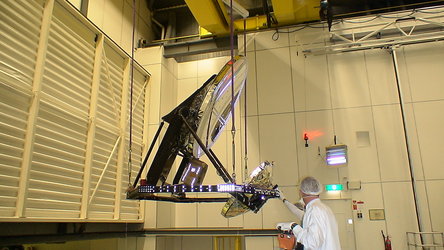
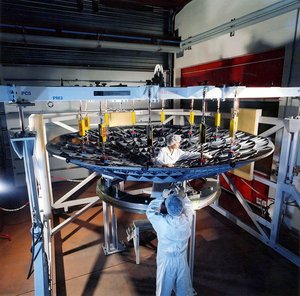
The Planck spacecraft was built by AAS Cannes, the prime contractor, leading a consortium of industrial partners with the AAS industry branch in Turin, Italy, responsible for the satellite’s service module. ESA and the Danish National Space Centre (Copenhagen, Denmark) are responsible for the hardware provision of Planck’s telescope mirrors, manufactured by EADS Astrium (Friedrichshafen, Germany).
AAS Cannes is also responsible for the payload module, the platform that hosts the telescope and the two onboard instruments, HFI and LFI. The instruments themselves are being supplied by a consortium of scientists and institutes led by the Institut d'Astrophysique Spatiale at Orsay (France) in the case of HFI, and by the Istituto di Astrofisica Spaziale e Fisica Cosmica (IASF) in Bologna (Italy) in that of LFI.
There are also numerous subcontractors spread throughout Europe, with several more in the USA.
For further information, please contact:
ESA Media Relations Office
Tel: +33(0)1.53.69.7155
Fax: +33(0)1.53.69.7690
Press event programme
1 February 2007, 10:00 am
Alcatel Alenia Space
100 Boulevard du Midi, Cannes (France)
10:00 - 10:05 - Opening address, by Patrick Maute - Head of Optical Observation and Science Programmes - Alcatel Alenia Space, and by Jacques Louet - Head of Science Projects - ESA
10:05 - 10:15 - Herschel/Planck Mission overview, by Thomas Passvogel - Planck Project Manager - ESA
10:15 - 10:25 - Planck satellite, by Jean-Jacques Juillet - Programme Manager - Alcatel Alenia Space
10:25 - 10:35 - The scientific mission, by Jan Tauber - Planck Project Scientist - ESA
10:35 - 10:45 - The High-Frequency Instrument, by Jean-Loup Puget – HFI Principal Investigator
10:45 - 10:55 - The Low-Frequency Instrument, by Reno Mandolesi – LFI Principal Investigator
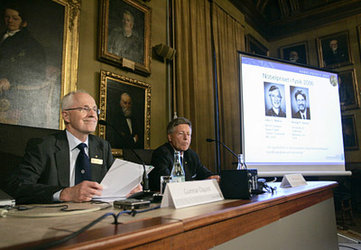
10:55 - 11:05 - Special guest – Nobel prize winner G.F. Smoot
11:05 - 11:25 - Questions and answers
11:25 - 12:35 - Visit of the integration room to see Planck spacecraft and face-to-face interviews
12:45 - 14:30 - Lunch hosted by Alcatel Alenia Space.