Extreme star cluster in new Hubble images
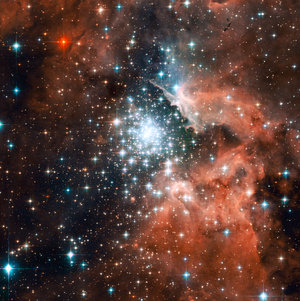
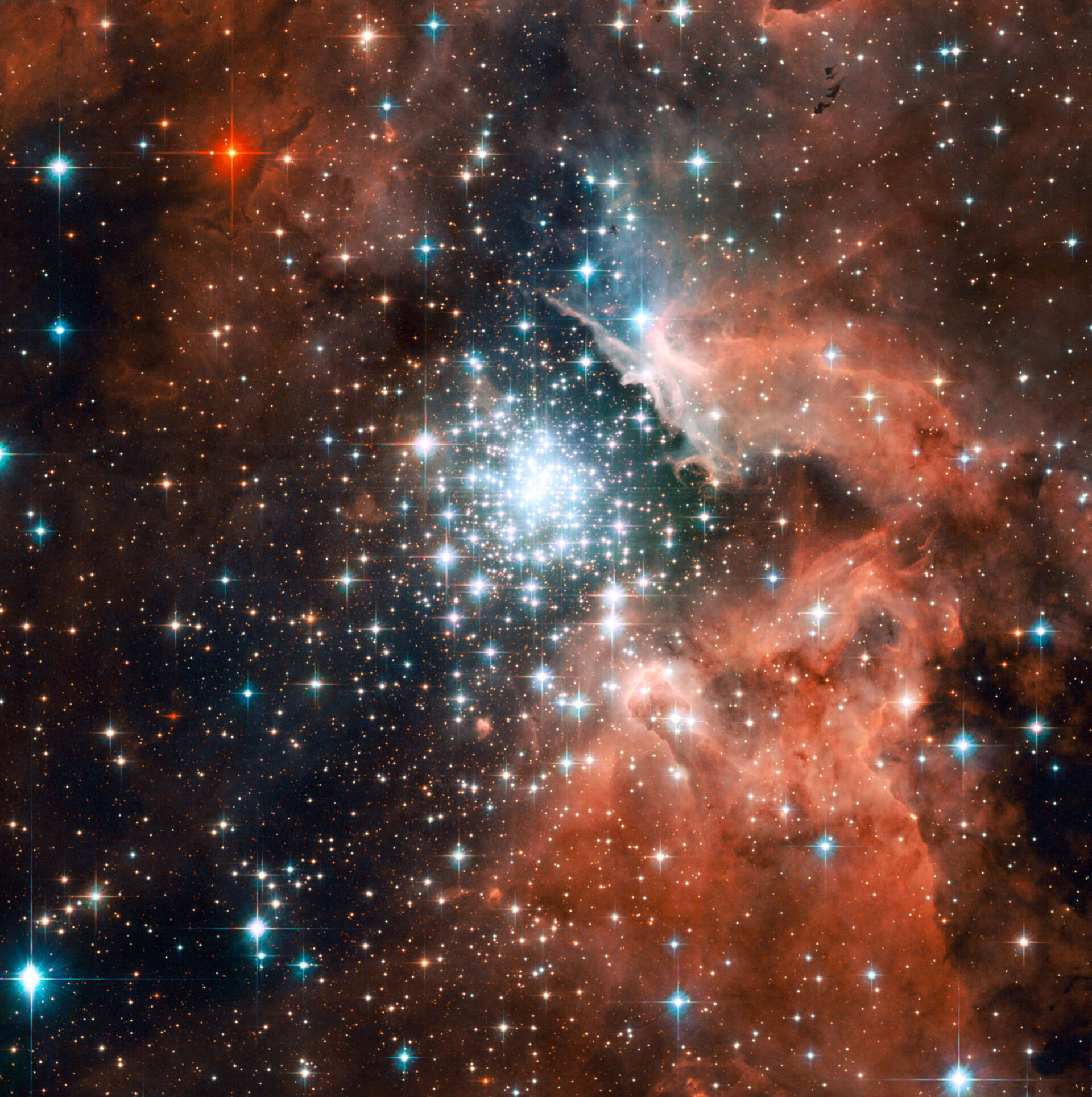
The gigantic nebula NGC 3603 hosts one of the most prominent, massive, young clusters in the Milky Way. Hubble has been observing this prime location for star formation studies.
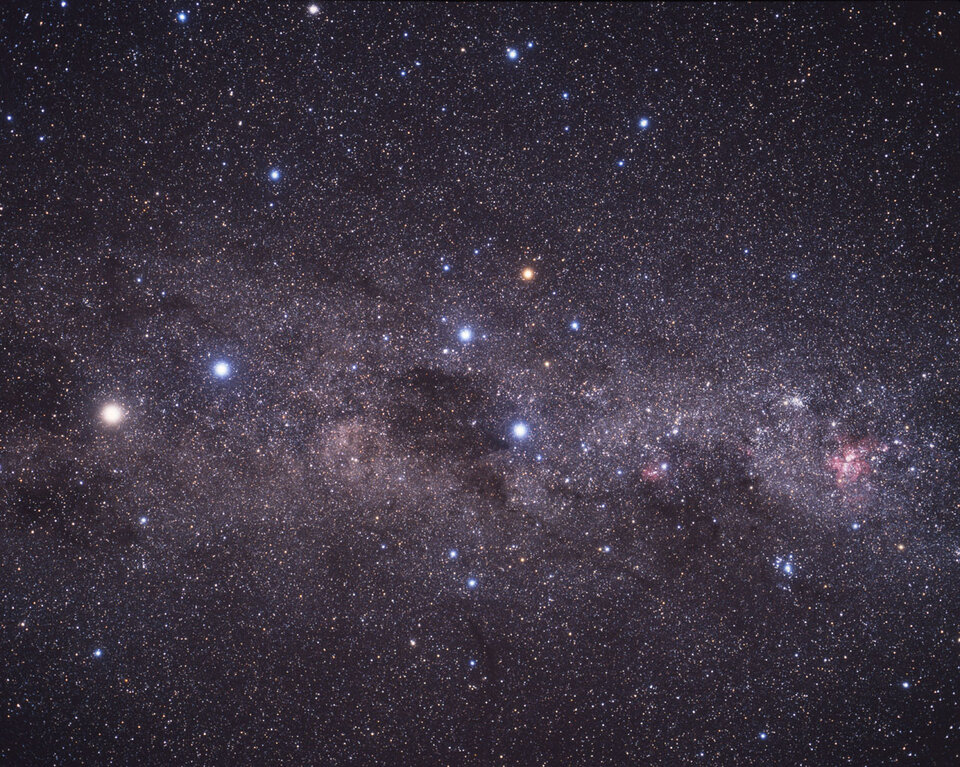
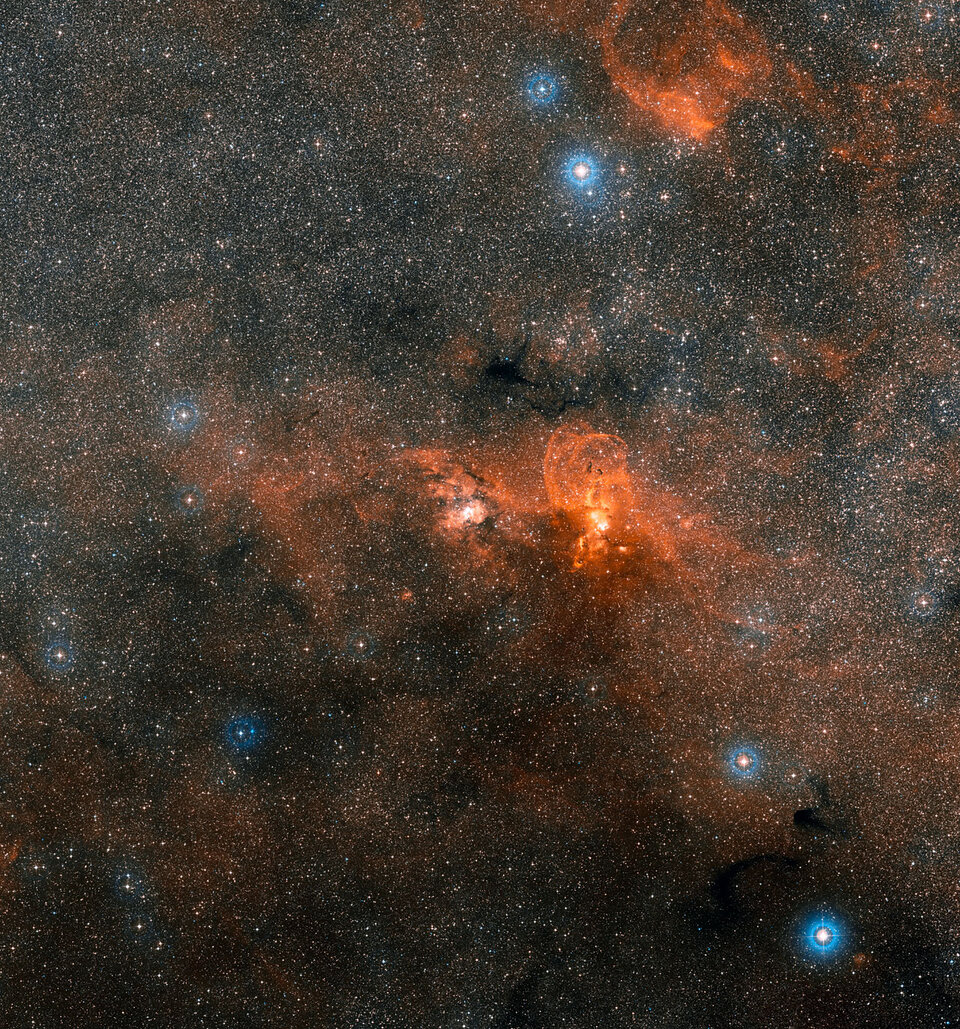
NGC 3603 is located in the Carina spiral arm of the Milky Way, about
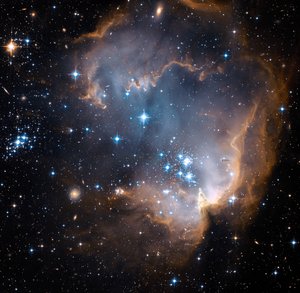
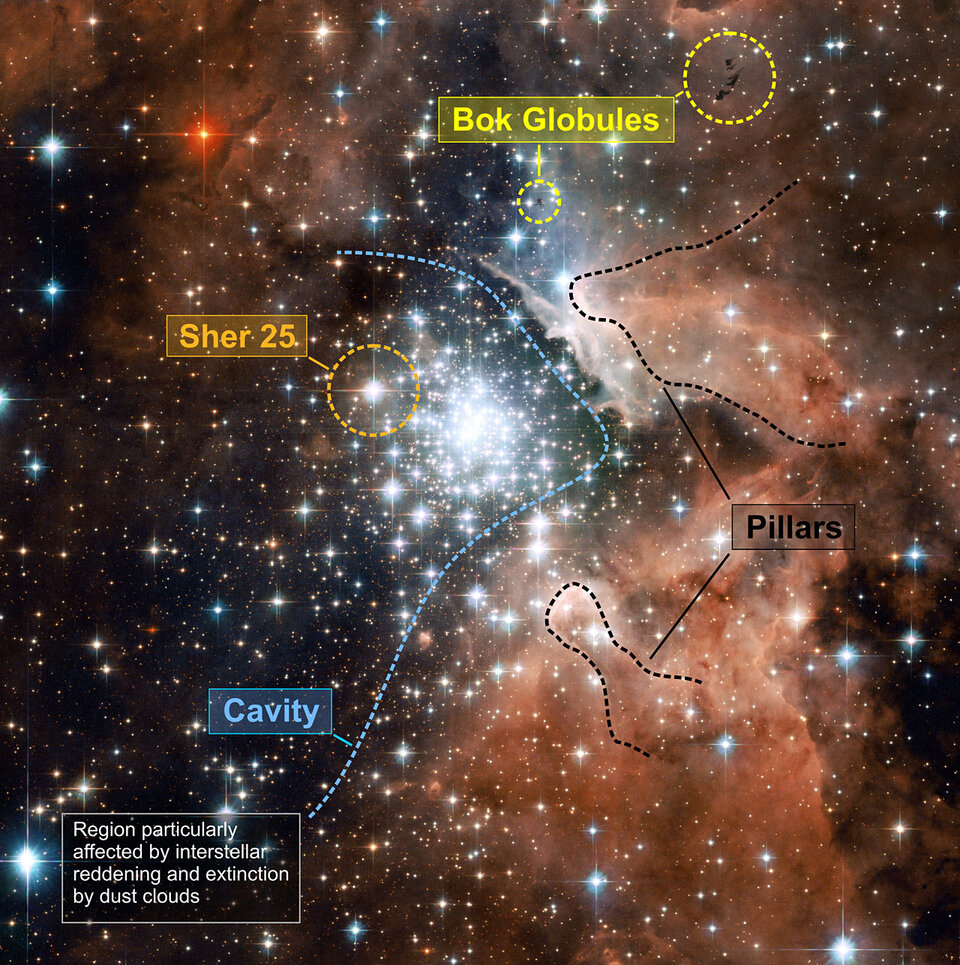
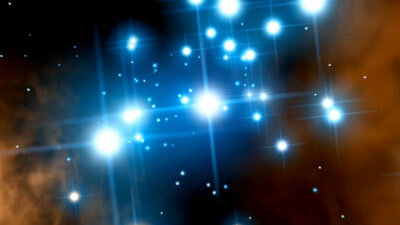
Images from the NASA/ESA Hubble Space Telescope show a young star cluster surrounded by a vast region of dust and gas. Most of the bright stars in the image are hot, blue stars. They produce ultraviolet radiation and violent winds that have formed an enormous cavity in the gas and dust surrounding the cluster.

The image shows many stars with differing masses but similar ages inside the young cluster. Stars of different masses evolve at a different pace, so this makes it possible to study several types of stars at varying stages in their lives, in detail. Astronomers can compare clusters of different ages with one another and determine which properties (such as temperature and brightness) change as the stars get older.
Dr Jesús Maíz Apellániz from Instituto de Astrofísica de Andalucía, Spain, is leading the Hubble investigation. According to him, the cluster appears to gather the most massive stars at its core. His team has discovered that the distribution of different types of stars at the centre of this dense cluster is similar to that of other young clusters in the Milky Way.
Apellániz's team has also found that the three brightest stars in the centre appear to be more massive than theoretical limits allow. In fact, these ‘heavyweights’ may actually consist of two or perhaps more individual massive stars whose light has blended together. Even with Hubble’s resolution, it is not possible to separate the individual stars in each of the three systems.
This finding agrees with a recent discovery by Dr. Anthony Moffat from the Université de Montréal, Canada. He used ESO’s Very Large Telescope (VLT) and Hubble’s Near Infrared Camera and Multi-Object Spectrograph (NICMOS) to measure the movements of the individual stars in two of the three systems. Dr. Moffat measured the largest star’s mass to be roughly 115 times that of the Sun - which is within acceptable limits for conventional theory.
The swirling nebula of NGC 3603 contains around
Bok globules are dark clouds of dense dust and gas with masses of about ten to fifty times that of the Sun. They resemble insect cocoons and are in the process of collapsing under their own weight, forming new stars. Bok globules appear to be some of the coldest objects in the Universe.
NGC 3603 was first discovered by Sir John Herschel in 1834. It is known to harbour a blue supergiant star called Sher 25, believed to be on the verge of exploding as a supernova. It is often known as the Milky Way counterpart of the predecessor of the now-famous supernova SN 1987A in the Large Magellanic Cloud.
Notes for editors:
The Hubble Space Telescope is a project of international cooperation between NASA and ESA.
For more information:
Jesús Maíz Apellániz, Instituto de Astrofísica de Andalucía, Spain
Email: Jmaiz @ iaa.es
Lars Lindberg Christensen, Hubble/ESA, Garching, Germany
Email: Lars @ eso.org
Ray Villard, Space Telescope Science Institute, Baltimore, USA
Email: Villard @ stsci.edu