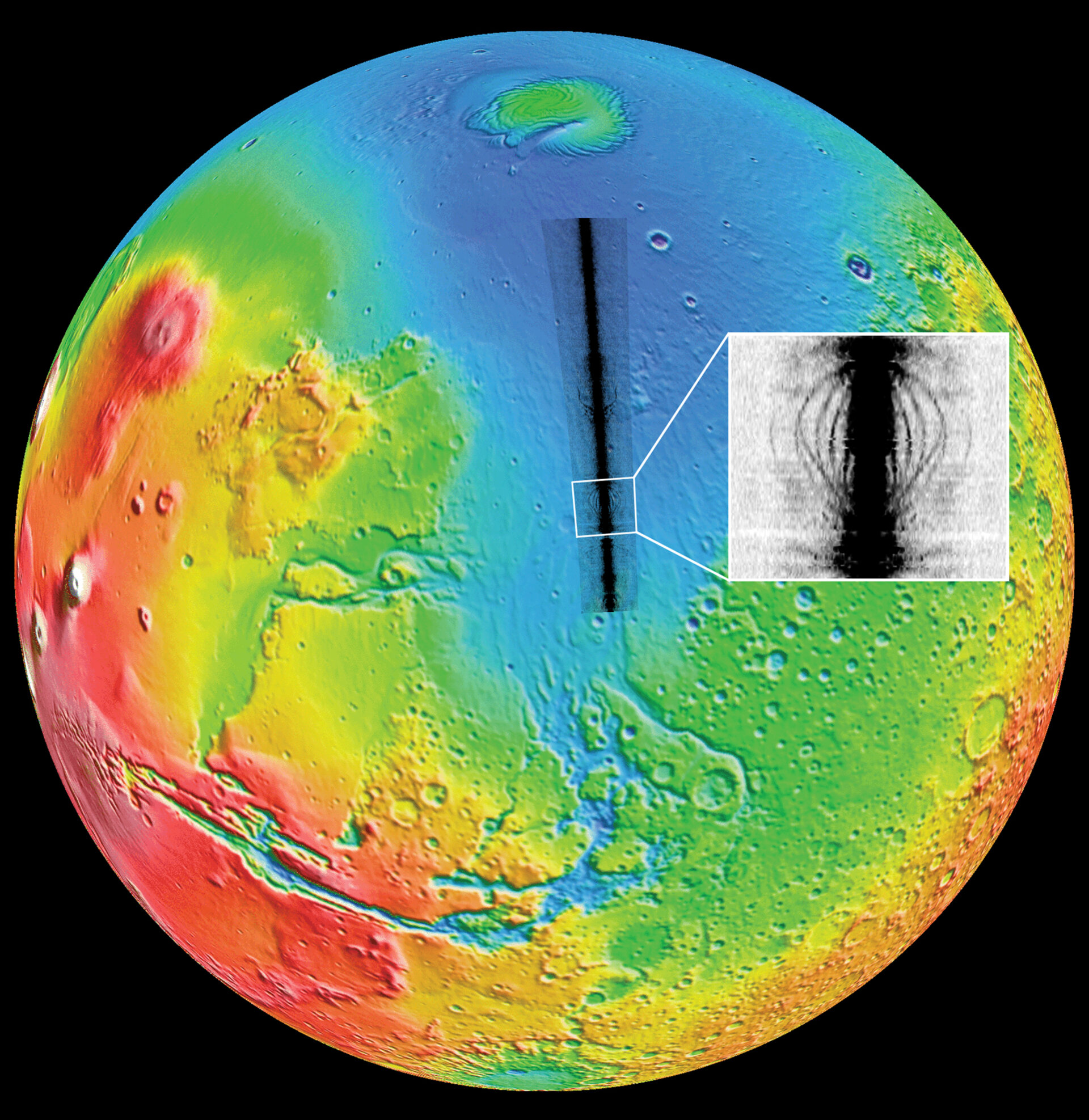
Mars Expressforskere finner en annen Mars under overflaten
ESA PR 45-2006. Med resultater som sjefsforskeren for Mars Express MARSIS-radaren, Giovanni Picardi, fra universitetet ‘La Sapienza’i Roma, beskriver som enestående, viser Mars- forskerne at den har en eldre, forrevet overflate under sitt ytre.
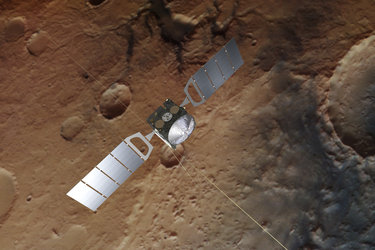
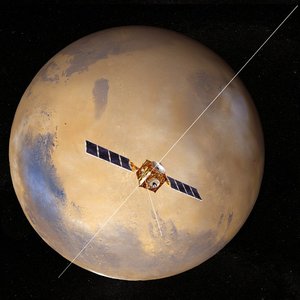
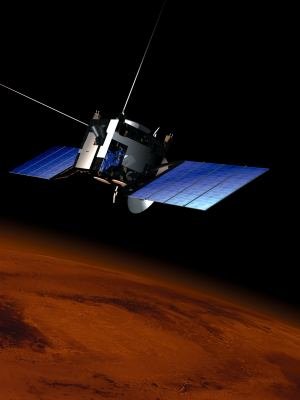
Observasjonene ble skaffet av MARSIS, pioner-radaren om bord i ESAs orbitalsonde Mars Express, og gir viktige, nye opplysninger om den fortsatt mystiske geologiske historien til Mars.
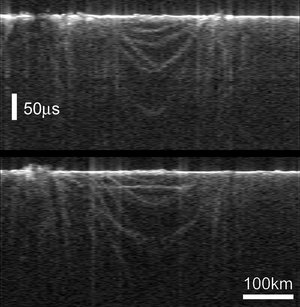
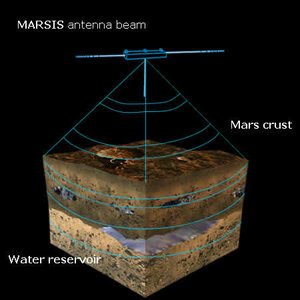
Observasjonene fra MARSIS, den første radaren som kan undersøke forholdene under overflaten på en planet, gir sterke indikasjoner på at gamle innslagskrater ligger begravd under de myke, lave slettene på Mars’ nordlige halvkule. Teknikken gjør bruk av ekko fra radiobølger som har trengt ned under overflaten.
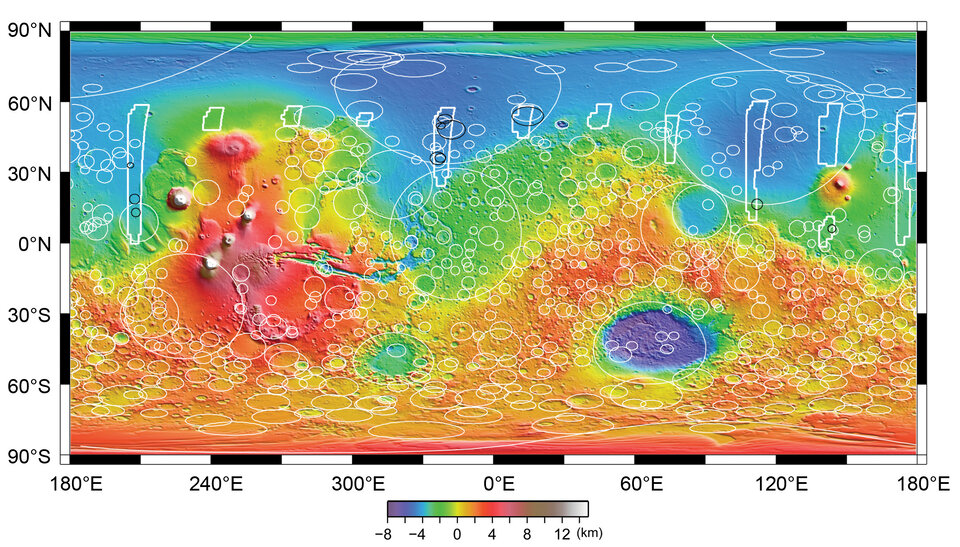
MARSIS fant bevis for at disse begravde innslagskratrene – fra rundt 130 to 470 kilometer i diameter – finnes under mye av lavlandet i nord.
Med MARSIS "er det nesten som en har røntgensyn," uttalte Thomas R. Watters fra National Air and Space Museum´s Center for Earth and Planetary Studies, Washington, DC, og ledende forfatter av en artikkel om resultatene. "I tillegg til å finne tidligere ukjente sedimentbassenger har vi også fått bekreftet at enkelte dype, nesten runde topografiske nedsenkinger i lavlandet har sammenheng med innslag.
Studiene av hvordan Mars har utviklet seg er med på å kaste lys over hvordan Jorden var i begynnelsen. Visse tegn på krefter som virket for noen få milliarder år siden er vanskeligere å oppdage på Jorden, fordi mange av dem er blitt slettet ut på grunn av tektonisk aktivitet og erosjon.

De nye funnene bringer planetvitenskapen nærmere forklaringen på et av de mest vedvarende mysterier om Mars' geologiske utvikling og historie. I motsetning til Jorden viser Mars en slående ulikhet mellom den nordlige og sørlige halvkulen. Nesten hele den sørlige halvkulen har grove høylandskaper med mange kratre, mens det meste av den nordlige halvkulen har mykere og lavere terrengforhøyelser.
Siden innslag som forårsaker kratre kan finne sted hvor som helst på en planet, anses normalt områder med færre krater som, der geologiske prosesser har fjernet innslagsmerkene. Overflaten på Mars’ nordlige sletter er ung og myk, dekket av enorme mengder vulkansk lava og vulkanske sedimenter. Men nye MARSIS-data tyder på at den skorpen som ligger under, er meget gammel.

“Antallet begravde innslagskrater større enn 200 kilometer i diameter som vi har funnet med MARSIS forteller oss at skorpen som ligger under de nordlige lavlandene, må være meget gamle og datere seg til den tidlige noakiske epoken (som varte fra planetens fødsel til omtrent for fire tusen millioner år siden uttalte Jeffrey Plaut ved Jet Propulsion Laboratory i California og ledende MARSIS-forsker. Den tidlige noakiske epoken var en tid da innslagskraterdannelsen var meget intens over alt i solsystemet.
Resultatene tyder på at den nordlige lavlandsskorpen er like gammel som de eldst eksponerte høylandskapene, også datert fra den noakiske epoken, og at forskjellen mellom den nordlige og sørlige halvkulen muligens oppsto meget tidlig i Mars’ historie.
“Disse resultatene er virkelig interessante og enestående,” tilføyde Giovanni Picardi, fra universitetet ‘La Sapienza’ i Roma og en annen ledende MARSIS-forsker. “MARSIS kan bidra til at vi forstår Mars’ geologi gjennom analysene av morfologien på og under overflaten. I tillegg kan vi med en detaljert analyse av instrumentdatae også skaffe oss verdifulle indikasjoner på hvordan materialene er sammensatt.”
For mer informasjon, kontakt
ESA Media Relations Office
Tel: +33 (0) 1 53 69 7155
Fax: +33 (0) 1 53 69 7690
Thomas R. Watters, National Air and Space Museum's Center for Earth and Planetary Studies, Washington, USA
Email: watterst@si.edu
Giovanni Picardi, MARSIS Principal Investigator, Univ.di Roma 'La Sapienza', Italy
E-mail: picar@infocom.uniroma1.it
Jeffrey Plaut, MARSIS Co-Principal Investigator, NASA/JPL
E-mail: plaut @ jpl.nasa.gov
Agustin Chicarro, ESA Mars Express Project Scientist
Email: agustin.chicarro @ esa.int
Roberto Seu, MARSIS co-investigator and SHARAD Principal Investigator, Univ. di Roma 'La Sapienza', Italy
Email: roberto.seu@uniroma1.it