Die ESA kommt der Entstehung des Mars-Mondes Phobos auf die Spur
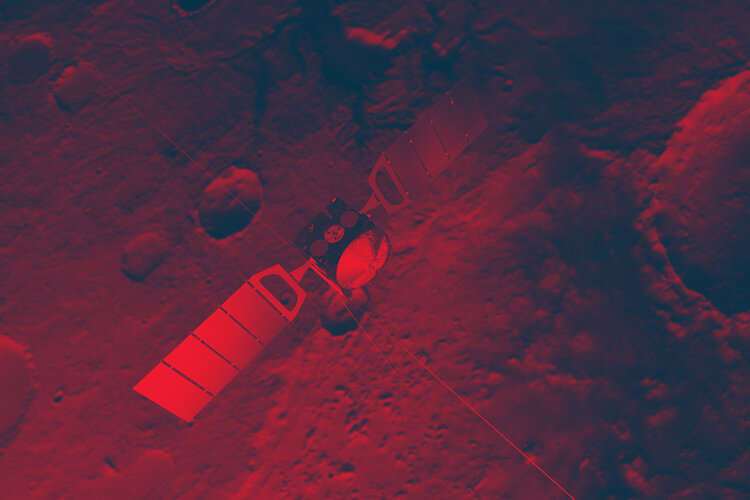
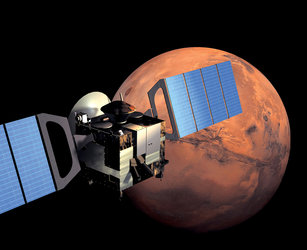
Die europäischen Raumfahrtwissenschaftler sind kurz davor, das Geheimnis um die Entstehung des größeren Mars-Mondes Phobos zu enträtseln. Dank einer Reihe von „Annäherungen“ durch die ESA-Sonde Mars Express lässt sich fast sicher sagen, dass dieser Mond eher einem Trümmerhaufen gleicht als einem festen Objekt aus einem Stück. Es bleibt jedoch noch ein Geheimnis, woher diese Trümmer stammen.
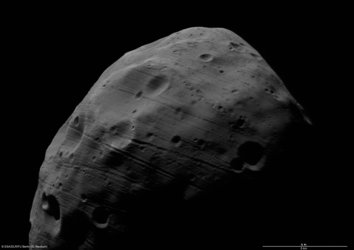
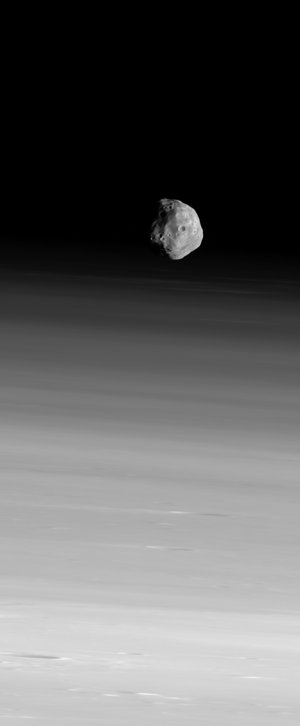
Anders als die Erde mit ihrem einen, großen Mond wird der Mars von zwei kleinen Monden begleitet. Der größere davon ist Phobos, ein unregelmäßig geformter Felsbrocken im Weltraum, der gerade mal 27 km x 22 km x 19 km misst.
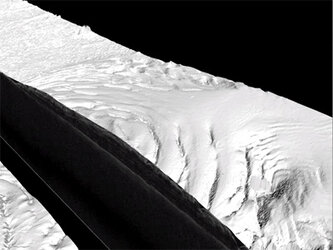
Im Laufe dieses Sommers ist Mars Express einige Male dicht an Phobos vorbeigeflogen. Der Sonde gelang es, bei fast allen Vorbeiflügen mit ihrer hoch auflösenden Stereo-Kamera (HRSC) Bilder von Phobos einzufangen. Ein Team unter der Leitung von Dr. Gerhard Neukum, Professor an der Freien Universität Berlin, erstellt nun mit diesen und mit zuvor bereits gesammelten Daten ein genaueres 3D-Modell von Phobos, um dessen Volumen präziser bestimmen zu können.
Außerdem hat das von Dr. Martin Pätzold vom Rheinischen Institut für Umweltforschung an der Universität Köln geleitete Team des MaRS-Experiments (Mars Express Radio Science) die Funksignale der Raumsonde genau überwacht, als die Raumsonde ganz nahe am Mars vorbei geflogen ist. Sie zeichneten die Frequenzänderungen auf, die von der auf Mars Express wirkenden Schwerkraft von Phobos bewirkt wurden. Anhand dieser Daten berechnen Tom Andert von der Universität der Bundeswehr in München und Pascal Rosenblatt vom Observatoire Royal de Belgique, die beide zum MaRS-Team gehören, die exakte Masse des Marsmondes. „Das Team schätzt die aktuelle Massen von Phobos auf 1,072 10 16 kg, das ist etwa ein Billionstel der Masse der Erde.“
Aus den Daten für die Masse und das Volumen kann das Team dann die Dichte berechnen. Dies wird schließlich einen weiteren wichtigen Hinweis darauf geben, wie dieser Mond entstanden ist.

Weitere Informationen
Gerhard Neukum, HRSC Principal Investigator, Freie Universität Berlin, Germany
Email: gneukum @ zedat.fu-berlin.de
Martin Pätzold, MaRS Principal Investigator, Rheinisches Institut fuer Umweltforschung, University of Cologne
Email: Paetzold @ geo.uni-koeln.de
Pascal Rosenblatt, MaRS science team, Royal Observatory of Belgium
Email: Pascal.Rosenblatt @ oma.be
Tom Andert, Universität der Bundeswehr Muenchen, Germany
Email: Tom.Andert @ unibw-muenchen.de
Agustin Chicarro, ESA Mars Express Project Scientist
Email: Agustin.Chicarro @ esa.int