Clúster celebra su primera década de descubrimientos
La misión Clúster de la ESA celebra su décimo cumpleaños. Durante esta década, los cuatro satélites que la componen han permitido estudiar con un extraordinario nivel de detalle la invisible interacción entre el Sol y la Tierra.
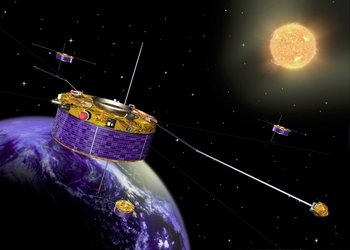
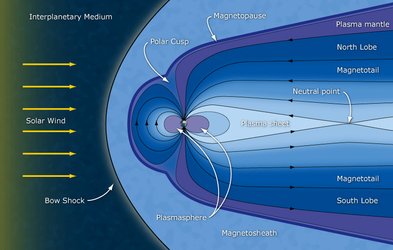
Los cuatro satélites que componen la misión Clúster - Rumba, Samba, Salsa y Tango - vuelan en formación alrededor de la Tierra para generar una imagen tridimensional de la interacción del incesante ‘viento solar’, formado por partículas cargadas o plasma procedente del Sol, con la ‘burbuja magnética’ que protege a la Tierra: la magnetosfera.
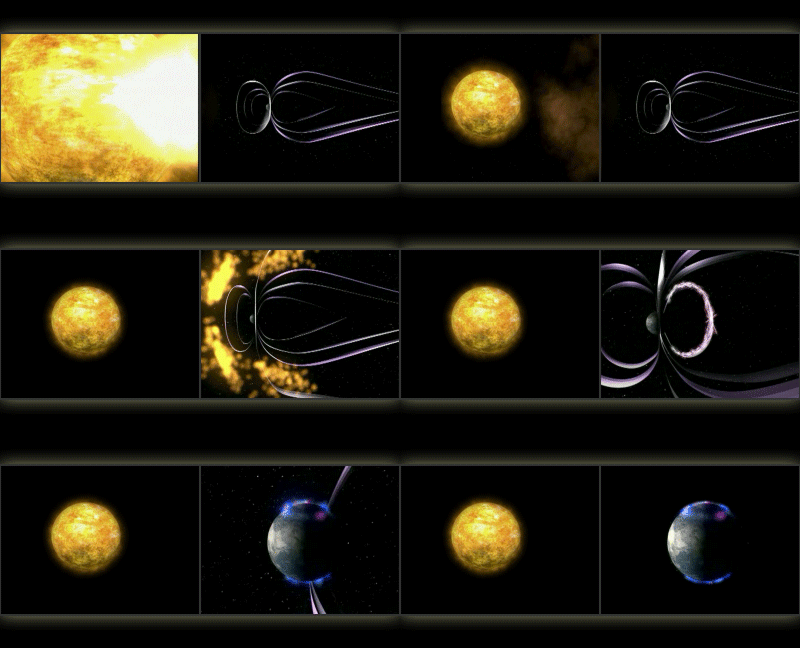
En ocasiones, el viento solar ‘sopla’ de forma turbulenta y racheada, agitando el campo magnético de la Tierra, lo que genera partículas de alta energía. Estas ‘tormentas’ en la magnetosfera pueden provocar interferencias en los sistemas eléctricos a bordo de los satélites o incluso en los de los equipos de tierra. En los peores casos, pueden llegar a destruir componentes electrónicos cruciales, dejando a los satélites completamente inoperativos.
“Clúster ha generado una gran cantidad de datos que permiten comprender mejor los fenómenos físicos asociados a la meteorología espacial”, comenta Philippe Escoubet, Director de la Misión Clúster para la ESA.
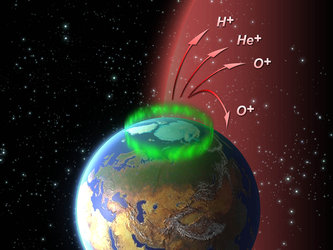
Sus observaciones han desvelado un dramático mundo de invisible violencia. Clúster ha estudiado cómo penetra el viento solar en el entorno de la Tierra y ha descubierto que, en ciertas circunstancias, remolinos magnéticos más grandes que nuestro planeta se abren camino a través de la magnetosfera, inyectando peligrosas partículas.
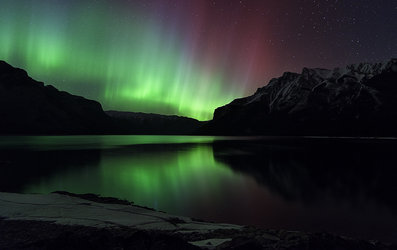
Cuando estas partículas alcanzan la atmósfera terrestre, provocan el sublime brillo de las auroras boreales y australes. En este campo, Clúster ha abierto nuevas puertas a la investigación.
Clúster ha confirmado que las ‘auroras negras’ - un extraño fenómeno eléctrico que origina regiones oscuras, vacías, en el seno de las auroras polares - son una especie de ‘anti-aurora’, un fenómeno que elimina electrones de la ionosfera.
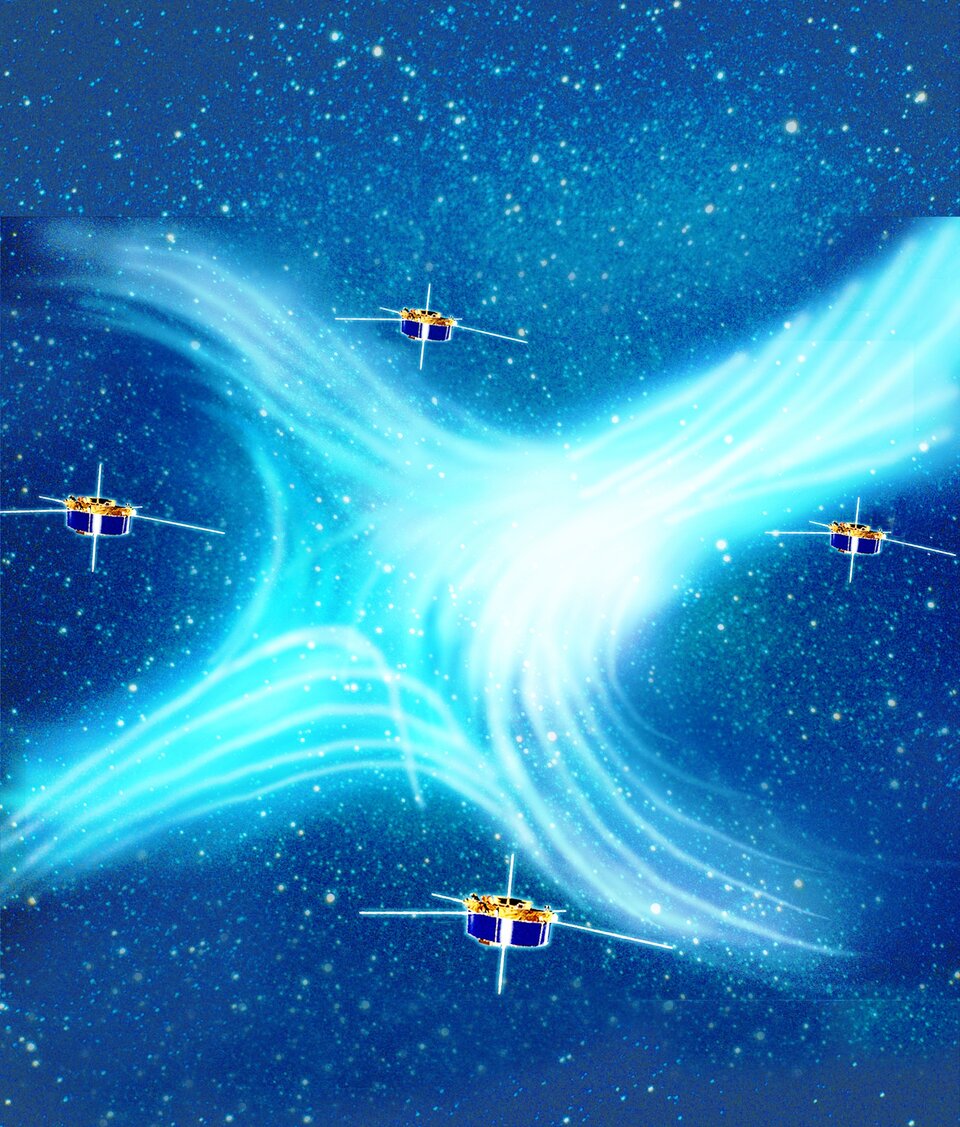
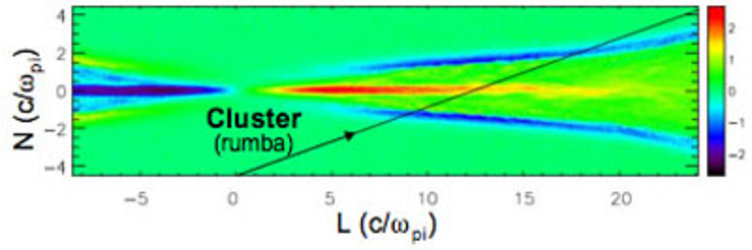
Sin embargo, uno de los mayores logros de la misión ha sido el primer mapa tridimensional del corazón de un fenómeno magnético conocido como ‘reconexión’.
Este fenómeno se produce cuando dos campos magnéticos colisionan, permitiendo la mezcla de las corrientes de plasma que antes mantenían confinadas, lo que libera una gran cantidad de energía. El centro de este fenómeno se conoce como ‘punto neutro’.
Clúster obtuvo la primera imagen tridimensional de un punto neutro, aportando información crucial para la comunidad científica. En el momento de la reconexión, fue capaz de determinar que el campo magnético se retorcía en una región de unos 500 km de diámetro. Hasta ese momento, ninguna observación, teoría o simulación había sido capaz de predecir el tamaño característico de estas regiones.
La reconexión magnética continúa siendo una de las cuestiones fundamentales de la física moderna. Este fenómeno es el responsable de las erupciones solares, unas violentas explosiones en la fotosfera del Sol que pueden ser miles de millones de veces más potentes que una bomba atómica. En los laboratorios de la Tierra, los fenómenos de reconexión continúan frustrando los intentos de generar energía eléctrica en los reactores de fusión.
Esta gran serie de éxitos tuvo un dramático comienzo cuando, el 4 de Junio de 1996, los cuatro satélites originales de Clúster quedaron destruidos tras un fallo del lanzador Ariane 501, instantes después de su lanzamiento.
Sin embargo, el equipo de Clúster fue capaz de sobreponerse a la catástrofe. Rápidamente se fabricaron nuevos satélites y la misión se lanzó de nuevo tan sólo cuatro años más tarde. “Poder reconstruir, ensayar y relanzar una misión de estas características en tan poco tiempo fue sin duda un gran éxito de todo el equipo”, explica John Ellwood, que en aquel entonces era el Director del Proyecto Clúster para la ESA.
Esta segunda vez, Clúster alcanzó la órbita terrestre a bordo de dos lanzadores rusos Soyuz. La primera pareja despegó desde el Cosmódromo de Baikonur, en Kazajstán, el 16 de Julio del año 2000, seguido por los otros dos satélites tan sólo un mes más tarde. Durante los últimos diez años, estos cuatro satélites han estado volando en formación entorno a la Tierra, ejecutando con precisión su peculiar vals espacial.
Tras el éxito del lanzamiento, comenzó una década de extraordinarios descubrimientos científicos. Clúster ayuda a los científicos a comprender cómo se comporta el plasma en prácticamente cualquier situación. Con los cuatro satélites en perfecta forma física, se ha decidido extender la misión hasta el año 2012.