European astronauts in new functions
Maurizio Cheli
From 22 February 1996 until 9 March 1996 Maurizio Cheli flew on Shuttle Mission STS-75 together with Claude Nicollier and Umberto Guidoni. The principle payloads on STS-75 were the reflight of the Tethered Satellite System (TSS) and the third flight of the United States Microgravity Payload (USMP-3). The TSS experiment produced a wealth of new information on the electrodynamics of tethers and plasma physics, it successfully demonstrated the ability of tethers to produce electricity. Maurizio Cheli left the Agency on 30 June 1996.
» Read Maurizio Cheli's biography
Reinhold Ewald
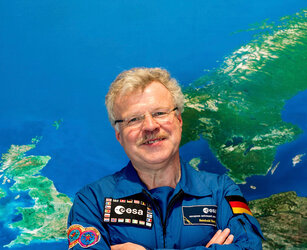
Reinhold Ewald spent 18 days on board the Mir space station during the Mir '97 mission (10 February to 2 March 1997). He then headed the Flight Operations Division within ESA’s ISS Operations department and located at the Columbus Control Centre near Munich, Germany. He retired from ESA in September 2018.
Dirk Frimout
Dirk Frimout flew as Belgian payload specialist on the ATLAS-1 mission (STS-45) from 24 March 1992 until 2 April 1992. The STS-45 mission marked the first flight of the Atmospheric Laboratory for Applications and Science-1 (ATLAS-1), mounted on non-deployable Spacelab pallets in the orbiter cargo bay.
Christer Fuglesang
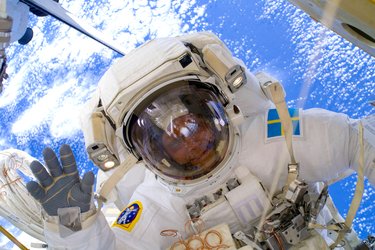
In 2006, Christer Fuglesang flew as Mission Specialist on Space Shuttle Discovery for flight STS-116 to the International Space Station. He became the first Swedish astronaut to fly in space. In 2009 he returned to the Space Station on flight STS-128. Christer has done five spacewalks totalling over 30 hours outside of spacecraft. In May 2010 he took over as Head of Science and Application Division within the Directorate of Human Spaceflight and Operations at ESTEC, Netherlands. He is now seconded to the Swedish KTH Royal Institute of Technology.
Umberto Guidoni
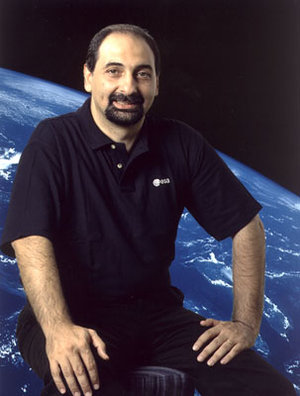
From 22 February – 9 March 1996, Umberto Guidoni flew as a Payload Specialist on the 16-day STS-75 mission. In April 2001, Umberto Guidoni participated in the Space Shuttle’s STS-100 mission, during which he became the first European on board the International Space Station. Guidoni left the European Astronaut Corps in July 2004 to become a Member of the European Parliament.
Claudie Haigneré
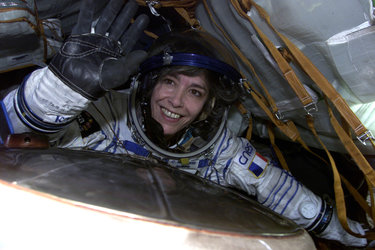
In August 1996, Claudie Haigneré participated in the French-Russian Cassiopée mission to the Mir space station. She took up training as back-up for Jean-Pierre Haigneré on the French-Russian Perseus mission in May 1998, and in July 1999 she became the first woman to qualify as a Soyuz Return Commander. From 21-31 October 2001, Claudie Haigneré participated in a short duration flight to the International Space Station as Soyuz Flight Engineer.
In June 2002, Claudie Haigneré was appointed to the post of Minister for Research and New Technologies by the French Prime Minister. She is currently Senior Advisor to ESA's Director General and Strategic Manager in the Inter-Directorate Task Force.
Jean-Pierre Haigneré
Jean-Pierre Haigneré started his astronaut career when he was selected to be a CNES astronaut in 1985. His first spaceflight was to the Russian Mir space station during the 21-day French Altaïr mission in 1993. His second spaceflight took him as an ESA astronaut on a long-duration flight on board the Mir space station during the French-sponsored Perseus mission from 20 February to 28 August 1999 (189 days).
Haignere left the Corps in November 1999 after his second flight to become Head of the Astronaut Division. He then served as senior advisor to the ESA Director of Launchers, in charge of studying all aspects for a Soyuz human spaceflight programme from Europe's Spaceport in French Guiana. He is now retired.
Ulf Merbold
Ulf Merbold was the first ESA astronaut to fly in space and the first non-American to fly on the Space Shuttle. He became an ESA astronaut in 1978 and was assigned to fly on the first Spacelab mission STS-9 (FSLP) on board Columbia, from 28 November to 8 December 1983. During his second flight he flew as Payload Specialist on Space Shuttle Discovery, STS-42 (IML-1) between 22-31 January 1992. His third spaceflight, Euromir'94, took him on a 32-day mission to the Russian Space Station Mir from 3 October to 4 November 1994, making him the first ESA astronaut to fly to the Mir space station.
From the end of 1999 until 2004, Ulf Merbold was responsible for the Utilisation Promotion Management in the Microgravity Promotion Division of the ESA Directorate of Manned Spaceflight and Microgravity, at ESTEC, Noordwijk, the Netherlands. He retired from ESA on 30 June 2004.
Ernst Messerschmid
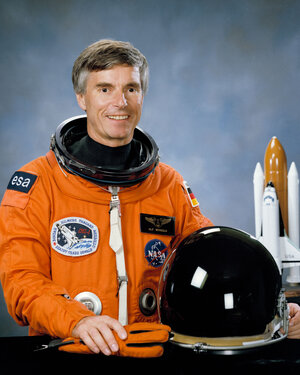
Ernst Messerschmid flew the German Spacelab Mission D1 on board Challenger (STS-61A) between 30 October - 6 November 1985. In 1986 he became Professor of the University of Stuttgart and Director of the Space Systems Institute. From 1989 to 1993 he became Deputy and Dean of the Aerospace Faculty, then Vice President for Research and Technology. From 2000 to 2004 he was Head of the European Astronaut Centre, in Cologne, Germany.
Claude Nicollier
A veteran of four space flights, Claude Nicollier logged more than 1000 hours in space. He flew as a mission specialist on STS-46 in 1992, STS-61 in 1993, STS-75 in 1996 and STS-103 in December 1999. He is presently living in Switzerland, teaching a course in aerospace engineering at the Swiss Federal Institute of Technology in Lausanne (EPFL), and supporting various aeronautics and space projects in Switzerland.
» Read Claude Nicollier's biography
Wubbo Ockels
Wubbo Ockels was selected by the European Space Agency to be in the first group of three ESA astronauts to be trained for the Spacelab-1 mission. During the mission he served as ground-communicator and liaison-scientist for the crew on board STS-9 (1st Spacelab mission). Wubbo Ockels flew as payload specialist during STS-61-A (STS-22), on board Challenger (Spacelab D-1) from 30 October to 6 November 1985.
From September 2003, in close coordination with ESA, Wubbo Ockels became full-time professor of Aerospace for Sustainable Engineering and Technology at the Delft University of Technology, the Netherlands.
» Read Wubbo Ockels's biography
Philippe Perrin
Philippe Perrin served as a mission specialist (MS1) on STS-111 (June 5-19, 2002) onboard Space Shuttle Endeavour. The STS-111 mission delivered a new ISS resident crew and a Canadian-built mobile base for the orbiting outpost’s robotic arm. In May 2004, he became Experimental Test Pilot with Airbus Industrie in Toulouse.
» Read Philippe Perrin's biography
Thomas Reiter
Thomas Reiter flew on the ESA–Russian EuroMir-95 mission to the Mir space station as a Flight Engineer on 3 September 1995, spending 179 days in space. He performed two spacewalks and conducted 40 European scientific experiments.
Between 4 July and 22 December 2006, Thomas flew the Astrolab mission, ESA's first long-duration mission to the International Space Station. He spent 166 days aboard as Flight Engineer 2 in the Expedition 13 and 14 crews. After 171 days in space, Thomas returned to Earth with STS-116.
He holds the European record of 350 days in space – he is the most experienced non-American or non-Russian astronaut by time.
After his active astronaut career, Thomas Reiter was named on 8 August 2007 as a member of the Executive Board of the German Aerospace Center, DLR, responsible for Space Research and Technology.
From April 2011 to December 2015, he was Director of ESA’s Directorate of Human Spaceflight and Operations.
Gerhard Thiele
From 11-22 February 2000, Thiele participated as mission specialist in the STS-99 Mission. The Shuttle Radar Topography Mission (SRTM) was dedicated to the first, three-dimensional, digital mapping of the Earth surface on a nearly global scale.
In August 2005, Gerhard Thiele was assigned as the Head of the Astronaut Division of the European Astronaut Centre (EAC). Since 2016, Gerhard has held a teaching position at the Rheinisch-Westfälische Technische Hochschule in Aachen.
Michel Tognini
Between May 2003 – December 2004, Tognini was Head of the Astronaut Division at the European Astronaut Centre (EAC), in Cologne, Germany. Since January 2005, Tognini is Head of the European Astronaut Centre.
» Read Michel Tognini's biography
Frank de Winne
Frank de Winne was an experienced test pilot before joining the European astronaut corps in 2000. He flew to the International Space Station in 2002 on the Odissea mission and again in 2009 for mission OasISS. During this long duration mission he became the first non-Russian non-American commander of the Station. In August 2012 he took over as Head of ESA's European Astronaut Centre in Cologne, Germany.