Russian-European crew starts 'Mars mission'
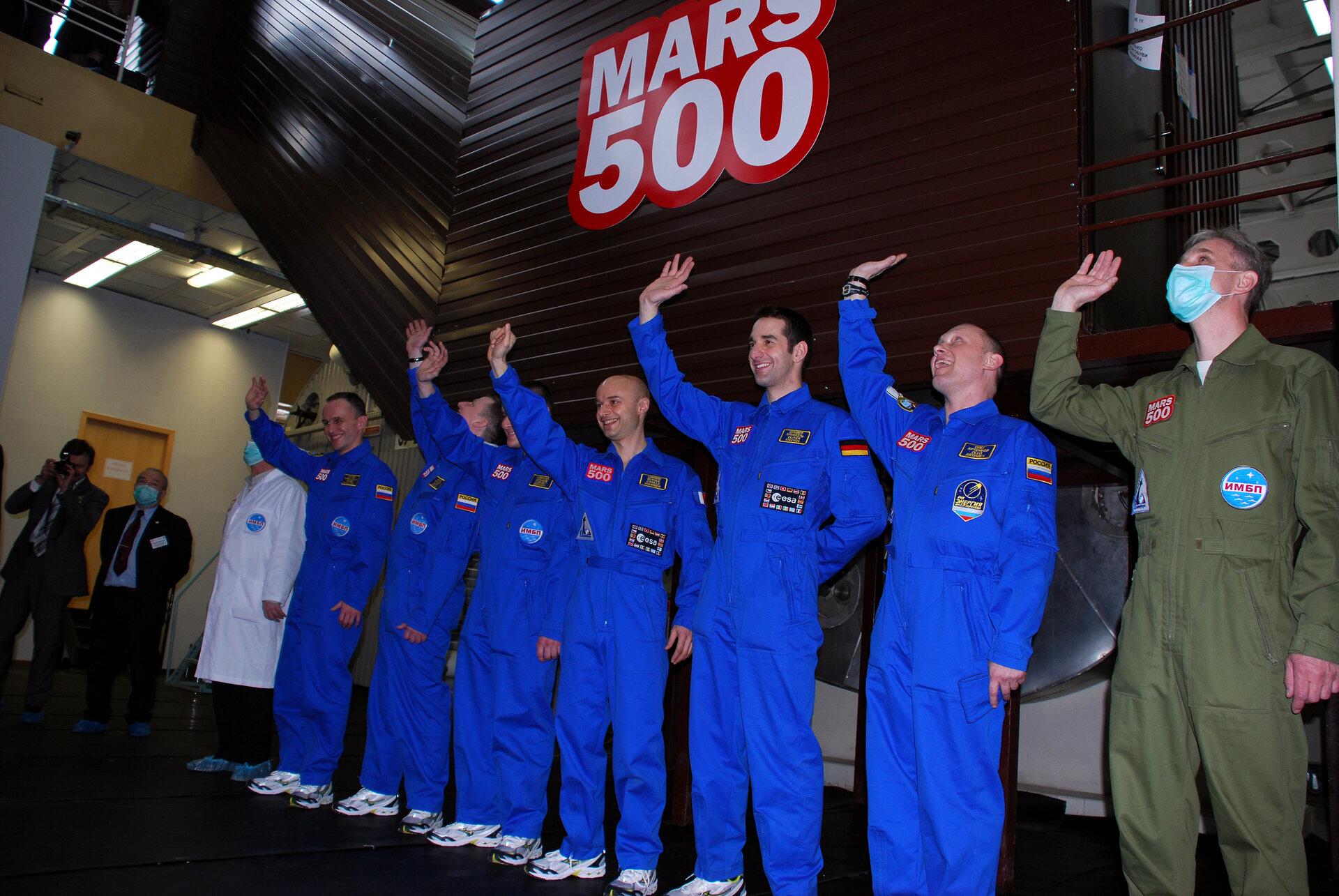
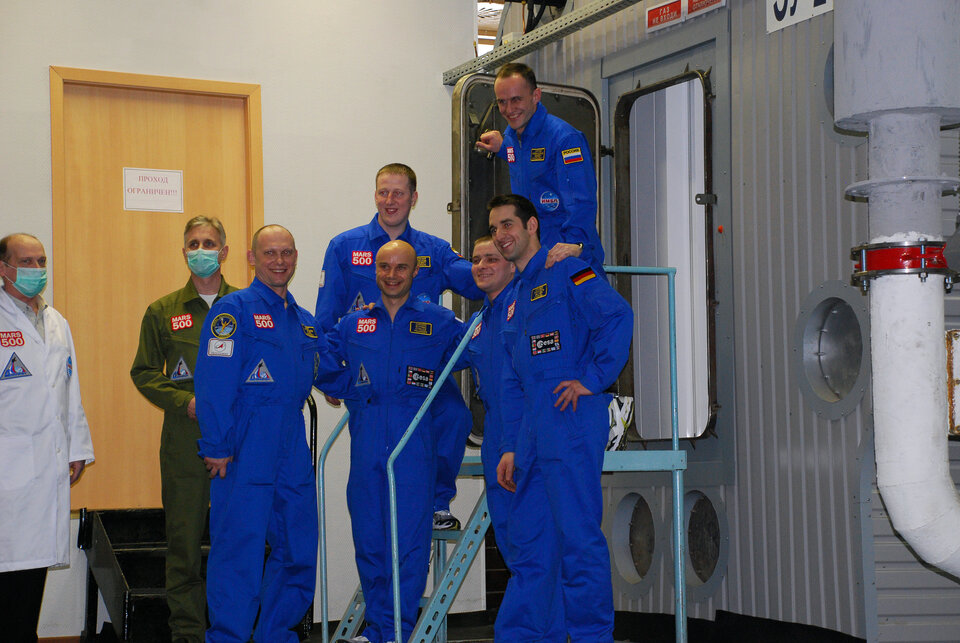
Earlier today, a crew of six, including two ESA-selected participants and four Russians, embarked on a simulated mission to Mars. Although they will not leave the confines of a dedicated isolation facility in Moscow for 105 days, their mission will help prepare for a real human mission to Mars in the future.
At 12:00 CEST (14:00 local time), once all six crewmembers had entered the special habitat at the Institute of Biomedical Problems (IBMP), the hatch was firmly closed for the last time in 105 days.
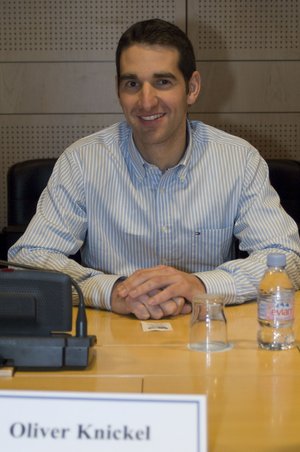
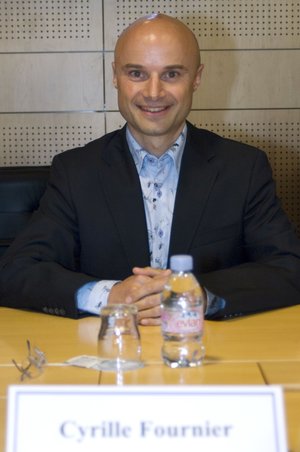
Accompanying ESA-selected participants Oliver Knickel and Cyrille Fournier on their simulated journey are four Russian crewmembers: cosmonauts Oleg Artemyez and Sergei Ryazansky, Alexei Baranov, a doctor, and Alexei Shpakov, a sports physiologist.

During their stay in the facility, the crew will experience all aspects of a mission to the Red Planet, including launch, the outward journey, arrival at Mars and, after an excursion to the surface, the long journey home.
Their tasks will be similar to those on a real space mission. They will have to cope with simulated emergencies, maybe even real emergencies. Communication delays of as much as 20 minutes each way will not make life any easier.
The crewmembers will act as subjects in scientific investigations to assess the effect that isolation has on various psychological and physiological aspects, such as stress, hormone regulation and immunity, sleep quality, mood and the effectiveness of dietary supplements.
“A crew travelling to Mars will face major challenges, not least, how to cope with being confined to a small space and seeing the same faces for one and a half years,” explains Martin Zell, Head of the ISS Utilisation Department in ESA's Directorate of Human Spaceflight. “It is of paramount importance to understand the psychological and physiological effects of long-duration confinement, to be able to prepare the crews in the best way possible and to learn about important aspects of the vehicle design. To contribute to their psychological wellbeing and long-term performance, we need to learn how to support the crew with optimum nutrition, artificial light, appropriate medical countermeasures and also planned and off-nominal task management.”
The 105-day study precedes a full simulation of a mission to Mars, due to start late in 2009. This will see another six-member crew sealed in the same chamber to experience a complete 520-day Mars mission simulation.

Both studies are part of the Mars500 programme conducted by ESA and the Russian IBMP, with Roscosmos funding. ESA's Directorate of Human Spaceflight is undertaking Mars500 within its European Programme for Life and Physical Sciences (ELIPS) to prepare for future missions to the Moon and Mars.
“Mars500 is the proof that we are preparing for the future,” says Simonetta di Pippo, ESA’s Director of Human Spaceflight. “The International Space Station is about to reach full operational capability with a crew of six and the international partners are considering how to maximise the investment made in the Station by working towards a possible extension of its lifetime, so it can be used increasingly to prepare for future exploration undertakings. In parallel, we are intensifying our activities in preparation for the next steps in human spaceflight and exploration as part of the Global Exploration Strategy together with the space agencies worldwide who endorsed it. Mars500 is an important part of this global endeavour as it provides us with the knowledge of how to keep a small crew psychologically and physiologically healthy, and ultimately, to succeed in the big challenge to bring humankind to Mars and safely back to Earth.”
Follow the crew throughout their simulated mission, including regular diary updates from the ESA participants, on the ESA website: http://www.esa.int/mars500.
For more information
Jennifer Ngo-Anh
ESA Mars500 Programme Manager
Phone: +31 71 565 8609
Email: Mars500 @ esa.int
Markus Bauer
ESA Communication Officer for the Directorate of Human Spaceflight
Communications and Knowledge Department
Phone: + 31 71 565 6799
Email: Markus.Bauer @ esa.int