 |  |  |  |  |
| |  | |  | |
 |
Space Science About Space ScienceESA's 'Cosmic Vision'Science & Technology in-depthMultimedia Science imagesScience videosAnimationsDownloadsSounds from spaceMedia centre Press ReleasesPress kitsESA TelevisionResources Reference sectionGlossaryFAQs Science missions Services HelpLegal disclaimerCommentsSubscribeFollow us RSS feeds ESA Sci on Twitter
|  |  |  |  | | | Echus Chasma, page two 14 July 2008
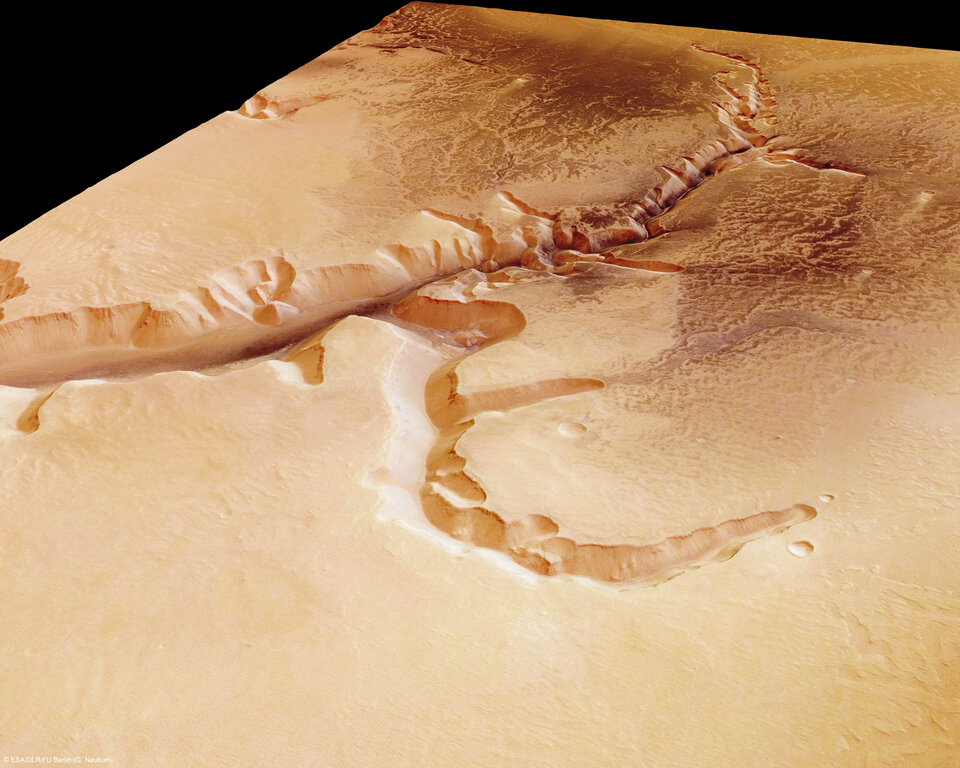
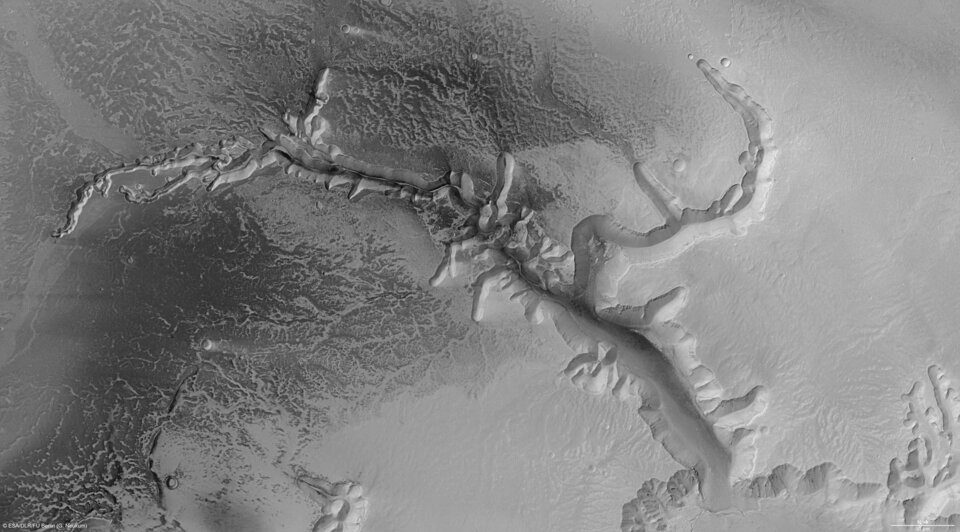
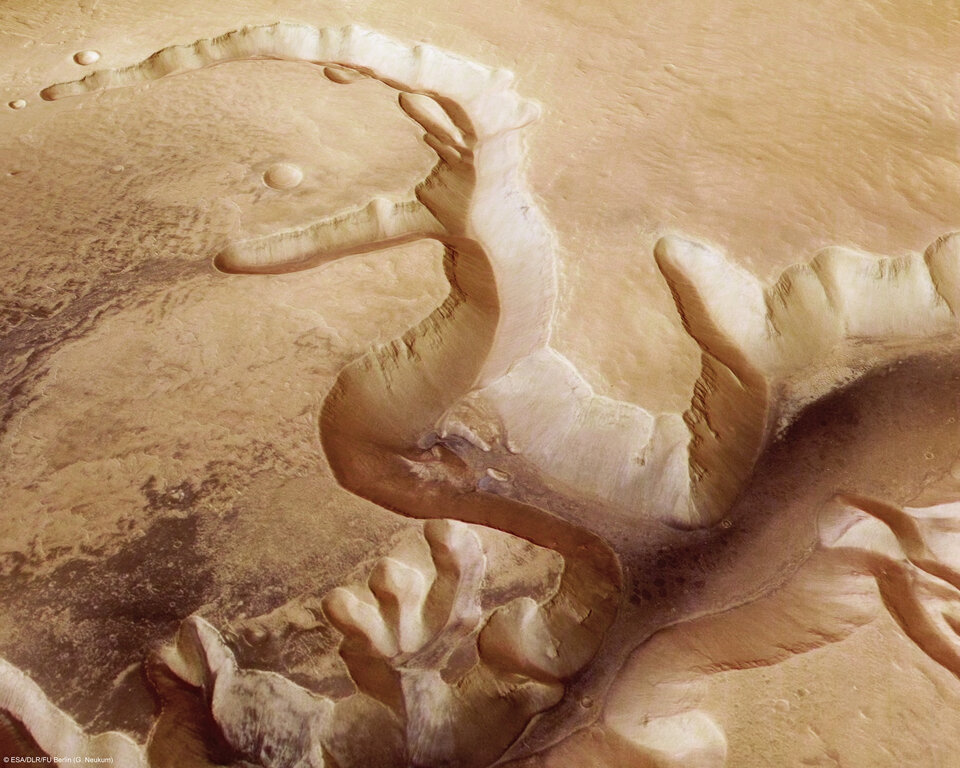
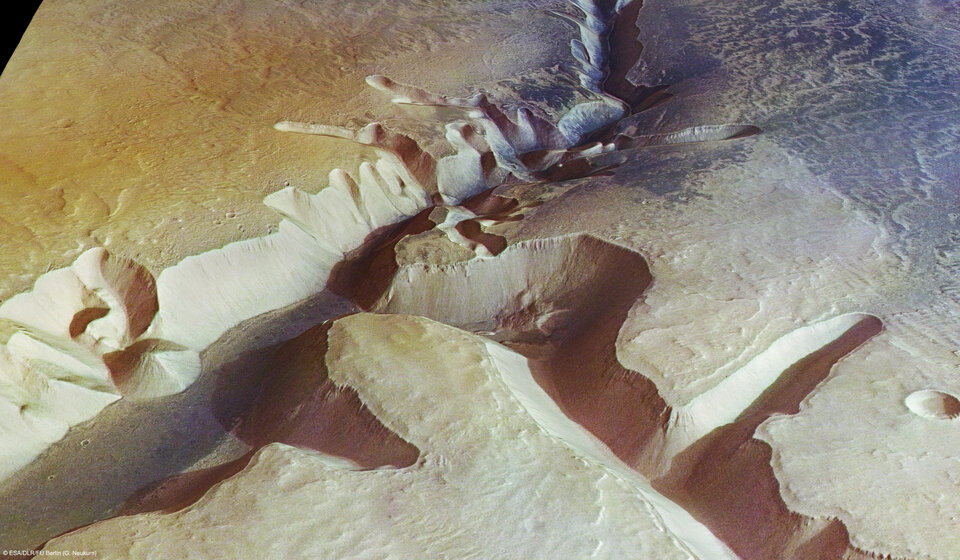
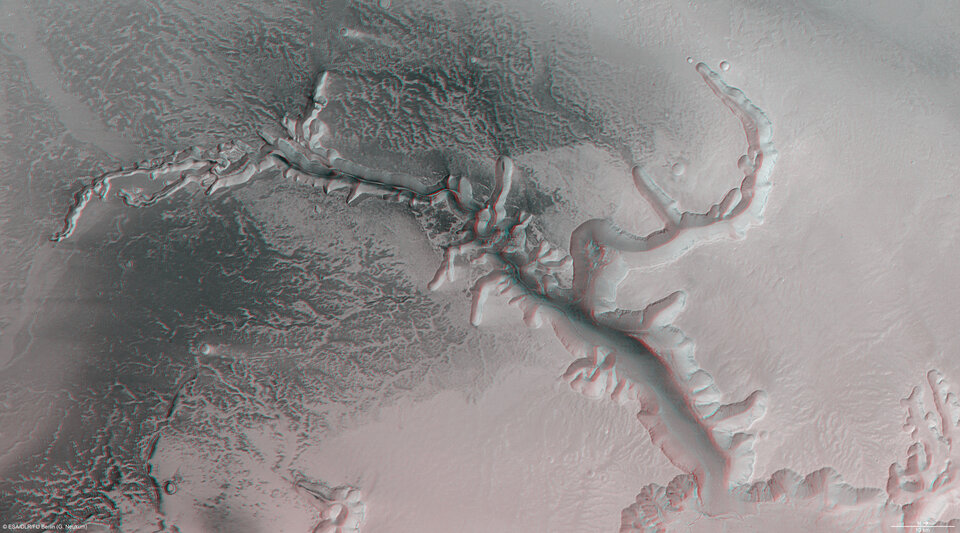
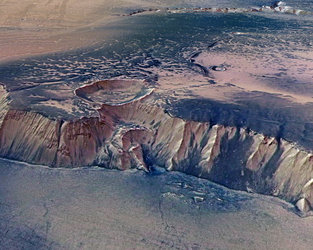
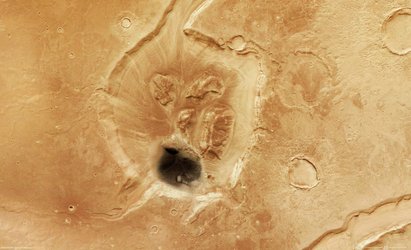
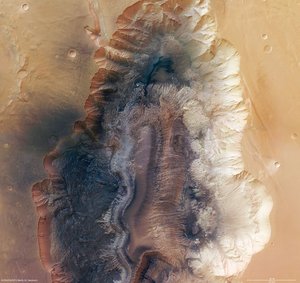
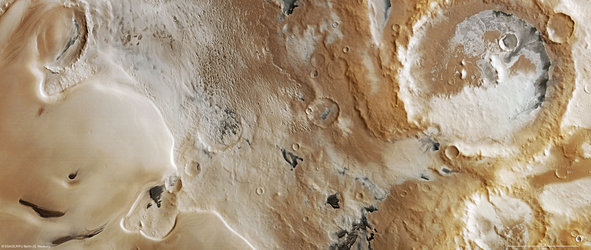
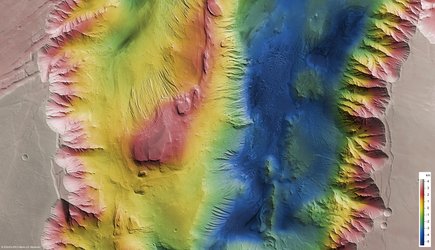
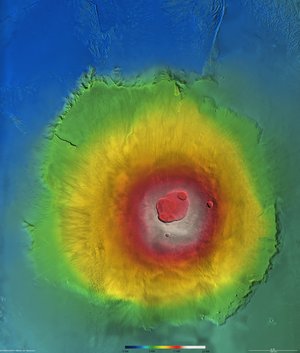
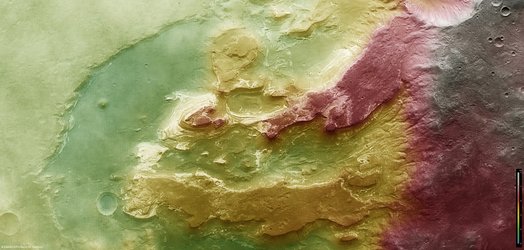
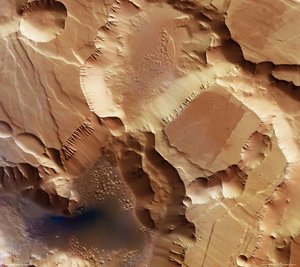
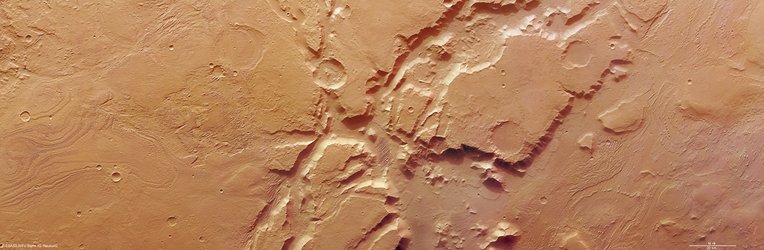
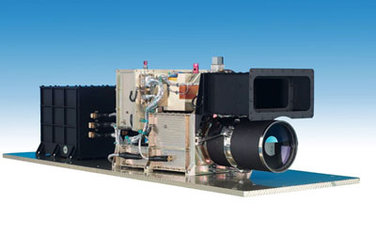
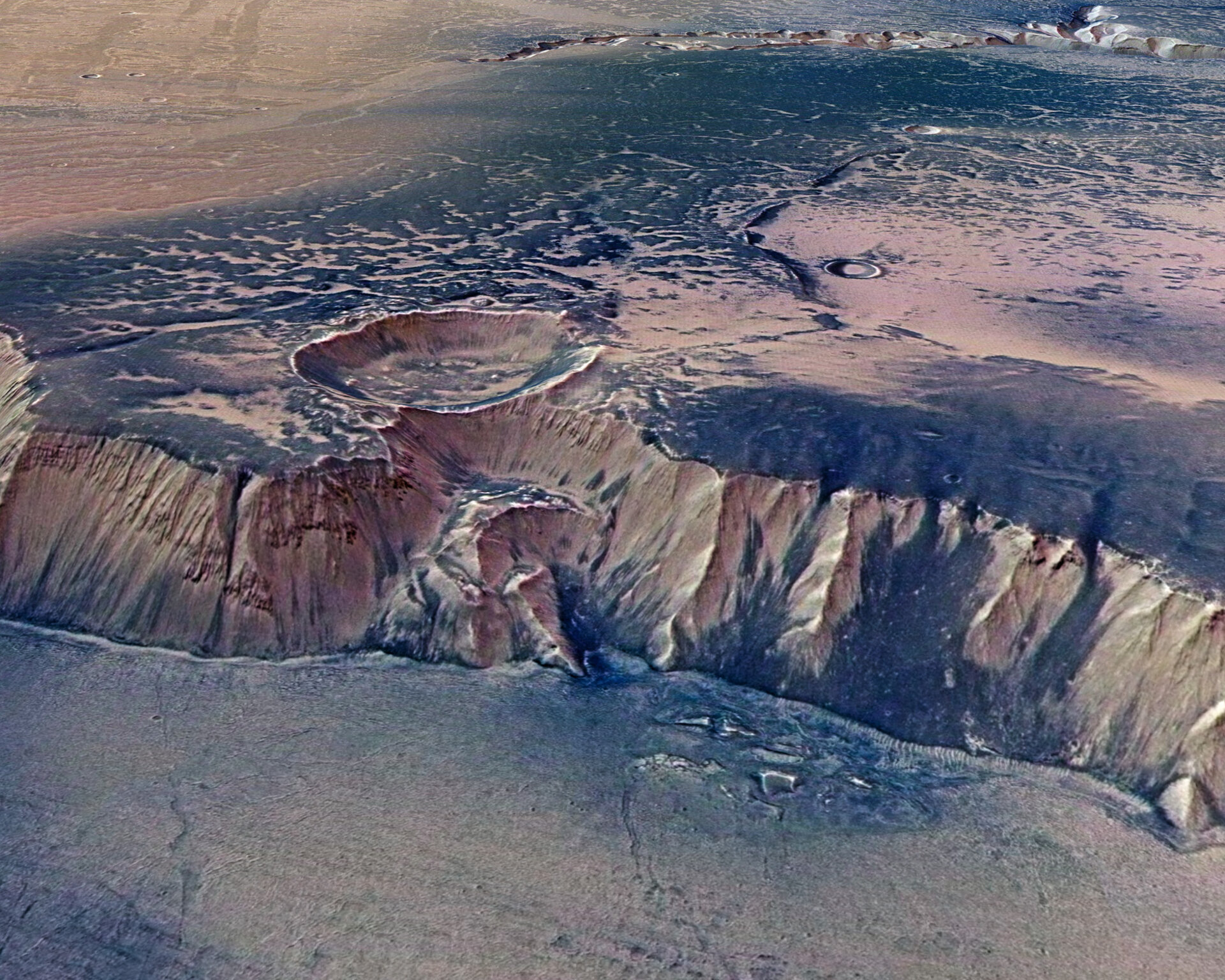
 | The High-Resolution Stereo Camera (HRSC) on board ESA’s Mars Express has returned images of Echus Chasma, one of the largest water source regions on the Red Planet. Echus Chasma is the source region of Kasei Valles which extends 3000 km to the north. The data was acquired on 25 September 2005. The pictures are centred at about 1° north and 278° east and have a ground resolution of approximately 17 m/pixel.
An impressive cliff, up to 4000 m high, is located in the eastern part of Echus Chasma. Gigantic water falls may once have plunged over these cliffs on to the valley floor. The remarkably smooth valley floor was later flooded by basaltic lava.
Credits: ESA/ DLR/ FU Berlin (G. Neukum) |  |  |  |  |
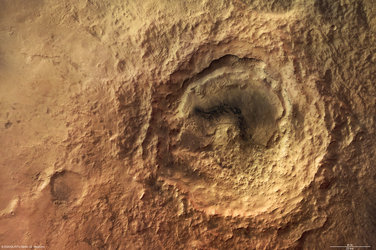
| | | |  | The High-Resolution Stereo Camera (HRSC) on board ESA’s Mars Express has returned images of Echus Chasma, one of the largest water source regions on the Red Planet. Echus Chasma is the source region of Kasei Valles which extends 3000 km to the north. The data was acquired on 25 September 2005. The pictures are centred at about 1° north and 278° east and have a ground resolution of approximately 17 m/pixel.
Credits: ESA/ DLR/ FU Berlin (G. Neukum) |  |  |  |  |
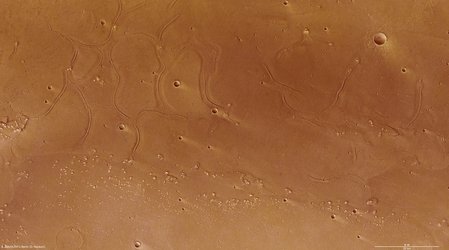
| | | |  | The High-Resolution Stereo Camera (HRSC) on board ESA’s Mars Express has returned images of Echus Chasma, one of the largest water source regions on the Red Planet. Echus Chasma is the source region of Kasei valles which extends 3000 km to the north.
The data was acquired on 25 September 2005. The pictures are centred at about 1° north and 278° east and have a ground resolution of approximately 17 m/pixel.
Credits: ESA/ DLR/ FU Berlin (G. Neukum) |  |  |  |  |
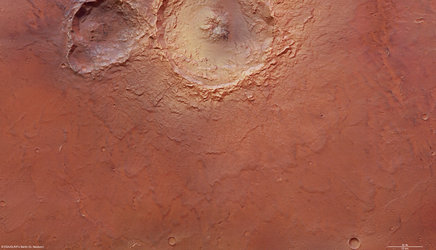
| | | |  | The High-Resolution Stereo Camera (HRSC) on board ESA’s Mars Express has returned images of Echus Chasma, one of the largest water source regions on the Red Planet. Echus Chasma is the source region of Kasei Valles which extends 3000 km to the north. The data was acquired on 25 September 2005. The pictures are centred at about 1° north and 278° east and have a ground resolution of approximately 17 m/pixel.
Credits: ESA/ DLR/ FU Berlin (G. Neukum) |  |  |  |  |
| | | |  | The High-Resolution Stereo Camera (HRSC) on board ESA’s Mars Express has returned images of Echus Chasma, one of the largest water source regions on the Red Planet. Echus Chasma is the source region of Kasei Valles which extends 3000 km to the north. The data was acquired on 25 September 2005. The pictures are centred at about 1° north and 278° east and have a ground resolution of approximately 17 m/pixel.
Credits: ESA/ DLR/ FU Berlin (G. Neukum) |  |  |  |  |
| | | |  | The High-Resolution Stereo Camera (HRSC) on board ESA’s Mars Express has returned images of Echus Chasma, one of the largest water source regions on the Red Planet. Echus Chasma is the source region of Kasei valles which extends 3000 km to the north.
The data was acquired on 25 September 2005. The pictures are centred at about 1° north and 278° east and have a ground resolution of approximately 17 m/pixel.
Credits: ESA/ DLR/ FU Berlin (G. Neukum) |  |  |  |  |
| |
|  | Mars Express image browser Related articles Echus ChasmaCrater in martian valley Mamers VallesHebes Chasma, a trough in the Grand Canyon of MarsIcy Promethei PlanumDeep valleys of Candor ChasmaESA presents Mars in 3DTraces of the martian past in the Terby craterNoctis Labyrinthus, labyrinth of the nightHummocky and shallow Maunder craterThe mysterious ridges at the mouth of Tiu VallesImpact Craters in Tyrrhena TerraTectonic signatures at Aeolis MensaeRelated links High Resolution Stereo CameraBehind the lens...Frequently asked questionsFor specialists ESA Planetary Science archive (PSA)NASA Planetary Data SystemHRSC data viewer
|