Important role of groundwater springs in shaping Mars
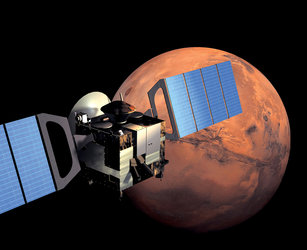
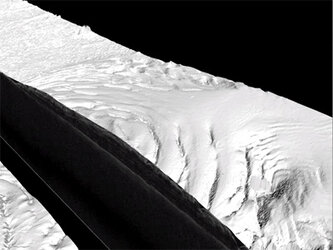
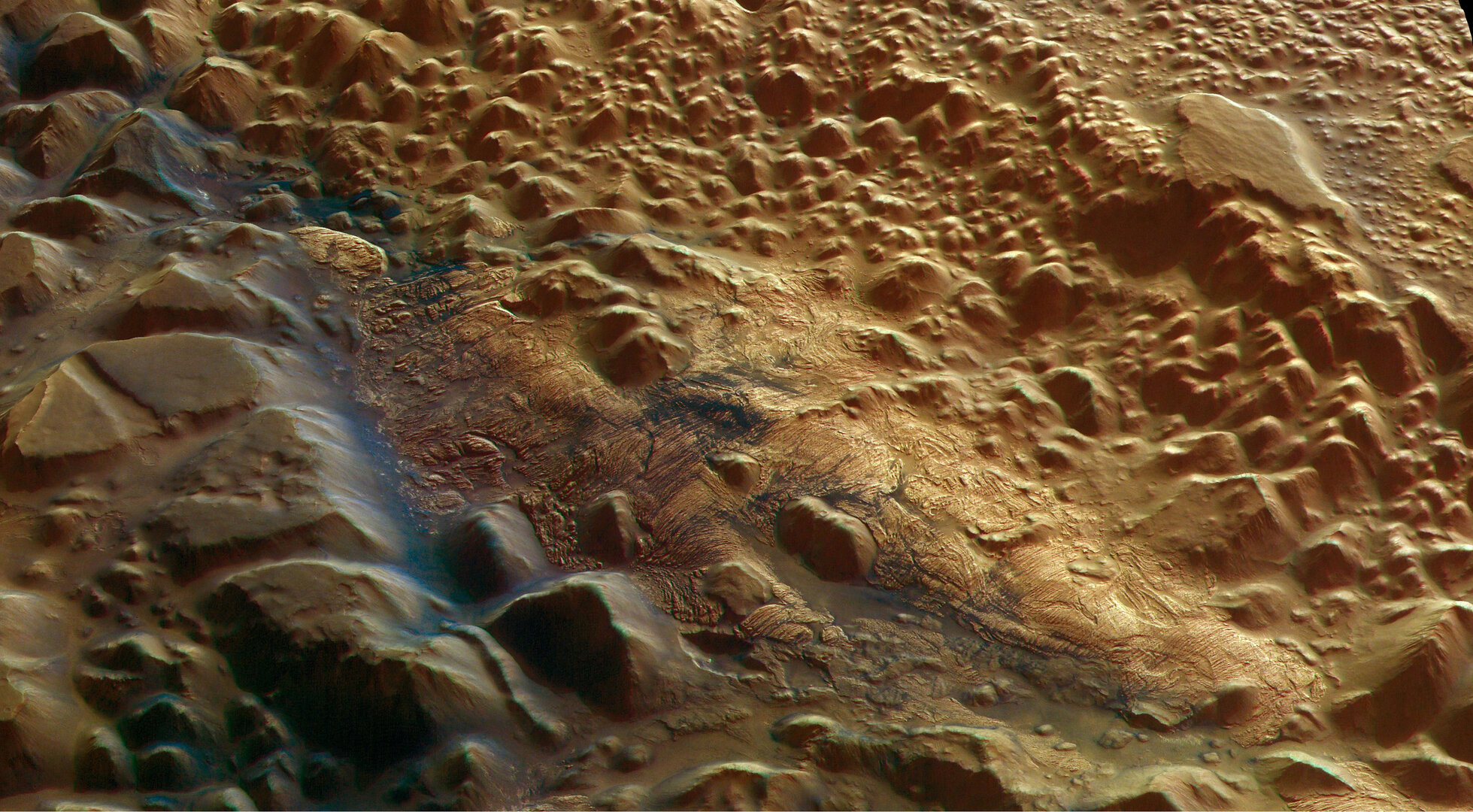
Data and images from Mars Express suggest that several Light Toned Deposits, some of the least understood features on Mars, were formed when large amounts of groundwater burst on to the surface. Scientists propose that groundwater had a greater role in shaping the martian surface than previously believed, and may have sheltered primitive life forms as the planet started drying up.
Light Toned Deposits (LTDs) - martian sediments that most closely resemble sediments on Earth - are some of the most mysterious sediments on Mars. Causes for their origin remain unknown. Until now, different mechanisms, including volcanic processes, have been proposed for their formation.
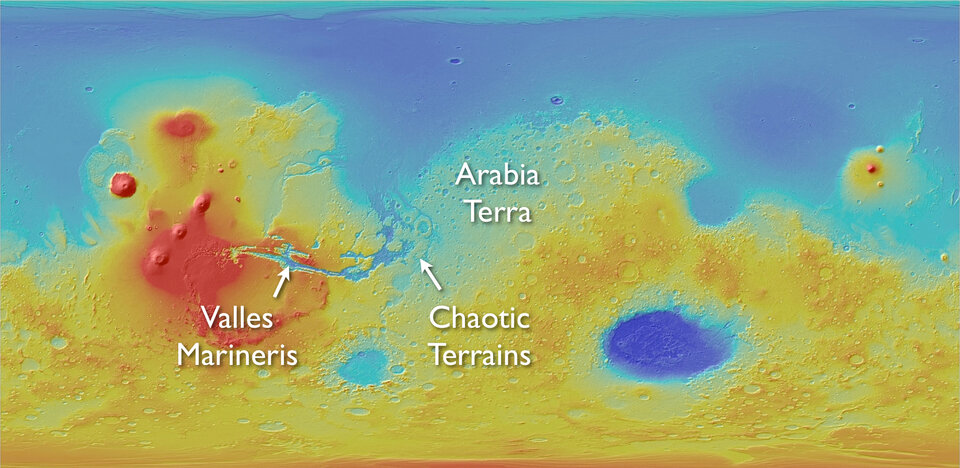
LTDs were first discovered by the Viking spacecraft in the late 1970s and have since been at the centre of scientific debate. These deposits occur on a large scale in Arabia Terra, Chaotic Terrain and Valles Marineris, close to the Tharsis volcanic bulge.
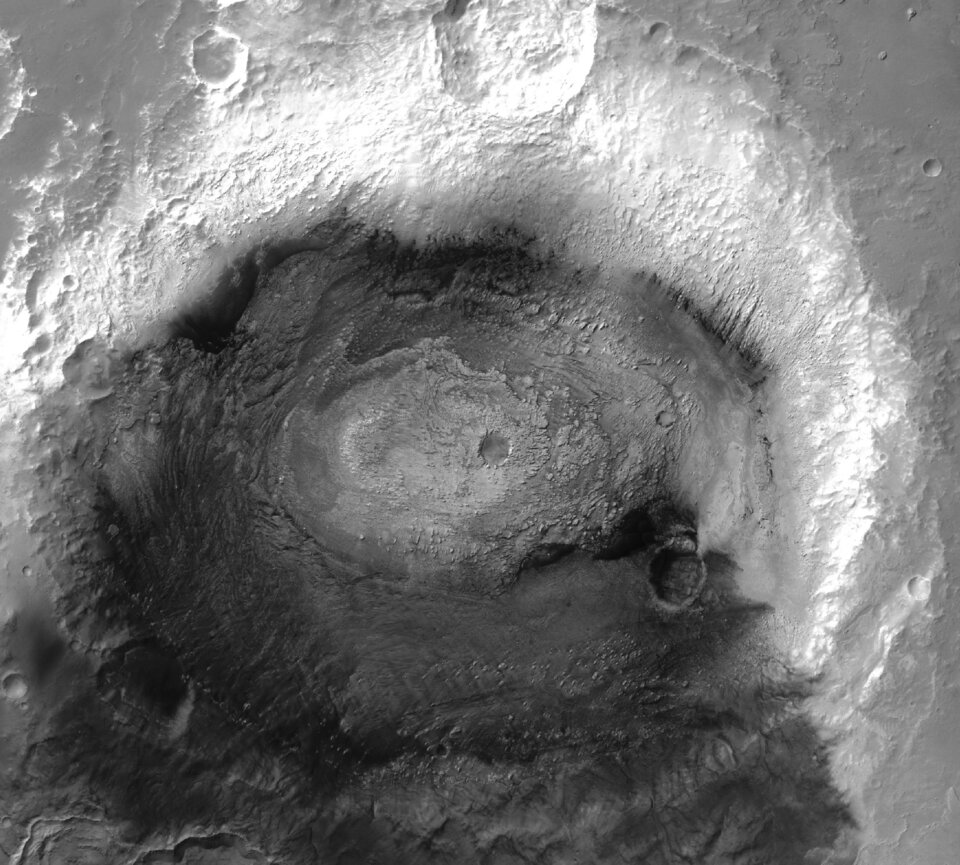
Now, based on Mars Express data, scientists propose that these sediments are actually younger than originally believed. Rossi and colleagues report their findings in a paper published in September this year. They have proposed that several LTDs may have been deposited by large-scale springs of groundwater that burst on to the surface, possibly at different times.
Analysis indicates that ground water had a more wide-ranging and important role in martian history than previously believed. Hydrated minerals, relatively young in age, have been found in the region.

Given that the deposits are relatively young in age, and associated with water, they may also have sheltered microbial life from the drier and harsher climate in more recent times on Mars, possibly eliminating the need for a stable atmosphere or a permanent water body.
Notes for editors:
These findings appear in ‘Large-scale spring deposits on Mars’ by A. Rossi, G. Neukum, M. Pondrelli, S. van Gasselt,T. Zegers, E. Hauber, A. Chicarro and B. Foing, was published in August 2008 in the Journal of Geophysical Research.