Celebrating the team behind the European Service Module
Human space exploration is built on collaboration, perseverance and shared ambition. At the European Space Agency, the teams behind the European Service Module (ESM) are helping shape the future of exploration beyond Earth orbit. Their work contributes to the Artemis missions, which are enabling humanity’s return to the Moon and laying the foundations for the next era of discovery. Here, some of our exceptional ESM team members share what it means to them to support these boundary-breaking missions.
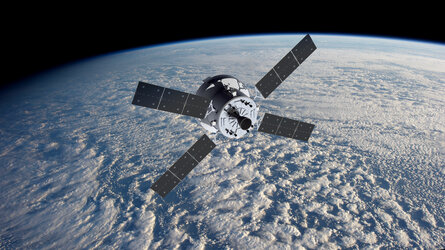
The European Service Module is a vital element of the Orion spacecraft. It provides propulsion, electrical power and thermal control, as well as water and air for the crew. In simple terms, it is the spacecraft’s powerhouse and life support system combined. Developed in Europe in partnership with industry, the European Service Module reflects decades of expertise in engineering, international cooperation and systems thinking. It enables missions that travel further than humans have ever gone, supporting astronauts as they journey beyond low Earth orbit and around the Moon.
“The European Service Module injected so precisely Artemis II towards the Moon that two planned trajectory burns were not necessary, demonstrating our know-how to its finest. This success is a testimony to the hard work of all the teams involved in this project. From the European engineers working for years on the development of the hardware, to the experts supporting the mission from the control rooms in Europe and in the United States... they are the ones that made the dream of going back to the Moon to stay come true.” - Daniel Neuenschwander, ESA’s Director for Human and Robotic Exploration
Behind every milestone stands a diverse community of professionals, each contributing their expertise to make these missions possible. Their perspectives reveal both the technical challenge and the human meaning of working on such a historic programme.

Jens Laursen, ESM System Engineer at ESA, reflects on the significance of the mission:
“For the first time Europe has contributed to sending a human-rated vehicle with crew further away than the Apollo programme ever reached. ESA and European industry have developed and delivered, on time, several European Service Modules to NASA and I am proud of ESA and European industry for achieving this historical milestone.
Spending days, evenings, nights and weekends with agencies and industry can be challenging but then when you sit in the control room and witness live videos, images and telemetry data from the vehicle and the onboard crew during flight, it makes it all worth it. That joy and that feeling are memories that will last and they are stories that I will tell the future engineers working in the space industry.”
Sara Pavesi, Mission and Performance System Engineer at ESA, highlights both the professional and personal dimension of contributing to the programme:
“Seeing Europe contributing to such a critical mission like Artemis II for the full Artemis programme and the future of human exploration is extremely inspiring and meaningful to me, both professionally and personally. Knowing that Europe is providing the backbone of the Orion spacecraft through engineering excellence, reliability and long-term system thinking is a real source of pride.

It is also a mission of firsts and milestones, among which the first crewed flight of the Orion spacecraft around the Moon, the first human mission beyond low Earth orbit in more than 50 years, the record for human spaceflight’s farthest distance and the first time a woman has travelled beyond low Earth orbit. Being part of a mission that is shaping the future of human exploration, and especially being part of the Artemis II Mission Evaluation Room team, is incredibly rewarding to me.
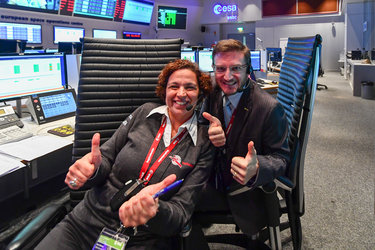
From ESA’s ESTEC site in the Netherlands, I have experienced the atmosphere of all mission phases: the focus, the tension and then the shared sense of achievement. It is a powerful reminder that behind every milestone there is a team fully invested in making it happen.”

Marco Arcioni, Assembly Integration Test and Verification Team Leader at ESA, emphasises the power of international cooperation:
“The Artemis II Moon flyby shows that space exploration is ultimately a shared human endeavour. Seeing Europe contribute through the European Service Module highlights how international collaboration makes such achievements possible. To me, it demonstrates the unique power of space projects to unite organisations, countries and expertise around a common goal. It’s not just about returning to the Moon, it’s about what we can accomplish together when we align our ambitions and work as one.
As AIT/AIV team leader, my most memorable experience is the time spent at Kennedy Space Center integrating and testing the European Service Module with the Orion Crew Module. Beyond the technical challenges, what stands out is the collaboration; working closely with NASA, Airbus and Lockheed Martin colleagues to solve problems together.
Those intense days built not only the spacecraft, but also strong relationships and trust. For me, that human collaboration is what truly defines the mission and lets us achieve together the impossible.”

Be part of the adventure
At ESA, careers in space are built on curiosity, collaboration and the drive to solve complex challenges. The people behind the European Service Module demonstrate how engineering excellence and teamwork can contribute to achievements that benefit humanity as a whole. Their work not only supports current lunar missions but also helps enable future exploration deeper into space.
If you are inspired by the opportunity to contribute to missions that expand our understanding of space and our place within it, explore career opportunities at ESA and become part of the teams shaping the future of exploration.

Stay connected
Stay up to date with the latest opportunities by visiting the ESA Careers website, subscribing to careers news and following ESA on LinkedIn.