ROSE-L given the shakes
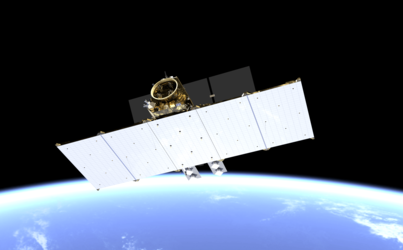
A structural model of the upcoming Copernicus Radar Observing System for Europe at L-band satellite, or ROSE-L for short, has recently been put through a series of demanding tests – including intense vibration – to demonstrate that the satellite will be able to withstand the stresses of launch and operations in orbit.
Once in orbit, ROSE-L’s data will support a wide range of applications, from soil moisture and crop monitoring to forest mapping, maritime surveillance, and the detection of natural and human-induced hazards.
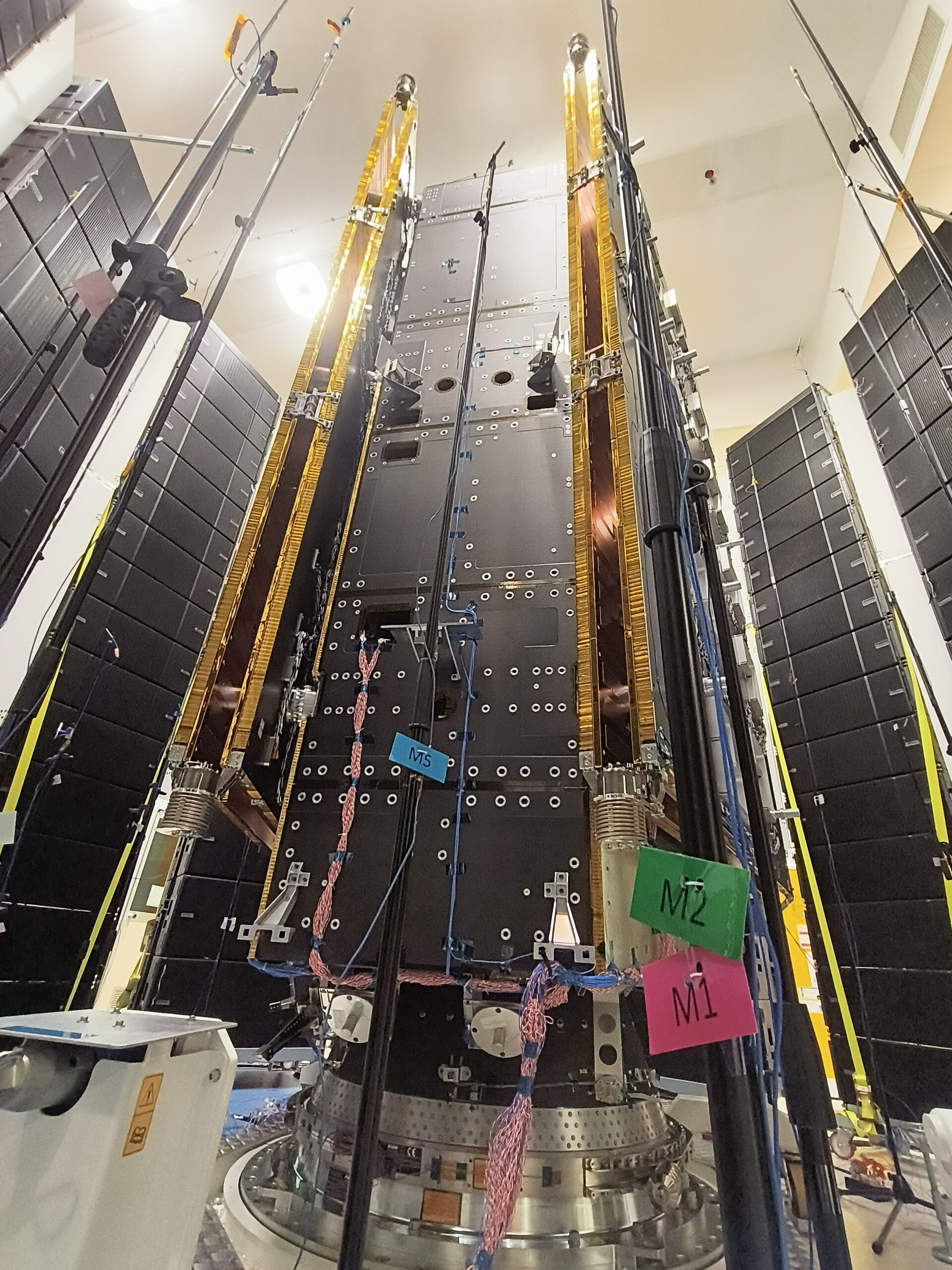
The five-week testing campaign took place at Thales Alenia Space’s facilities near Rome in Italy, and although satellite engineers ‘only’ used a structural model, it carried the full weight of ROSE-L’s ambitions.
Every beam, panel, and bracket – its central cylinder spine, the upper and lower cones, and the launcher interface ring – was built to mirror the true satellite with uncanny fidelity. Many of these components will be refurbished and subsequently be used in the real satellite.


Access the video
Mass dummies were also bolted into place to mimic the heft of yet-to-be-installed systems: the wide-winged solar array, the radar antenna, and countless other components that will one day look down on Earth from orbit.
ROSE-L then endured gut-punching sine vibration along all three principal axes, shaking with the same violence it will face atop a roaring rocket.
It also braved the deafening acoustic onslaught meant to recreate the launch environment, sound so intense it becomes a physical force. Day after day, between October and the end of November, the satellite structure stood firm.

ESA’s Project Manager for ROSE-L, Gianluigi Di Cosimo, said, “This was a very important series of tests, and we have seen that the satellite structure passed with flying colours. Our thanks go to the entire team, whose expertise and dedication were essential to achieving this milestone.
“The campaign actually began earlier in the year at SAB Aerospace in Brno in Czechia, where the structure passed its static load tests in July. It then moved to Rome for these dynamic mechanical tests, which have closed out the qualification programme.
“With this phase complete, attention now shifts to the upcoming integration of the actual satellite. This will take place in the newly-inaugurated Space Smart Factory in Rome – a 5000-square-metre facility featuring modular ISO 8 cleanrooms, advanced manufacturing tools, and a modern digital infrastructure aimed at streamlining satellite integration and testing.”
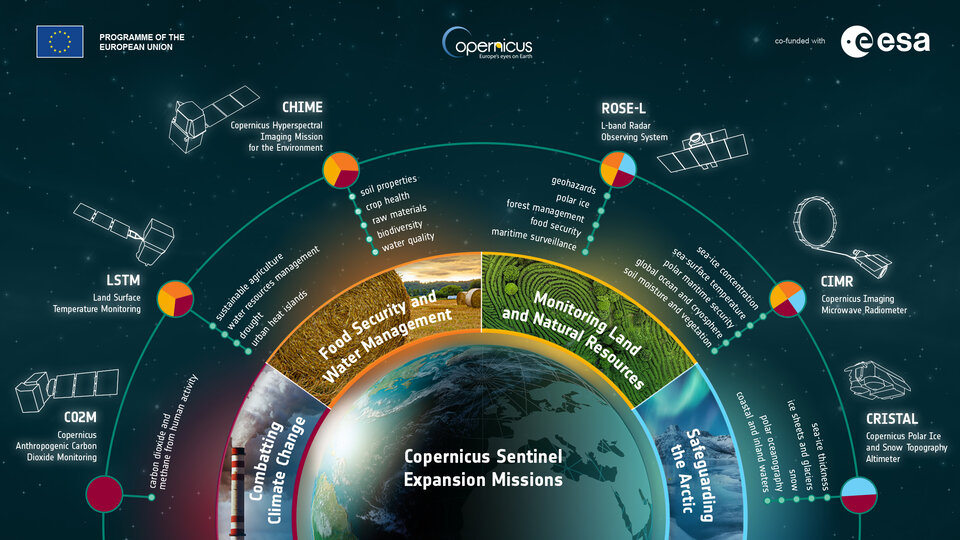
ROSE-L is one of the six Copernicus Expansion missions and is designed to meet key needs in land monitoring and emergency management. Using its L-band radar, the mission will support soil moisture mapping, crop monitoring, forest analysis, maritime surveillance, and the observation of natural and human-induced hazards. It will also provide valuable data on the cryosphere, including sea ice and land ice.
By doing so, ROSE-L will significantly enhance existing Copernicus capabilities and complement missions such as the Copernicus Sentinel-1 radar mission.
Thales Alenia Space serves as the prime contractor for ROSE-L, with responsibility for satellite and platform development, system integration and verification, and support for launch and commissioning.
Airbus Defence and Space GmbH is responsible for the design and development of the L-band synthetic aperture radar prior to delivery to Thales Alenia Space for integration.

Access the video