

Ready for lift-off? Apply now for ESA Academy’s new Access to Space training course
In brief
University students can now apply for the pilot edition of the Access to Space Training Course, which will be held from 27 to 31 October 2025 at ESEC-Galaxia in Belgium. Organised by ESA Academy in collaboration with ESA Space Transportation Directorate, this course will explore how and why the European Space Agency is ensuring Europe’s autonomous and reliable access to space.
In-depth

Without space transportation, space exploration would not exist. There would be no iconic view of our Pale Blue Dot from deep space, no orbital observations of Earth’s changing climate, no asteroid samples or strategies to deflect them. No planetary flybys. No human spaceflight. And no exploration of the Moon, Mars or other celestial bodies — in short, we would not be able to benefit from space applications, which today are an integral part of the infrastructure underpinning our economy and modern society, and we would not be able to explore outer space and enhance our knowledge about the past, present and future of our universe and the role of humankind therein.
Over the past decades, ESA and Europe’s space industry have collaborated to design, build, and launch a variety of space transportation systems, including the Ariane and Vega rocket families, providing ESA Member States with access to space. In partnership with France’s CNES, they established the European Spaceport in French Guiana, ideally positioned near Earth’s equator to take full advantage of the planet’s rotational speed boost.
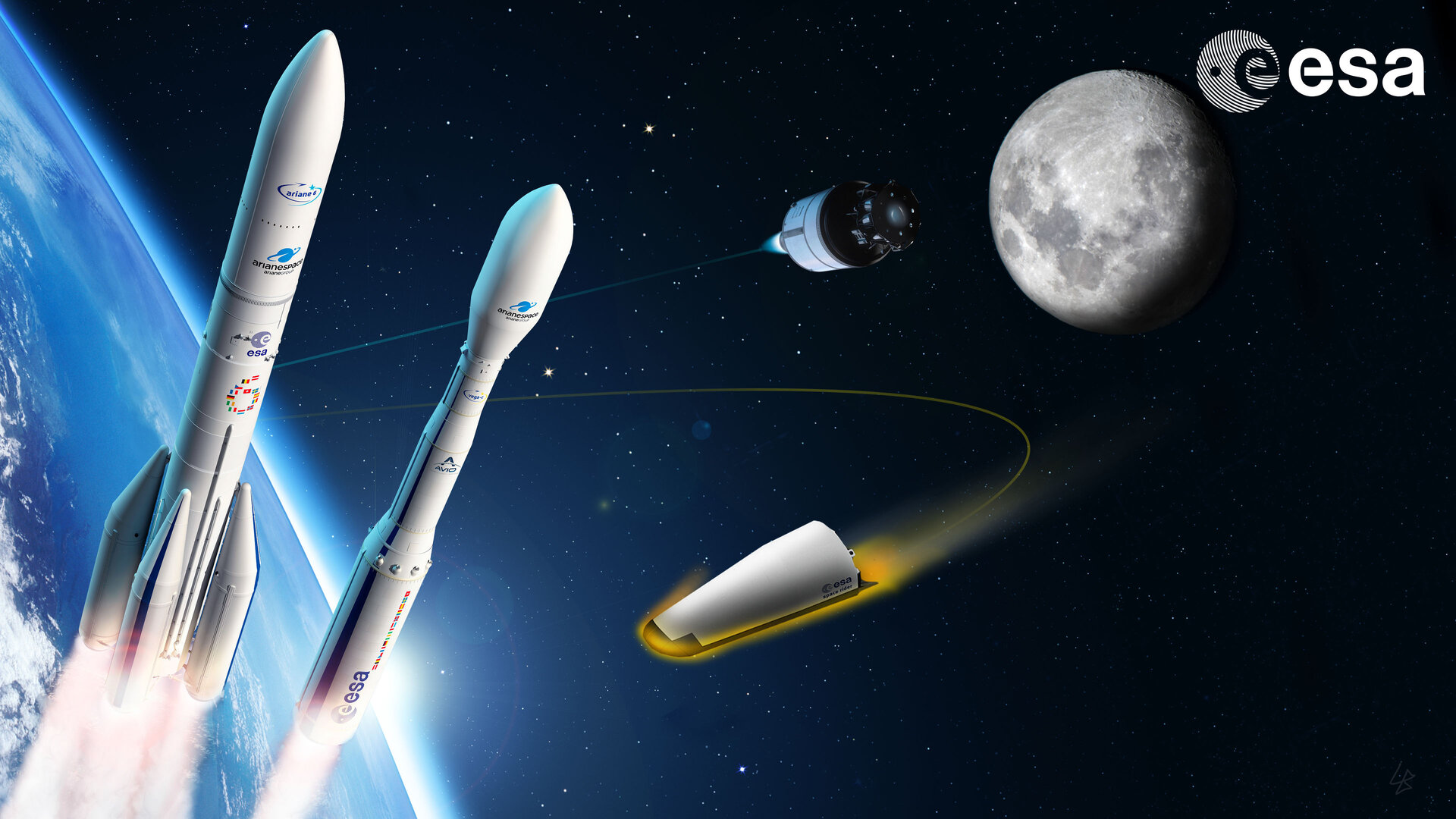
ESA’s Space Transportation Directorate plays a dual role: leading Europe’s space transportation ambitions and working to support innovation in Europe’s space transportation industry, research centres, and institutions—ensuring all Europeans benefit from our growing presence in space. Here’s what we’re working on today: Ariane 6, Vega C/E, Space Rider, the Boost! Programme, and many other projects for the future of space transportation.

This training course provides students with a thorough introduction to the key concepts and components of space transportation systems, including launcher technologies, ground support infrastructure, project management, sustainability, economic context, and related business opportunities.
Throughout the week, students will explore how innovative solutions can support humanity’s expansion beyond Earth. To apply their knowledge, participants will work in teams to develop an idea that incorporates the technologies and methods covered during the training.
Combining expert-led lectures with hands-on activities, the course will equip students with the knowledge and skills needed to drive innovation in the field of space transportation systems. The training will conclude with participants presenting their projects to a panel of experts.
At the end of the training session, students will be assessed based on their team project and will receive a certificate of participation along with a course transcript. These documents may be used to request ECTS credit(s) from their respective universities.
Preliminary schedule
| Day 1 | Why Go into Space: Science, Society, Business Space Transportation Systems: History, Milestones and Case Studies Rocket Science: Basics and Contemporary Design Lifecycle of a Launch System Operations |
| Day 2 | Going into Space and Back Anatomy of a Launcher Hands-on exercises |
| Day 3 | International Context, Laws and Regulations Sustainability Considerations Human Spaceflight: Human Physiology and Design Constraints |
| Day 4 | The Space Sector Economy European Industry of Launchers Business Plan |
| Day 5 | Future of Space Transportation Final group presentations |
Who can apply?
To participate, students must fulfil the following criteria at the time of application:
- aged minimum 18 years old. ESA Academy and relevant partners will only appraise applications from students who have no or limited professional experience in relevant engineering or space-related topics;
- be a citizen of an ESA Member State, Canada*, Latvia, Lithuania, or Slovakia;
- be enrolled as a Bachelor, Master, or Ph.D. student in a university for the academic year 2025-2026;
- be studying any subject: engineering, science, business, project management, laws and regulations, etc. If you are interested in the course content, it might be for you. This training course does not require any previous relevant knowledge.
The selected students who decide to attend the training will need to accept the ESA Academy’s Training Programme Code of Conduct to confirm their attendance. They will be sponsored by ESA to cover accommodation and meal expenses, as well as up to 350 euros for travelling to Belgium.
ESA is committed to achieving diversity and creating an inclusive professional environment. To this end, we welcome proposals and applications from all eligible candidates irrespective of gender, sexual orientation, ethnicity, beliefs, age, disability, or other characteristics. ESA Academy strongly encourages inclusiveness within its programmes and within participating teams, which contributes to the enrichment of our programme.
We seek to accommodate individuals with disabilities by providing the necessary support, either digitally or at the location of the training. In case of any questions or specific needs, please reach out to academy.training@esa.int to get assistance or advice during the application process.
* Canadian students enrolled in a Canadian post-secondary institution may apply for additional support from the Canadian Space Agency through this Announcement of Opportunity (grant applications must be submitted at least 8 weeks before the course delivery and account creation 3 weeks before the deadline). This additional support is to cover costs that are not already covered by ESA for selected Canadian post-secondary students.
How to apply?
- Fill in the application form;
- Upload a motivation letter (PDF, maximum 1 page, no image);
- Upload a CV (PDF, Europass format, maximum 2 pages, no image);
- Upload a formal recommendation letter (PDF, maximum 1 page, including signature, no image) from a university professor or academic supervisor of the current university (if it is not possible to receive the recommendation letter from your referee, please ask them to send a recommendation email to academy.training@esa.int before the application deadline);
- Upload a copy of your Transcript of Grades from the two previous semesters, or, if not available, the previous graded academic year (PDF).
All answers and documents should be in English (Transcript of Grades can be submitted in the language of the hosting university, if unavailable in English).
Deadlines
- The deadline for applications is 3 August 2025, 23:59 CEST.
- The selection announcement will be on 1 September 2025.
For more information, please contact academy.training@esa.int.