About YPSat-2
When ESA’s Space Rider launches for its inaugural flight, it will carry more than scientific experiments. It will carry the bold vision of ESA’s emerging generation. Developed entirely by young professionals across the Agency, YPSat-2 is the latest mission of the Young Professionals Satellite Programme. On board is the payload Angiology in Microgravity (AIM), an innovative experiment that dives into the critical field of space medicine, studying blood flow dynamics in microgravity and its potential risks to astronaut health. From conception to construction, AIM is not only science in action, but also a hands-on mission integrating multidisciplinary teams, novel technologies, and real-world spacecraft operations.
The science behind AIM
At the heart of YPSat-2 lies Angiology in Microgravity (AIM) a biomedical experiment designed to investigate the blood flow dynamics in microgravity. It specifically examines how blood behaves in weightless conditions, with an emphasis on the internal jugular vein, an area where Deep Vein Thrombosis (DVT) has been previously detected on board the International Space Station (ISS).
The main goal of the mission is to understand how microgravity alters haemodynamics over time, potentially leading to blood stagnation, vessel deformation, and clot formation, all critical health risks in long-duration missions.
AIM focuses on three primary scientific objectives:
- Characterise blood flow dynamics in a model of the human jugular vein under spaceflight conditions.
- Track the redistribution and stagnation of red blood cell analogues, identifying markers of potential clotting.
- Demonstrate Particle Image Velocimetry (PIV) as a reliable technique for visualising and measuring blood flow in microgravity.
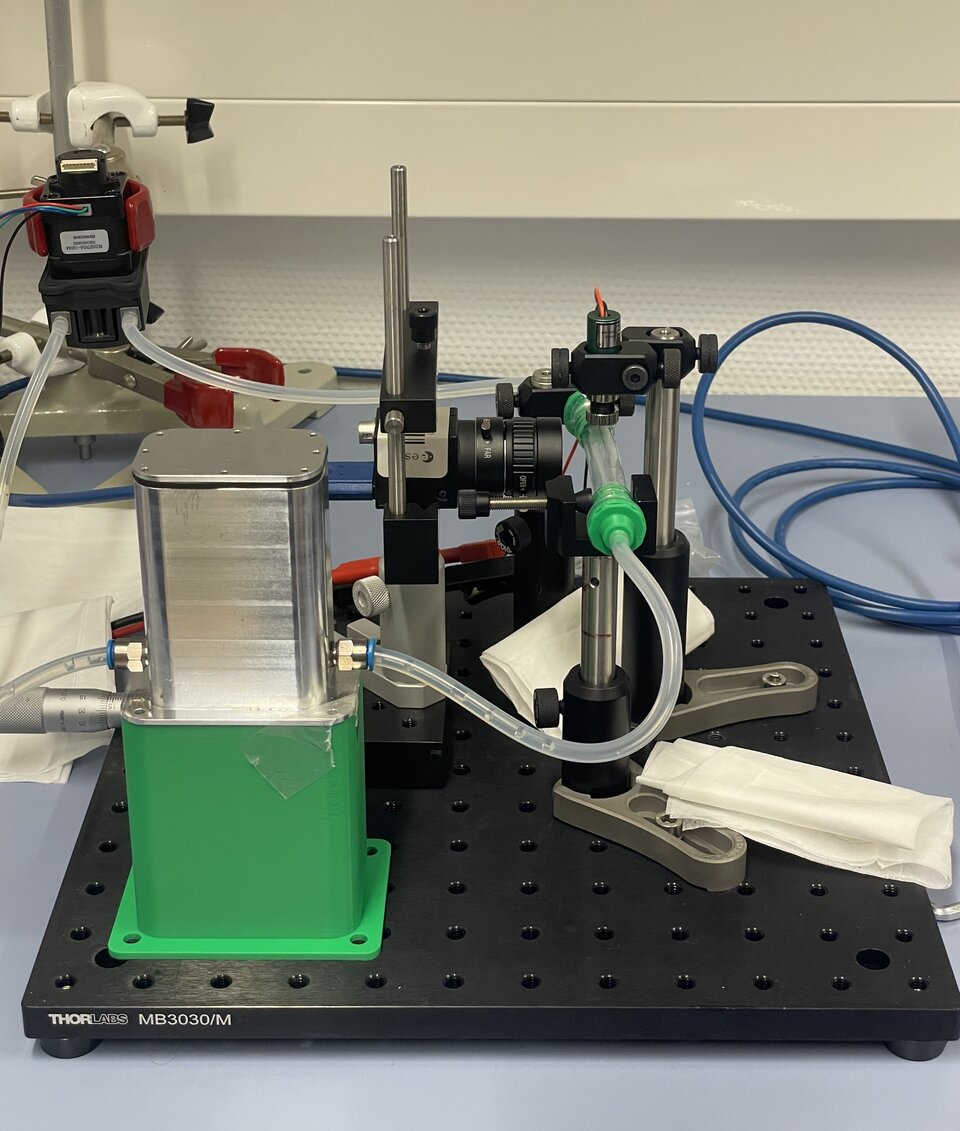
Using blood-mimicking fluid and a transparent, deformable vein phantom, AIM reproduces vascular conditions in orbit. A high-speed camera, laser sheet, and embedded pressure sensors allow the team to capture precise flow behaviour and observe the subtle changes that might otherwise remain invisible.
Payload details, how AIM comes together
The AIM payload is a compact, fully autonomous system designed to deliver high-resolution flow analysis under controlled conditions. The setup includes:
- A peristaltic pump that controls flow rate and mimics circulatory motion.
- A silicone vein phantom with realistic geometry and compliance, enabling vessel distension under pressure.
- A proportional valve to regulate the diameter of the vein phantom, simulating natural vein dilation and constriction.
- Particle Image Velocimetry (PIV) equipment, including:
- A laser diode and sheet optics for fluid illumination.
- A high-speed camera & lens for capturing particle motion in the flowing fluid.
- Environmental sensors (pressure, temperature) to correlate environmental conditions with fluid dynamics.
- Red blood cell analogues mixed into the fluid to track sedimentation and stagnation.
- Low-speed camera to capture the entire vein structure and provide a global view of the flow dynamics.
- LEDS to illuminate the plane for the low-speed camera.
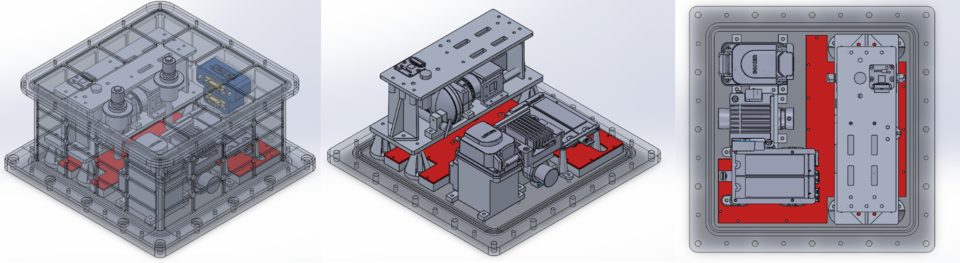
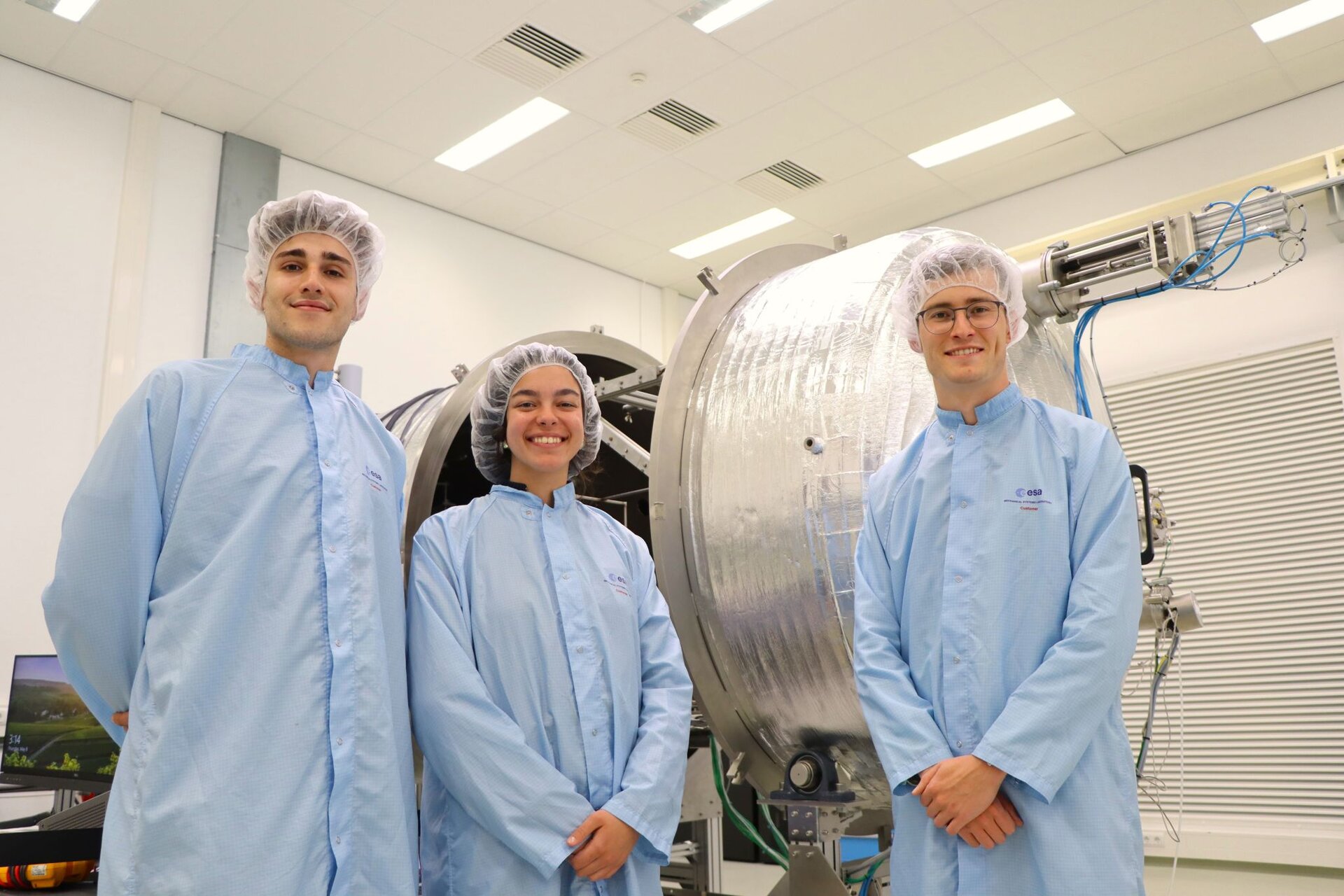
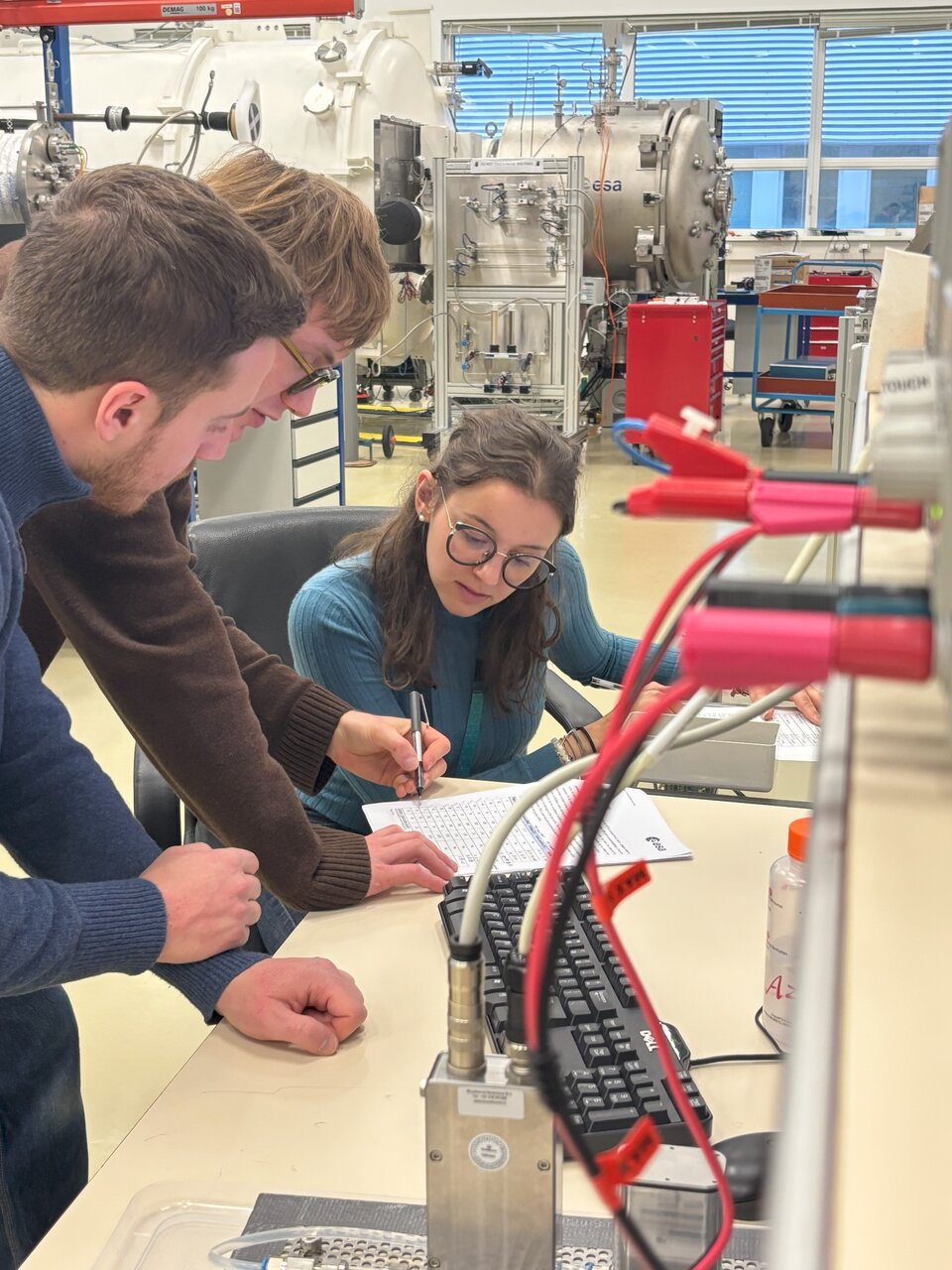
Each component of the payload is meticulously integrated by a distributed team of over 50 ESA young professionals. The YPSat-2 platform is structured into interconnected subsystems, each developed by a dedicated group:
| Subsystem | Responsibilities |
| Leadership & Communication | Oversee project development and manage stakeholder communication |
| Science Team | Define science objectives and payload components |
| System Engineering | Ensure cohesive design of the payload |
| Product Assurance | Ensure quality and compliance with ESA standards |
| Optical Engineering | Select and test optical instruments |
| Flight Software | Design, develop, and test flight software |
| Electronics | Design electronic architecture, select and integrate components |
| Thermal & Structure | Ensure thermal and structural stability throughout the mission |
| Payload Design | Design CAD model of the experiment |
| Knowledge Management | Manage documentation and gather lessons learned |
| Social Communications | Run public outreach campaigns |
“AIM is a masterclass in teamwork, it shows how over a dozen subsystems and disciplines can come together to create a single scientific instrument that’s ready for orbit.” – YPSat-2 Systems Engineer
Inside Space Rider, a platform for discovery
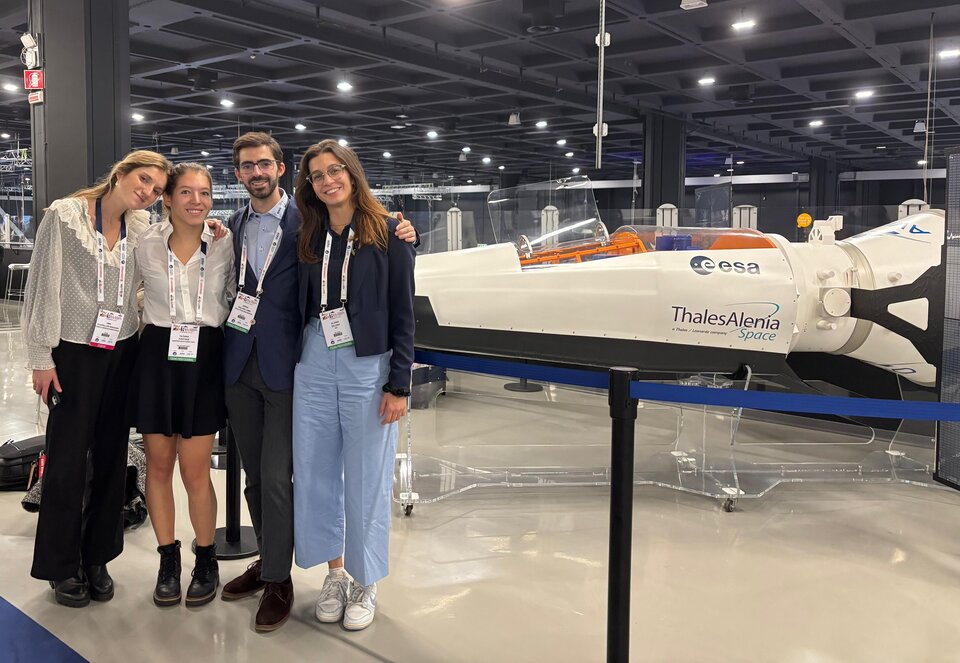
ESA’s Space Rider is a reusable orbital vehicle that bridges the gap between short suborbital flights and long-term space station missions. Unlike cargo spacecraft, it can remain in orbit for up to two months. It operates autonomously and returns its payloads intact. This makes it ideal for both in-situ and post-flight analysis.
YPSat-2’s AIM experiment is perfectly suited for this platform. Housed in the pressurised payload bay, it will benefit from an extended microgravity exposure period. This will enable the observation of haemodynamic changes over time, something short-duration parabolic flights or drop towers cannot offer.
Flight operations plan
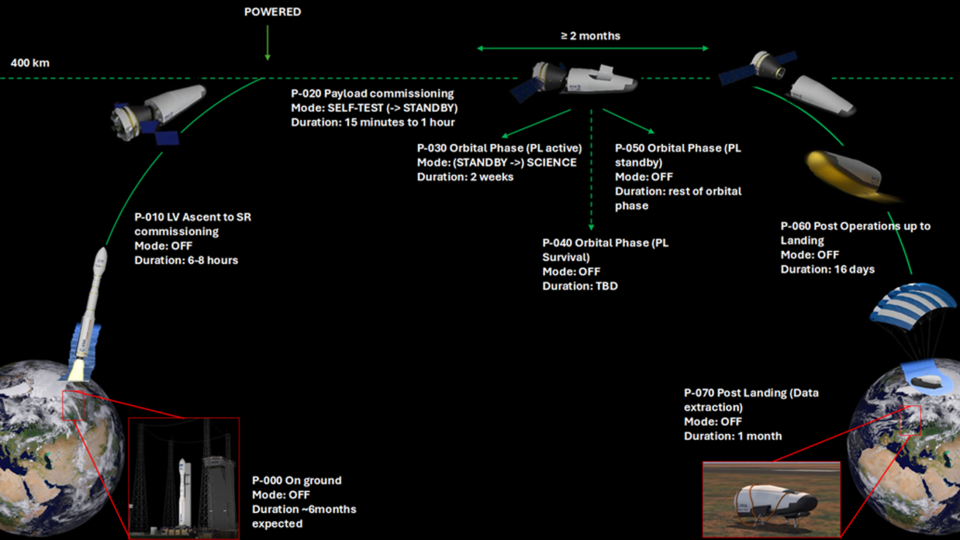
The YPSat-2 mission will begin its journey on board ESA’s Vega-C launcher, marking the start of an ambitious flight campaign for both the satellite and its onboard experiment, AIM. Once in orbit, YPSat-2 will remain securely housed within the payload bay of Space Rider, ESA’s new reusable orbital vehicle. Although the payload bay can control thermal conditions, it does not provide a pressurized environment. Once Space Rider is commissioned, the bay doors will open and a robotic arm will deploy, exposing all payloads, including YPSat-2, to the vacuum of space.
To ensure the protection of its non-space-qualified COTS components, AIM is internally pressurized to approximately 1 bar. This internal atmosphere allows sensitive systems to operate safely in orbit despite the harsh external environment.
During the autonomous mission phase, the AIM experiment will run according to pre-programmed sequences. During science mode, AIM will gradually adjust the flow rates and internal pressures to replicate the physiological shifts experienced by astronauts in microgravity. This continuous operation, lasting up to 14 days, is essential for capturing long-term haemodynamics effects.
Throughout the flight, critical data sets will be downlinked to Earth at regular intervals, allowing for early evaluation of the experiment’s performance and scientific output. Nevertheless, most of the science data will be stored on-board. At the end of the mission, Space Rider will perform a controlled re-entry, returning to Earth with YPSat-2 intact. Once safely recovered, the AIM payload will retrieve the data and undergo detailed post-flight analysis, enabling the team to potentially compare in-flight data with ground-based controls and further investigate the long-term effects of spaceflight on simulated human physiology.
“Space Rider is the enabler. Without it, AIM wouldn’t be possible.” – Payload Integration Team
By launching on board ESA’s Space Rider, the project aims to advance understanding of blood flow in microgravity, supporting astronaut health and bridging biology, fluid dynamics, and space engineering.