LARES: Laser Relativity Satellite
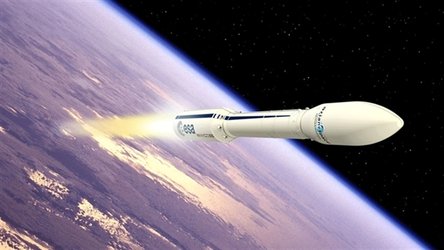
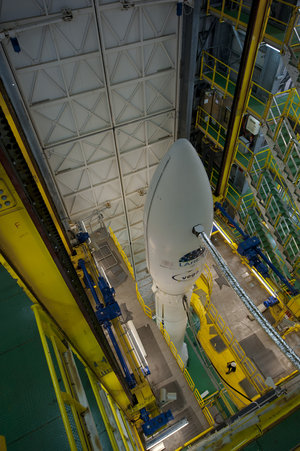
The main payload on Vega’s inaugural flight is the Italian space agency ASI’s LARES laser relativity satellite, built by Carlo Gavazzi Space SpA.
Building on the previous Italian-American geodetic missions Lageos-1 and Lageos-2, LARES will improve their measurements of the Lense–Thirring effect by a factor of 10.
The Lense–Thirring effect is the part of Albert Einstein’s theory of general relativity that describes the distortion of space-time caused by the rotation of a body with mass.
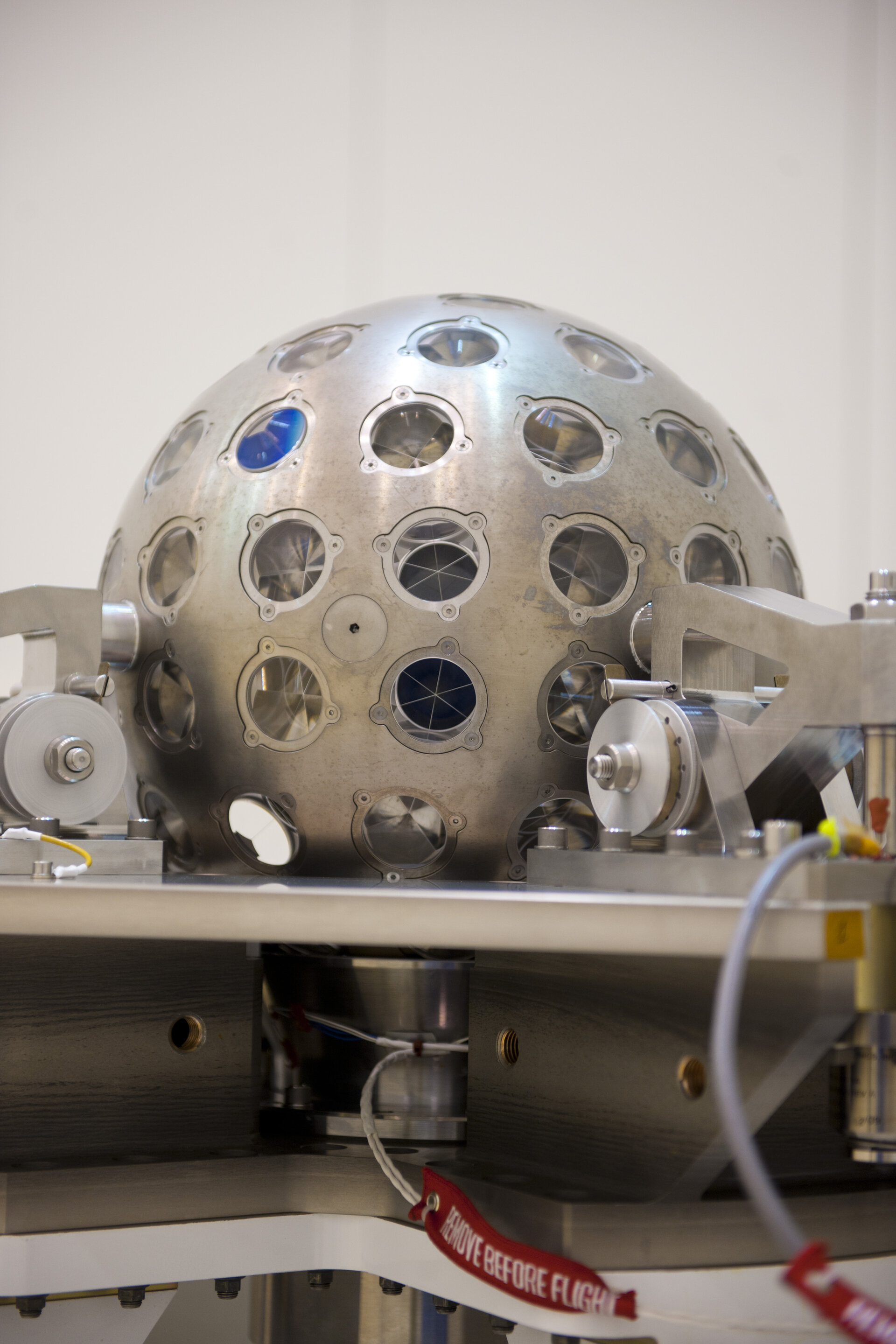
LARES (LAser Relativity Satellite) is a low-cost all-Italian mission with a short development time that will enable achieving important scientific goals in gravitational physics, fundamental physics and Earth sciences fields. The completely passive satellite is a tungsten sphere that has retroreflectors that allow the satellite's motion to be followed via laser from the Earth.
LARES went into orbit in 2012 from Europe's Spaceport with Vega's first launch and was inserted into orbit at about 1400 km at perigee with an inclination between 60° to 86° and reduced eccentricity. Data was acquired through the "International Laser Ranging Service" (ILRS), a network of various laser ranging stations in the world, which offers services for free on the basis of precise international agreements and makes all data immediately available. Data analysis was performed in a specially created centre.
Scientific Objectives
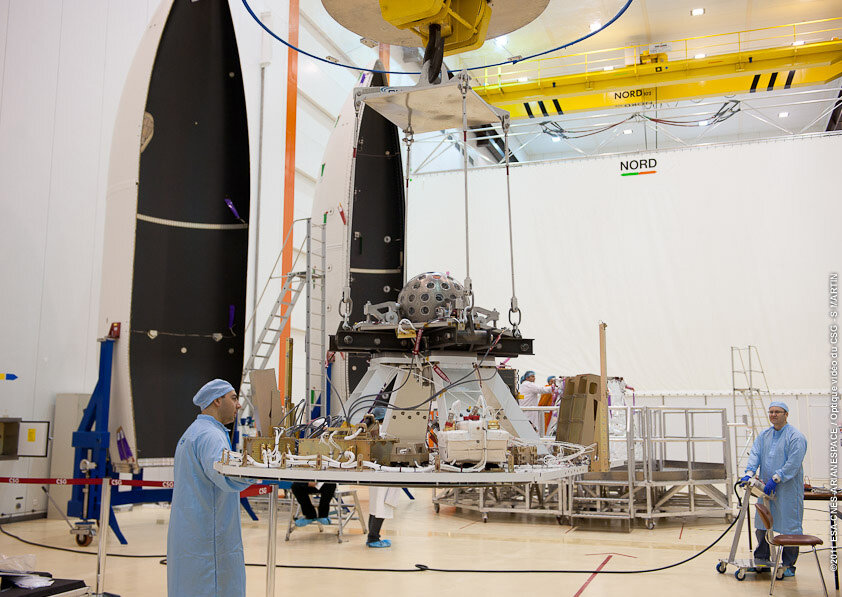
The small solid tungsten sphere is a passive satellite, weighs nearly 390 kg and features 92 retroreflectors. Ground stations send laser pulses to measure the precise time it takes the beams to travel between the ground and the satellite as it passes overhead.
The target injection orbit has a perigee altitude of 1450 km and an inclination of about 70º.