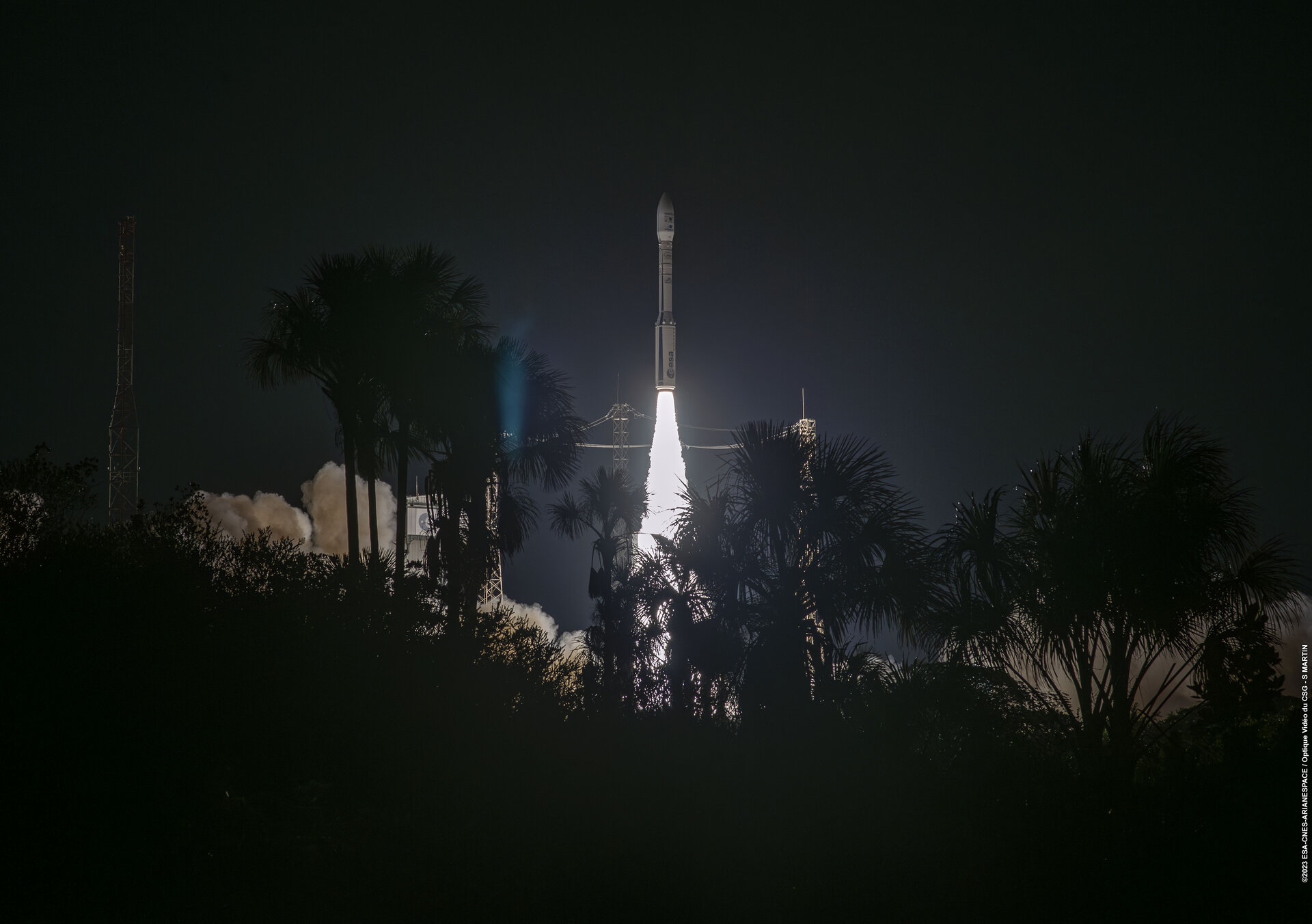
The Vega stages
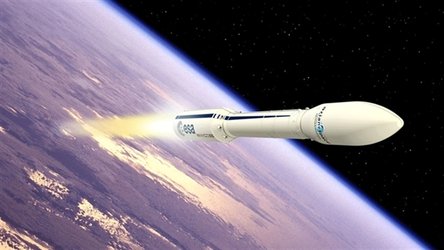
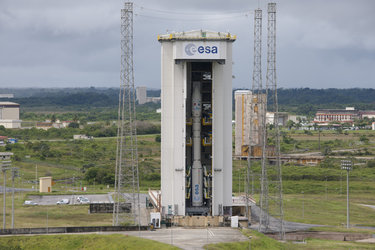
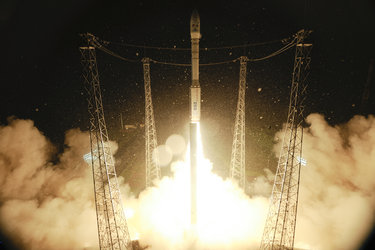
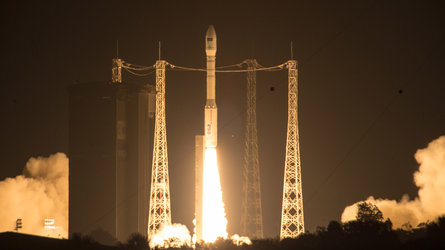
Vega had three solid-propellant stages and a liquid-propellant upper module for attitude and orbit control, and satellite release. Unlike most small launchers, Vega could place multiple payloads into orbit.
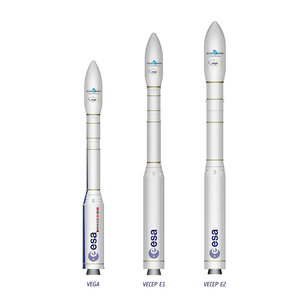
With a height of 30 m and a diameter of 3 m, Vega weighed a total of 137 tonnes at liftoff.
It had three main sections: the lower composite, restartable upper module and payload composite.
The lower composite consisted of the three stages and the stage interface structures.
P80 first stage
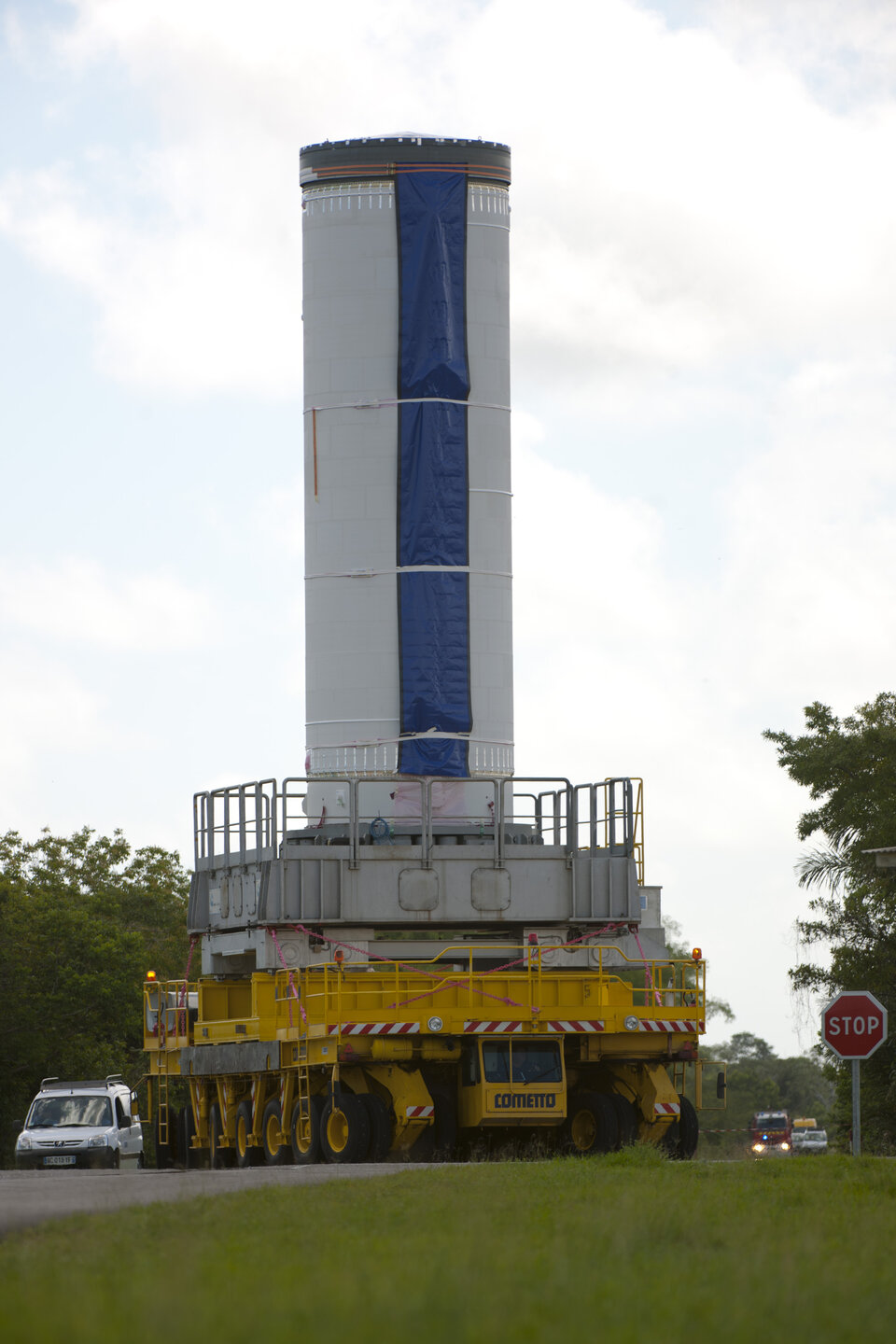
The P80 was developed both as Vega’s first stage and as a technology demonstrator. It was one of the largest, most powerful one-piece solid-propellant boosters ever built. The “P” in its name stands for “Powder”, as the 3.4-m cylinder houses solid propellant. The number 80 designates the 80 tonnes of propellant inside. Vega’s first-stage motor came to life on 30 November 2006 for the first time when it was ignited for its first static firing test at Europe’s Spaceport in French Guiana.
| Height | 10.5 m |
| Diameter | 3 m |
| Propellant mass | 88 t |
| Burn time | 107 s |
| Max. engine thrust | 3040 kN |
Zefiro-23 second stage
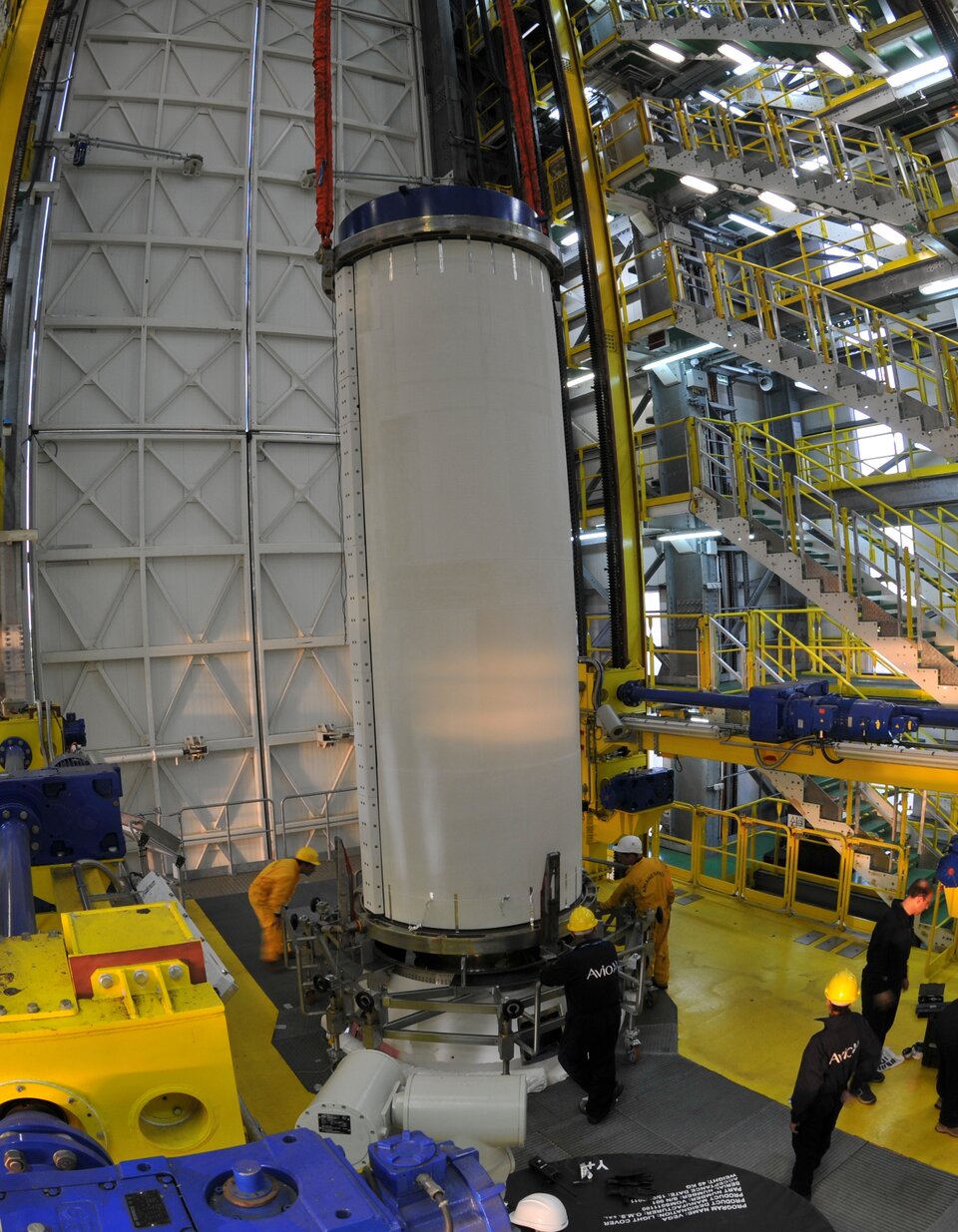
On 27 March 2008, the second stage motor for Vega successfully completed a static firing test at the Salto Di Quirra Inter-force Test Range in Sardinia, Italy. This was the second and final firing test for the Zefiro 23, in which over 24 tonnes of propellant was consumed with a flame temperature of over 3000 K. The burn lasted approximately 75 seconds. The Zefiro 23 was the second Vega solid rocket motor to achieve qualification, following the P80 first stage motor, which completed qualification testing in December 2007.
| Height | 7.5 m |
| Diameter | 1.9 m |
| Propellant mass | 23.9 t |
| Burn time | 71.6 s |
| Max. engine thrust | 1200 kN |
Zefiro-9 third stage
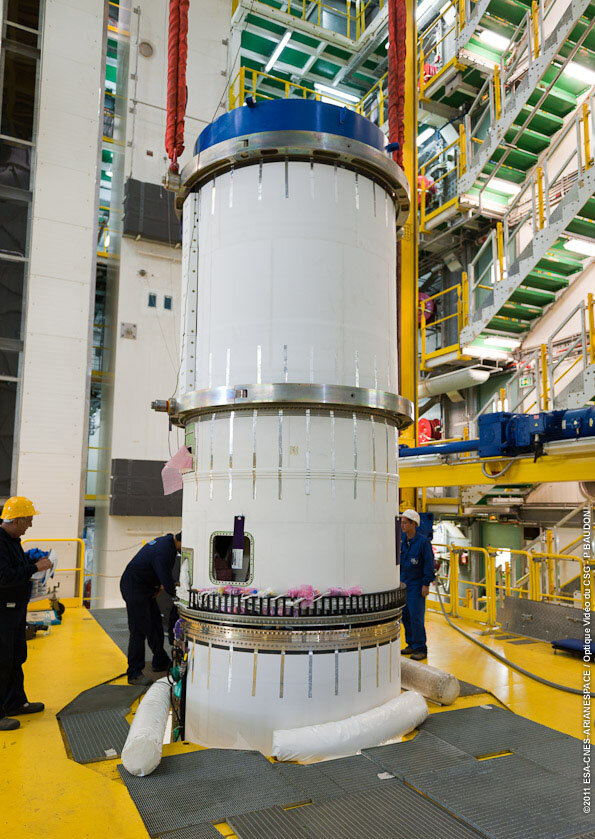
Zefiro-23 and Zefiro-9 are based on the previous Zefiro-16 technology demonstration carried out by Italian space agency ASI. Both stages were loaded with solid propellant before their shipment to Europe’s Spaceport in French Guiana. The technology used for Zefiro 9, as well as for Vega’s Zefiro 23 second-stage motor, is similar to the Zefiro 16 but with a number of improvements to the structure and the composite materials used for the motor. Improvements also included the use of HTPB 1912 solid propellant and new technology for the igniters inside the motor that are consumable and decompose after firing through pyrolysis. Another new addition was electric actuators that operate the movable nozzle.
| Height | 3.85 m |
| Diameter | 1.9 m |
| Propellant mass | 10.1 t |
| Burn time | 117 s |
| Max. engine thrust | 313 kN |
Attitude & Vernier Upper Module (AVUM)
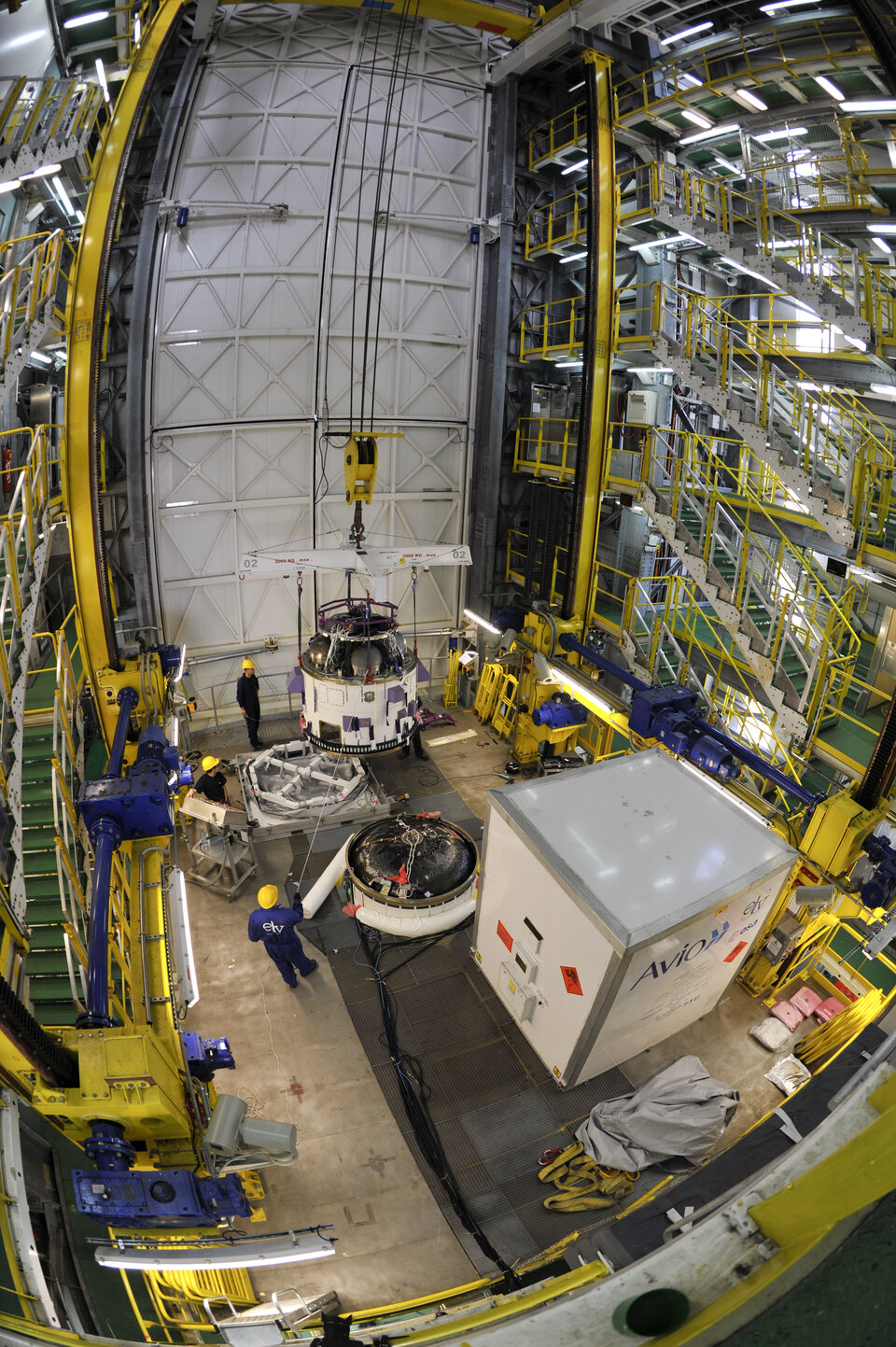
The restartable fourth stage, AVUM, hosts the Propulsion Module and the Avionics Module. It is restartable up to five times, allowing it to release multiple satellites into different orbits. The AVUM upper module consisted of a propulsion module and an avionics module. It used an RD-869 rocket engine liquid-fuel rocket, burning pressure-fed UDMH and nitrogen tetroxide as propellants.
| Height | 1.74 m |
| Diameter | 1.9 m |
| Propellant mass | 550 kg |
| Burn time | 317 s |
| Max. engine thrust | 2450 N |
Payload composite
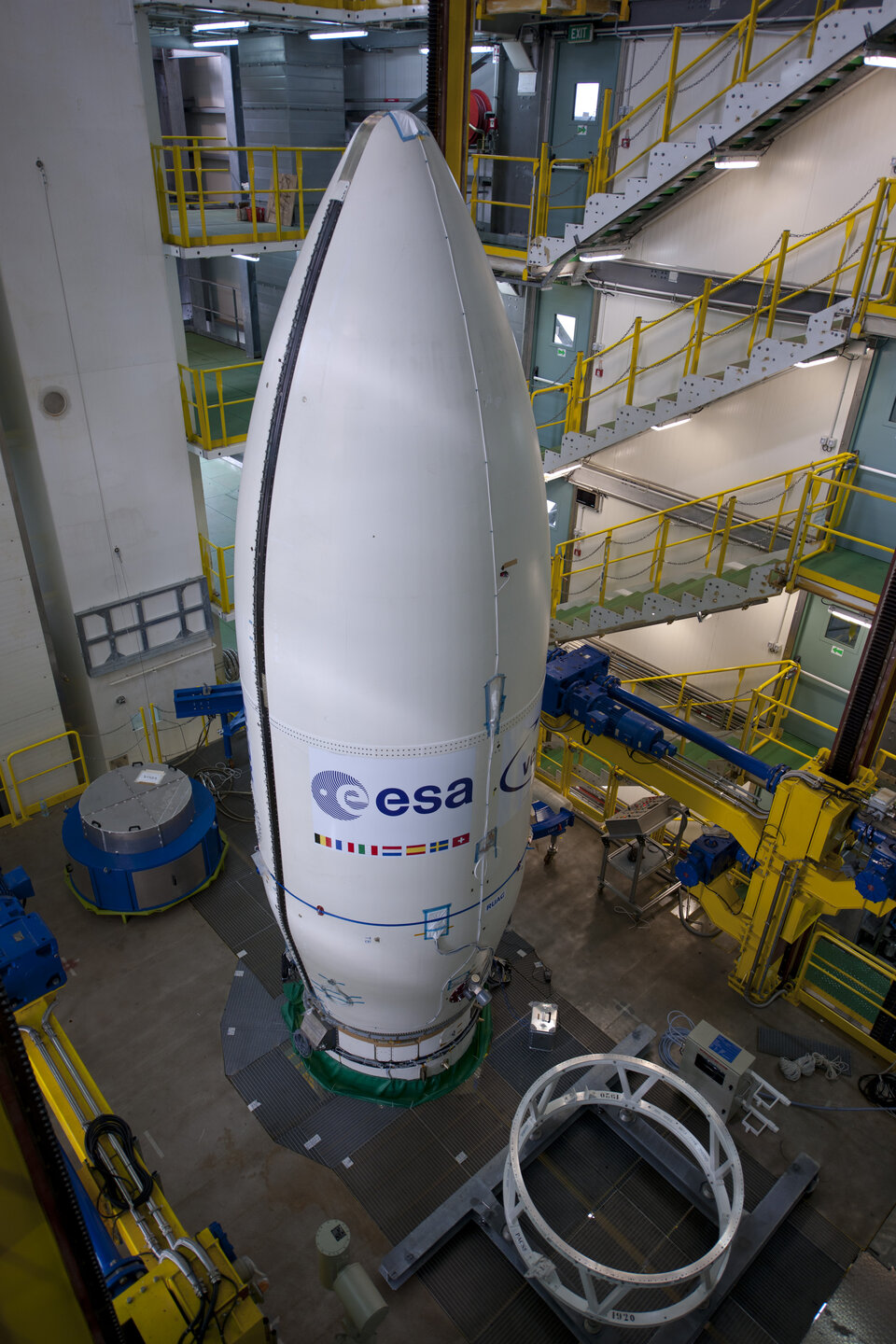
The payload composite is composed of a fairing and the payload–launcher interface structure. The fairing is Vega's nose-cone made of half shells that splits into two once in space, revealing the payload inside. The fairing protected the payload during ascent and provided an aerodynamic shape as Vega soared through our atmosphere. The payload composite included the interface structure that connected the payload to the fourth stage AVUM.
| Height | 7.18 m |
| Diameter | 2.6 m |
| Payload volume | 20 m<sup>3</sup> |
| Fairing mass | 470 kg |
Launch performance
Vega was compatible with payload masses ranging from 300 kg to 2500 kg, depending on the type and altitude of the orbit required by the customers. The benchmark was for 1500 kg into a 700 km-altitude polar orbit.