Asteroids
Asteroids are cosmic time capsules. These ancient rocks, left over from the formation of the Solar System, offer a direct link to our distant past. They provide clues to how planets like Earth formed and what materials shaped our cosmic neighbourhood.
What do we already know about them, what mysteries remain, and how is the European Space Agency protecting Earth from future asteroid impacts?

Born over 4.6 billion years ago, asteroids are rocky remnants of the cosmic construction site that created the planets and their moons. Unlike the planets, which grew large and spherical, asteroids remained as broken building blocks, preserving the raw materials from which planets and other celestial bodies were formed.
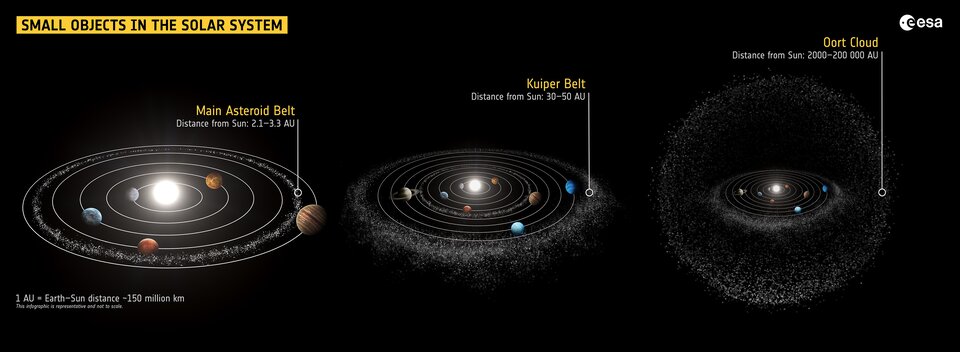
The first-ever asteroid was discovered on New Year’s Day 1801. Named Ceres, this 950 km-wide space rock is so big that it was later also classified as a ‘dwarf planet’. Together with over a million asteroids, Ceres lives between Mars and Jupiter, in a ring of space rocks circling the Sun known as the ‘main asteroid belt’.
Asteroids are just one of a variety of types of small objects traversing space, and scientists have a number of different names for them. This handy infographic illustrates what’s what in the fascinating world of space rocks.
Where are asteroids found?
These rocky remnants mostly reside in the asteroid belt (seen in green/blue in the image below), a vast region between Mars and Jupiter where millions of asteroids orbit the Sun. In this part of the Solar System, Jupiter’s immense gravitational pull prevented these rocks from coming together to form a planet. But not all asteroids are confined to the asteroid belt.
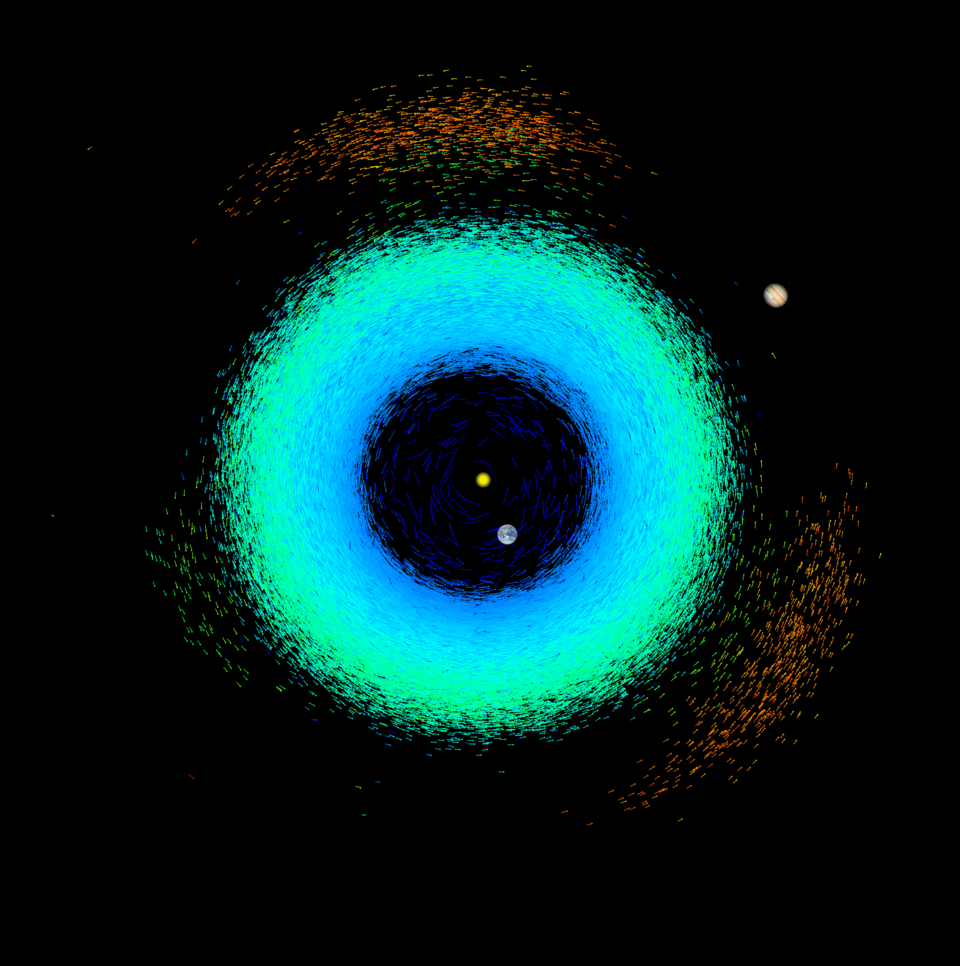
Some, called near-Earth asteroids, have orbits that bring them close to our planet, making them subjects of both scientific curiosity and planetary defence measures. Trojan asteroids, meanwhile, share orbits with big planets like Jupiter, travelling ahead of or behind a planet as it circles the Sun.
Asteroids are often compared to comets, another class of small bodies in the Solar System. While they both orbit the Sun, they show some key differences. Comets are icy wanderers, born in the cold outer reaches of the Solar System. As they approach the Sun, their ices turn to gas, creating the bright, iconic tails that make them such spectacular sights in the sky. Asteroids, by contrast, are mostly made of rock and metal, lacking the icy glimmer and stunning displays of comets.
What are asteroids made of?
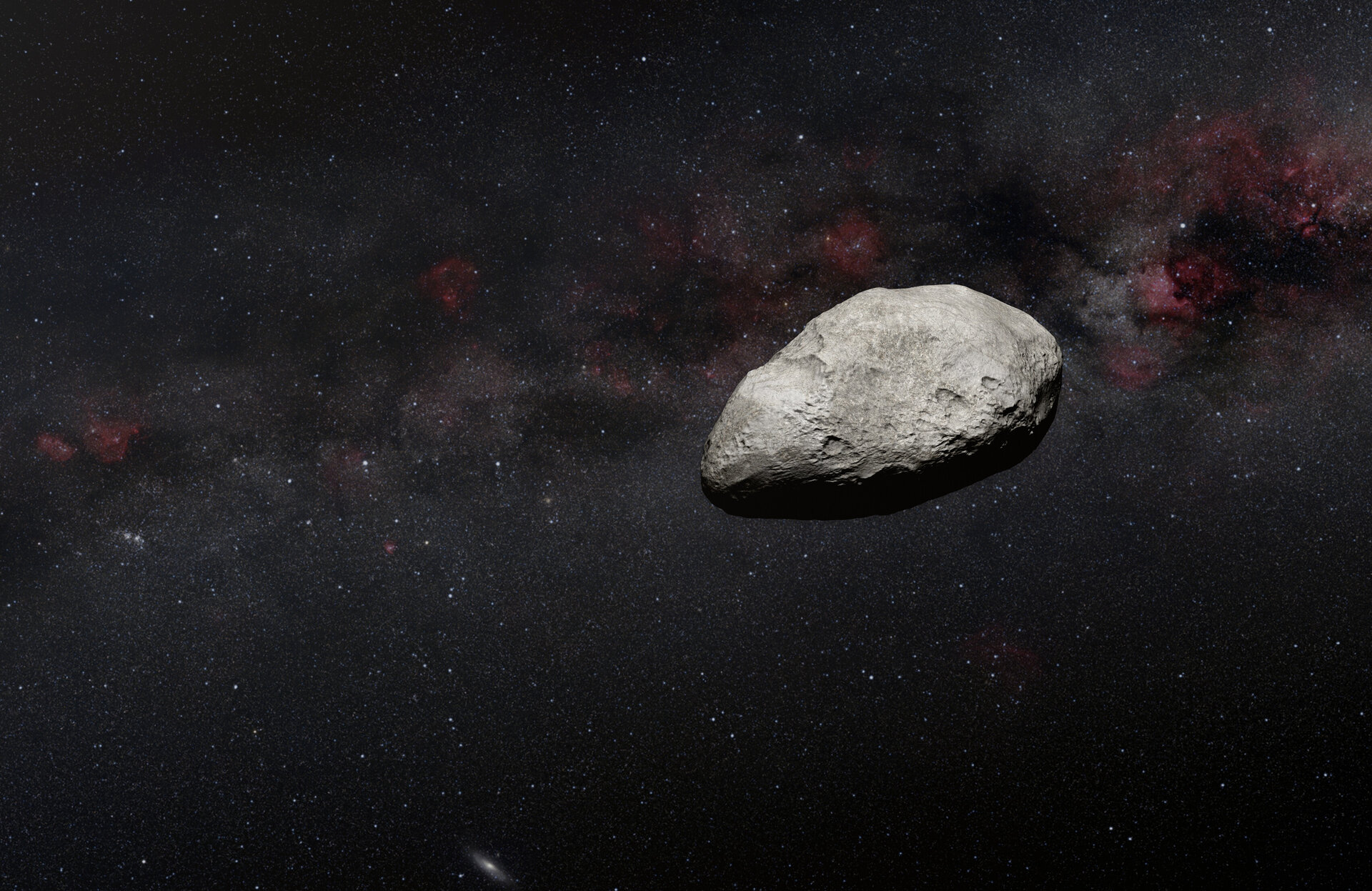
Asteroids come in many different shapes and sizes, with a huge diversity in what they are made of and where in the Solar System they are found. Some are as dark and dull as coal, others are bright and metallic. Their diversity provides rich data for researchers, giving insight into the early days of the Solar System.
Classifying asteroids is complex, and several different sorting schemes exist. But in general, most asteroids can be classified into one of two groups: C and S.
More than three quarters (75%) of known asteroids belong to the carbonaceous (carbon-rich) C-group. Very dark and mostly made of carbon, C-group asteroids are thought to be the most ancient, reflecting the very materials that existed when the Solar System formed. They mostly live in the outer regions of the main asteroid belt.
Next, around a fifth (20%) of known asteroids are siliceous (or stony) S-group, composed of silicate rocks, including metal-bearing minerals. Many S-group asteroids are fairly bright through reflection of sunlight, and they are mostly found in the inner regions of the main asteroid belt.
The rest – around 5% of asteroids – can’t be classified as either carbon-rich or stony. They are highly diverse, some being rocky and some consisting of metals like nickel or iron. Some are very dark and some are very bright. The metallic ones, for example Psyche, may be fragments of larger bodies that once had liquid cores, before they were shattered in collisions long ago.

Though the largest asteroids are probably solid, many smaller ones are likely to be piles of rubble held loosely together. Some even have little moons, possibly as a result of collisions that broke apart the parent asteroid.
In recent years, scientists have found water on several asteroids, including using ESA’s Herschel mission to discover water vapour around Ceres in 2014. The line between asteroids and their comet cousins is blurring, and scientists are beginning to wonder whether asteroids could have brought the first water to Earth billions of years ago.
What’s more, asteroids contain traces of organic compounds essential to life on Earth, leading to speculation that they may have brought to Earth some of the chemicals necessary to ignite life. Either way, these cosmic fossils could provide hints about the origin of life, holding secrets to how everything in the Solar System came to be.
Humans and asteroids, a match made in space
Whilst we have been observing asteroids from Earth for two centuries, space missions have recently given us a chance to engage more intimately with these cosmic entities. The first close-up observation was by NASA’s Galileo spacecraft in 1991. Then in 2001, NASA’s NEAR Shoemaker made history as the first spacecraft to land on an asteroid, touching down on 433 Eros.
More recently, JAXA’s Hayabusa and Hayabusa2, as well as NASA’s OSIRIS-REx, brought samples back from the asteroids Itokawa, Ryugu and Bennu, delivering to Earth a precious cargo of untouched space rock that could unlock the mysteries of asteroid composition.
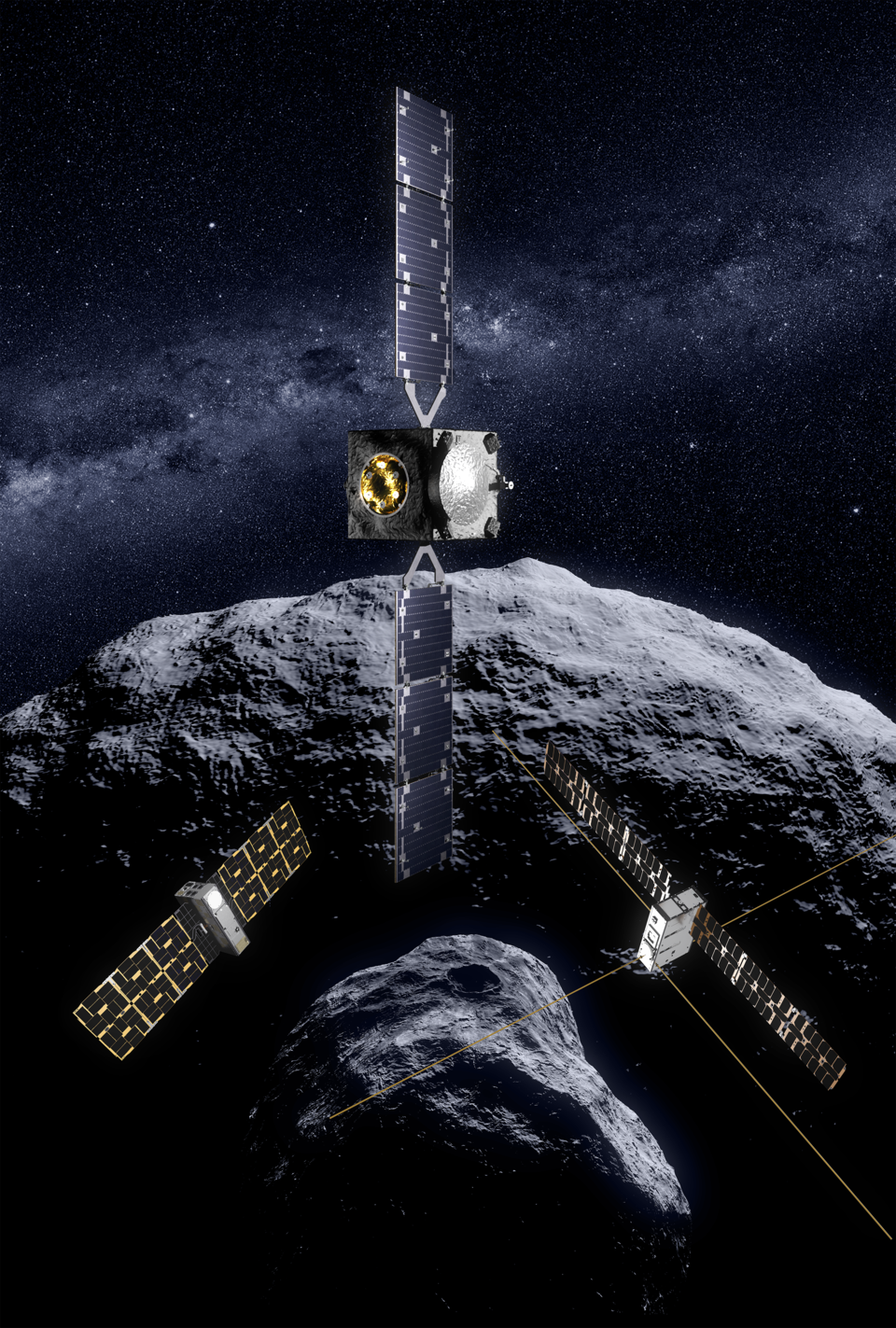
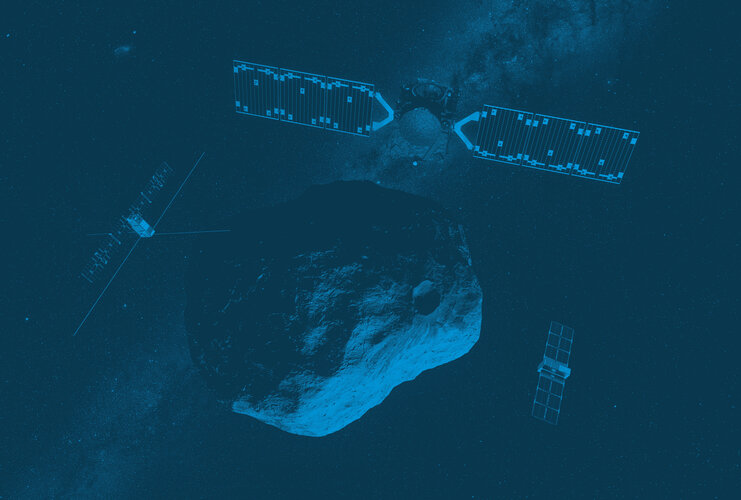
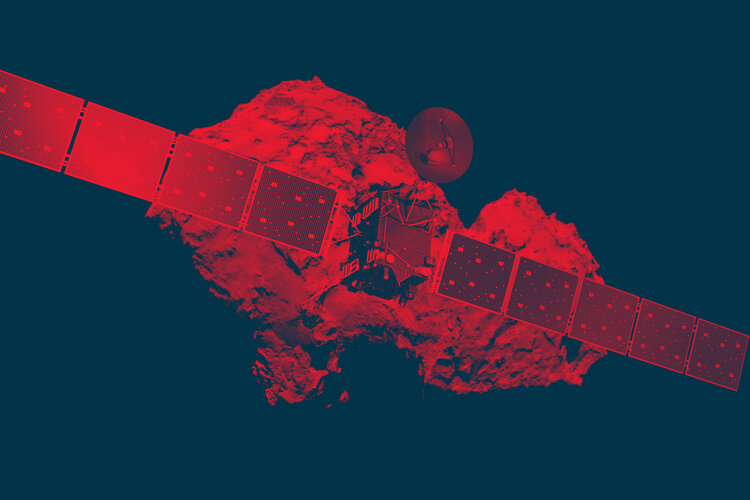
ESA’s Rosetta mission, famous for its exploration of Comet 67P/Churyumov-Gerasimenko, also studied asteroids, providing valuable data on Šteins and Lutetia as it made its journey through space. And ESA’s Hera mission is on its way to visit the binary asteroid system Didymos, contributing to an international effort to better understand how to protect Earth from potential asteroid impacts.
But while asteroids are scientifically fascinating, they also pose risks. We know of tens of thousands of asteroids with orbits that bring them close to Earth, and even though collisions between big space rocks and Earth are very rare, the consequences are catastrophic. Consider the dinosaurs, who didn’t have a space agency to protect them from cosmic dangers.
ESA’s Near-Earth Object Coordination Centre works with partners around the world to keep a close eye on those asteroids, tracking their movements and assessing any potential threats. With its Hera mission, ESA is testing a technique for deflecting hazardous asteroids, helping to ensure that Earth stays safe from these ancient travellers.

The story of asteroids is far from over. These cosmic time capsules carry secrets from the earliest days of the Solar System and could hold clues about our future in space. Just like Marty and Doc jumping through time, asteroids let us glimpse both the past and what is to come, reminding us that sometimes the key to the future lies in understanding our origins.
Last updated: June 2026