Vigil’s tools as a space weather reporter
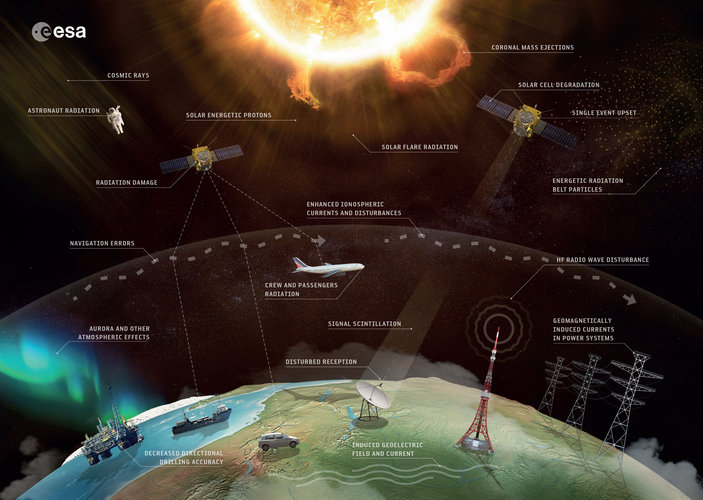
Big solar storms, like the one in May 2024 that lit up the skies with stunning auroras across Europe, have the potential to disrupt power grids, communications and satellites. Space weather, driven by solar activity, needs to be predicted early and accurately to give us the crucial time needed to protect satellites, astronauts and vital infrastructure on Earth.
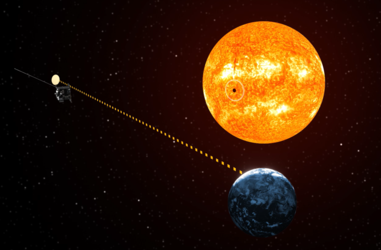
That’s where ESA’s Vigil mission comes in. Acting as a dedicated ‘space weather reporter’, Vigil will drastically improve our forecasting abilities with its specialised set of instruments, delivering breaking space weather news from its unique deep-space vantage point at Lagrange point 5 (L5).


Access the video
The power of the L5 perspective
Vigil will be ESA’s – and the world’s – first dedicated operational space weather mission at the fifth Lagrange point in deep space. Sending data continuously across 150 million kilometres back to Earth is both difficult and costly.
It requires sophisticated onboard data processing, a steady, low-latency data downlink with deep space antennas, and the transformation of Vigil’s raw data into actionable insights for space weather services. No small technical challenge.
It is the power of Vigil’s instruments combined with its position, observing from the unique perspective of the fifth Sun-Earth Lagrange point (L5), that will make it worthwhile. This new vantage point will vastly improve forecasts, allowing earlier warnings of up to 4–5 days in advance for certain space weather effects. Vigil’s valuable lead time may mean the difference between a minor inconvenience and a major disruption.
How can location alone be so crucial? There are three main ways Vigil’s instruments benefit from being located at the L5 vantage point.
1. Looking around the corner
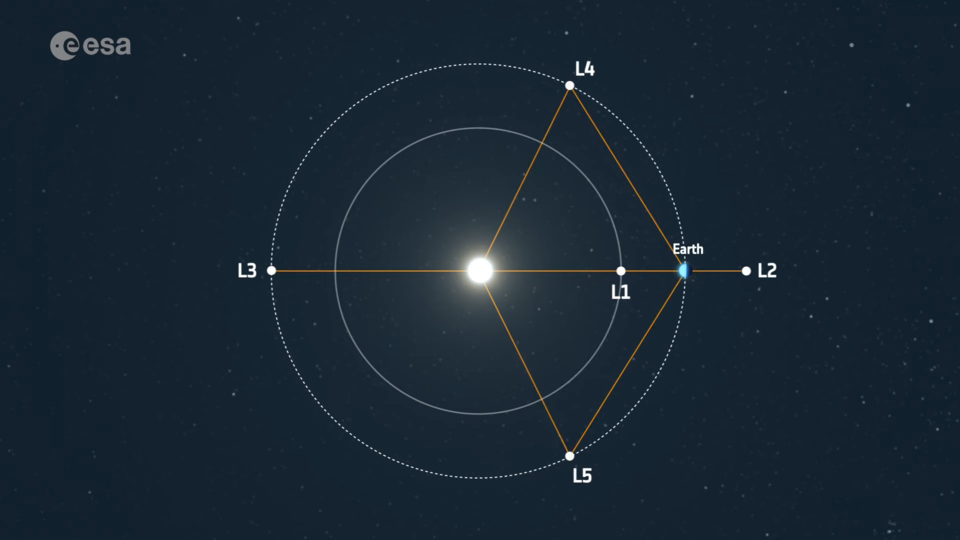
At the fifth Lagrange point, Vigil can observe the Sun’s surface and atmosphere from the side. As the Sun rotates on its axis approximately every 28 days, regions of enhanced activity can rotate into Earth’s view and immediately erupt towards us with little warning. Because Vigil will be positioned at L5, it offers a vital early glimpse ‘around the corner,’ detecting potentially hazardous regions several days before they face Earth, allowing time to prepare and respond.
Vigil’s Photospheric Magnetographic Imager (Max Planck Institute for Solar System Research, Germany) will image the Sun’s surface magnetic fields to help predict solar activity and sunspots, and its data will feed into models of the heliosphere.
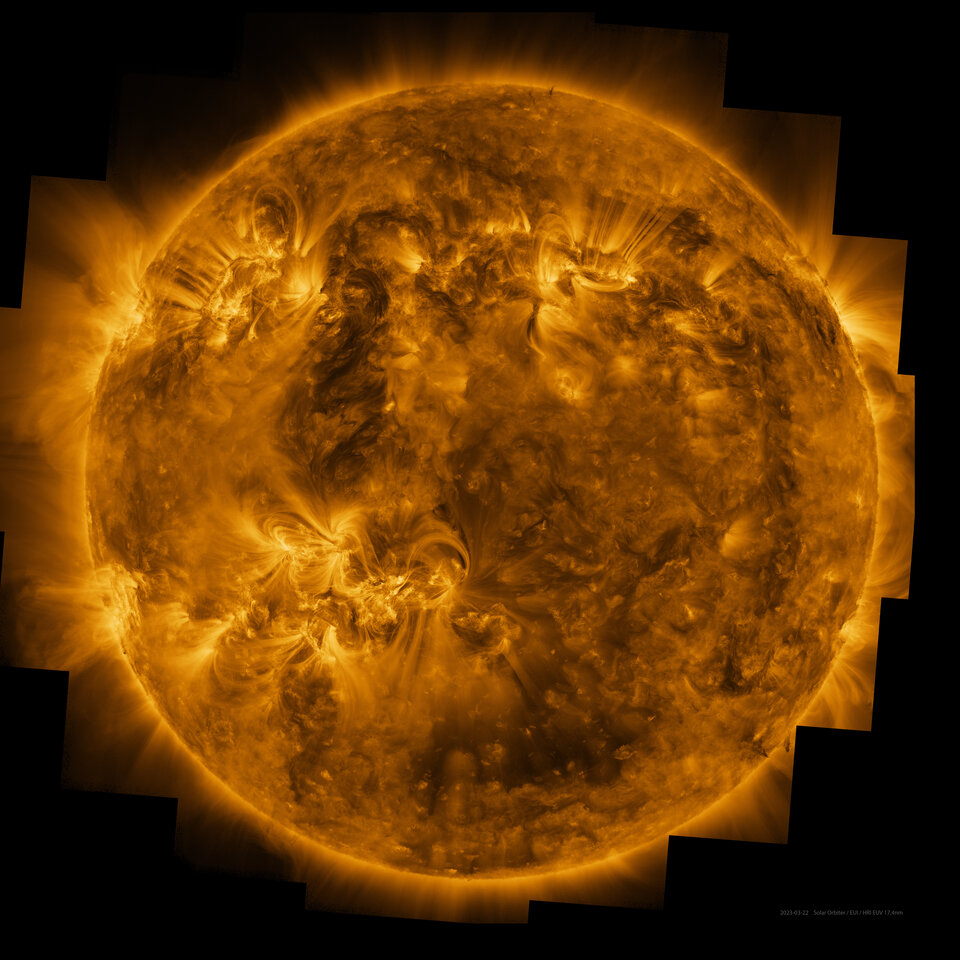
At the same time, extreme ultraviolet imager JEDI (South West Research Institute/NASA, USA) will capture high-resolution images of the Sun’s atmosphere to locate solar flares and eruption sites.
Together, these instruments act like a weather team observing storm clouds forming just beyond the horizon – before the sky even begins to darken – giving forecasters valuable time to issue warnings and prepare. Over time, their continuous observations will also deepen our understanding of how these active regions form, evolve and erupt.
2. Looking from the side
The second advantage of observing from the fifth Lagrange point is also the most important for directly predicting solar storms: looking at them side-on.
Imagine trying to judge the speed and size of a car coming straight at you. It’s difficult. Now imagine watching it from the side: suddenly it’s much easier to see how fast it’s going and how big it is. It is the same with solar eruptions, but unlike cars, these eruptions come in all shapes and sizes, making side-on observations even more important.
Currently all permanent operational space weather observers are positioned in an Earth orbit or at Lagrange point 1, which is about 1% of the way to the Sun on the Sun-Earth line. This means these satellites have a head-on view of eruptions coming towards us. Vigil’s new side-on perspective from L5 will give us an earlier and much clearer understanding of coronal mass ejections (CMEs) moving towards Earth.

Because Vigil can see the space between the Sun and Earth from the side, it can see how solar eruptions move from the moment they leave the Sun to when they approach Earth. The timing of CME impacts will be predicted with far greater accuracy. Even better, arrival time estimates will be refined and updated in near-real time as events unfold.
Vigil’s Compact Coronagraph (Naval Research Lab/NOAA, USA) blocks the bright disk of the Sun to observe the million-times-fainter outer solar atmosphere called the corona, allowing it to detect CMEs shortly after they erupt.
Then, the Heliospheric Imager (Leonardo SpA/CSL, Italy/Belgium) captures wide-angle images of these eruptions as they travel through space toward Earth. This continuous view enables improved tracking and modelling of space weather events in real time.
3. Measuring sweeping solar winds early
If you stick your hand out the window before leaving the house, you can get a sense of whether it's raining and how hard. But it’s far more useful to have a forecast that tells you that in advance.
In much the same way, the third major benefit of Vigil’s location at Lagrange Point 5 is that it can observe solar wind conditions similar to what will be experienced at Earth a few days later. Because solar wind streams follow curved paths known as Parker spirals – much like water spraying from a rotating garden sprinkler – L5 is ideally positioned to sample the flow moving along these spirals.
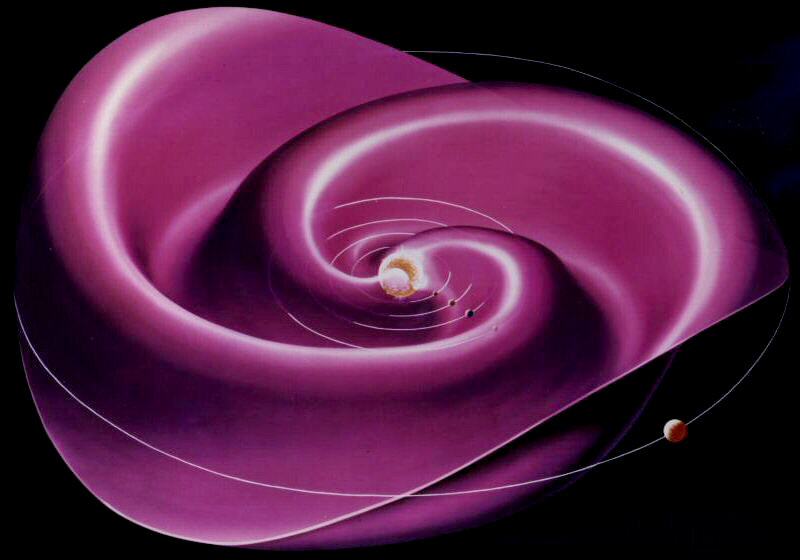
The Plasma Analyser (Mullard Space Science Laboratory, United Kingdom) measures solar wind particles directly at L5, giving us valuable insight into what will soon sweep past Earth.
Vigil’s second in situ instrument is its Magnetometer (Imperial College London/IWF Graz, UK/Austria). It detects magnetic fields from the end of a seven-metre-long boom. This distance helps eliminate interference from the spacecraft itself, enabling precise tracking of incoming magnetic disturbances associated with space weather events.
Vigil’s forecasts: more than the sum of their parts
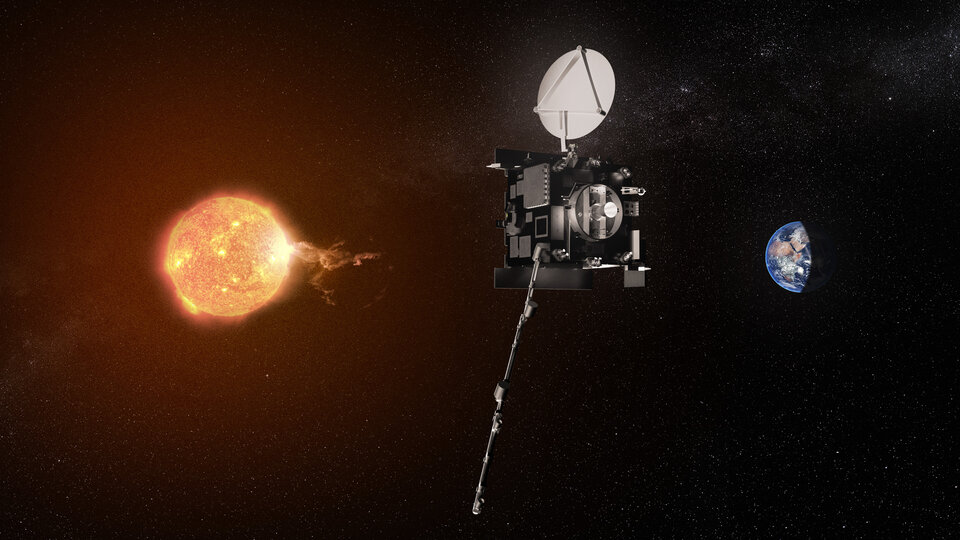
Together, Vigil’s powerful suite of instruments will help reduce the risk of disruptions caused by space weather events, continuously monitoring the Sun and the Sun–Earth line for years. Vigil’s unique and stable L5 location also makes it a fascinating source of scientific data. Vigil’s observations will feed into various space weather services, including ESA’s own Space Weather Service Network.
"When combined with data from other missions near Earth and at Lagrange point 1, Vigil’s unique perspective makes the system greater than the sum of its parts," says Matthew West, Vigil mission scientist at ESA.
"By contributing observations from a previously unmonitored region of space, Vigil will help stitch together a continuous scene: from activity on the Sun, through the heliosphere, all the way to Earth’s space environment. This added dimension will significantly enhance our ability to forecast and respond to solar storms."
With Vigil’s launch scheduled for 2031, Europe will gain a new and vital sentinel in space that is keeping watch, keeping data flowing and helping keep our modern world resilient to solar activity.