• → European Space Agency

      • Space for Europe
      • Space News
      • Space in Images
      • Space in Videos
    • About Us

      • Welcome to ESA
      • DG's News and Views
      • For Member State Delegations
      • Business with ESA
      • ESA Exhibitions
      • ESA Publications
      • Careers at ESA
    • Our Activities

      • Space News
      • Observing the Earth
      • Human Spaceflight
      • Launchers
      • Navigation
      • Space Science
      • Space Engineering
      • Operations
      • Technology
      • Telecommunications & Integrated Applications
    • For Public

    • For Media

      • Media
      • ESA TV
      • Videos for professionals
      • Photos
    • For Educators

    • For Kids

    • ESA

    • Operations

    • Ground Systems Engineering

    • Space Debris

    • SSA

    • Operations
    • Operations home
    • Background
    • About Operations
    • The Right Stuff
    • Multimedia

      • Images
      • Videos
    • SSA programme
    • Space Situational Awareness
    • Teams on ground
    • Ground Systems Engineering
    • EGOS - Ground operation system
    • Missions in space
    • Solar and planetary
    • Astronomy & fundamental physics
    • Earth observation
    • Human spaceflight
    • Technology demonstration
    • Estrack operations
    • Past missions
    • ESA mission history
    • - Find a mission: A...Z
    • Mission control centres
    • ATV Control Centre (ATV-CC)
    • Columbus Control Centre (Col-CC)
    • Ground stations
    • Estrack tracking stations
    • ESTRACK Control Centre
    • - Find a station: A...Z
    • OPS Community
    • Advanced Operations Concepts Office
    • HSO Exchange
    • Knowledge Management at ESA's Operations team

    ESA > Our Activities > Operations

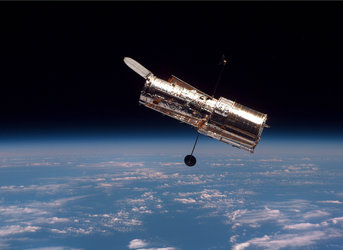
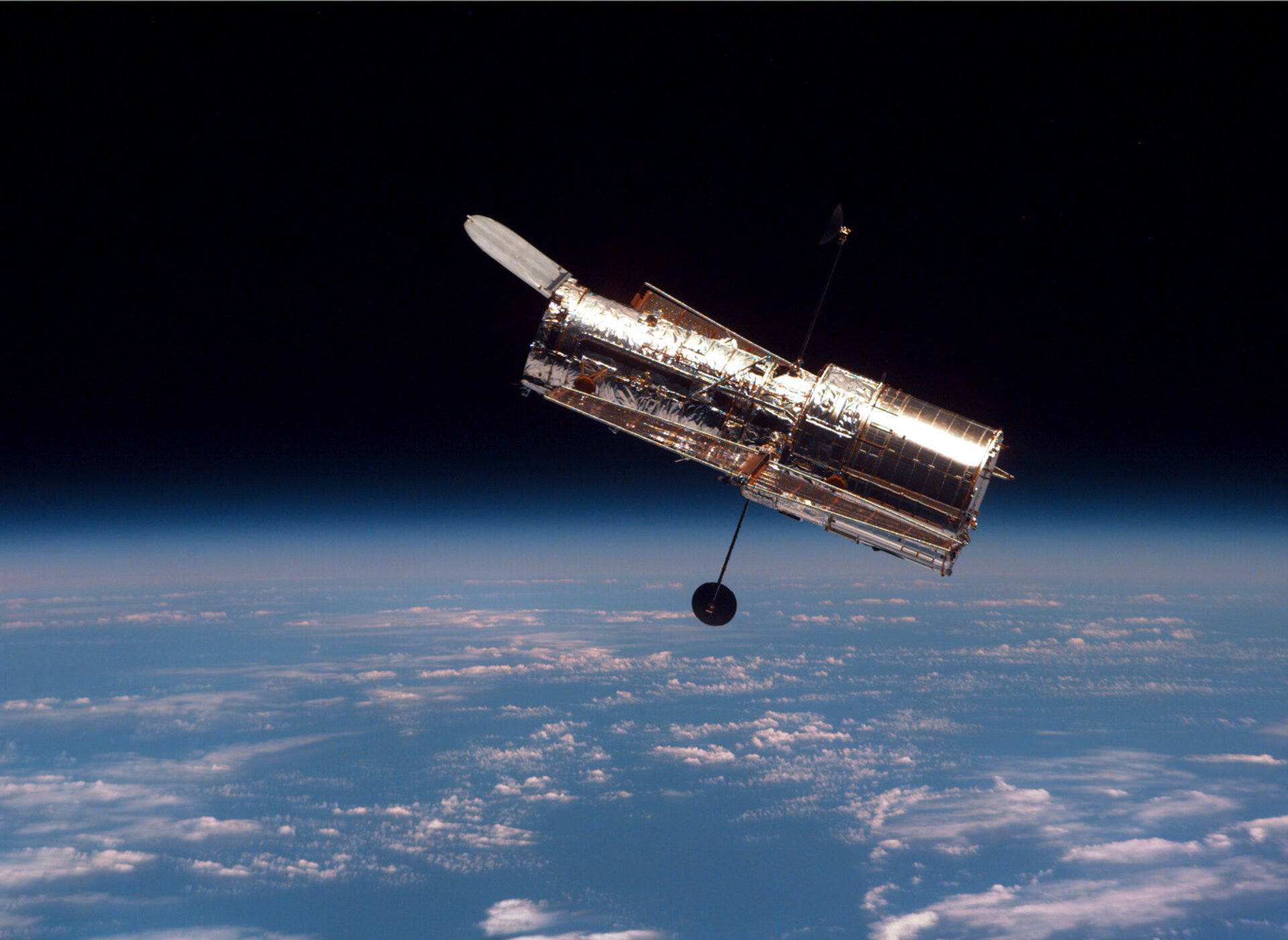
    Hubble enters safe mode

    Hubble in free orbit
    1 October 2008

    At approximately 02:00 CEST on Sunday, 28 September, the NASA/ESA Hubble Space Telescope automatically entered safe mode when errors were detected in the Control Unit/Science Data Formatter-Side A.

    This component is essential for the storage and transmission of data from the telescope's science instruments back to Earth. Ground control attempts to reset the device and obtain a download of the payload computer's memory were unsuccessful.

    NASA specialists are currently investigating the problem and are in the process of planning a switch-over to the redundant Side B. This is a complex task and requires that five other modules are also switched to communicating via the B channel. Many of these modules were last activated 20 years ago during ground testing prior to launch. If this transition is successfully completed the telescope could rapidly be returned to science operations.
    NASA is now also evaluating the possibility of flying a back-up replacement system as part of the Servicing Mission 4 that was originally scheduled for 14 October. The replacement part, although already manufactured, needs to be fully checked and tested at the NASA Goddard Facility and as a result will not be ready for delivery to the Shuttle before early January 2009.

    For more information:

    Richard Hook, Hubble/ESA, Garching, Germany
    E-mail: rhook @ eso.org

    Lars Lindberg Christensen, Hubble/ESA, Garching, Germany
    E-mail: lars @ eso.org

    Rate this

    Views

    Share

    • Currently 0 out of 5 Stars.
    • 1
    • 2
    • 3
    • 4
    • 5
    Rating: 0/5 (0 votes cast)

    Thank you for rating!

    You have already rated this page, you can only rate it once!

    Your rating has been changed, thanks for rating!

    32
    Tweet
    • More about...
    • Hubble overview
    • Hubblecast
    • Related articles
      • Hubble enters safe mode
        • When it comes to galaxies, diversity is everywhere
          • Hubble sees magnetic monster in erupting galaxy
            • Plethora of interacting galaxies on Hubble’s birthday
              • Black hole found in Omega Centauri
                • Exploding star in nearby galaxy
                  • Hubble finds first organic molecule on extrasolar planet
                    • Hubble discovers 67 gravitationally-lensed galaxies in the distant universe
                      • Hubble: One of the youngest and brightest galaxies found
                        • Gargantuan galaxy NGC 1132 - a cosmic fossil?
                        • Related links
                        • NASA Hubble update
                        • Servicing Mission 4
                        • NASA media guide on the data handling unit

    Connect with us

    • RSS
    • Youtube
    • Twitter
    • Flickr
    • G+
    • Facebook
    • Livestream
    • Subscribe
    • App Store
    • ESA Operations Twitter

    Follow ESA operations

    • LATEST ARTICLES
    • · Rare merger reveals secrets of gal…
    • · Watching for hazards: ESA opens as…
    • · ESA astronaut Timothy Peake set fo…
    • · Space drives e-mobility
    • · Proba-V opens its eyes
    • FAQ

    • Jobs at ESA

    • Site Map

    • Contacts

    • Terms and conditions