SMART-1 manoeuvres prepare for mission end
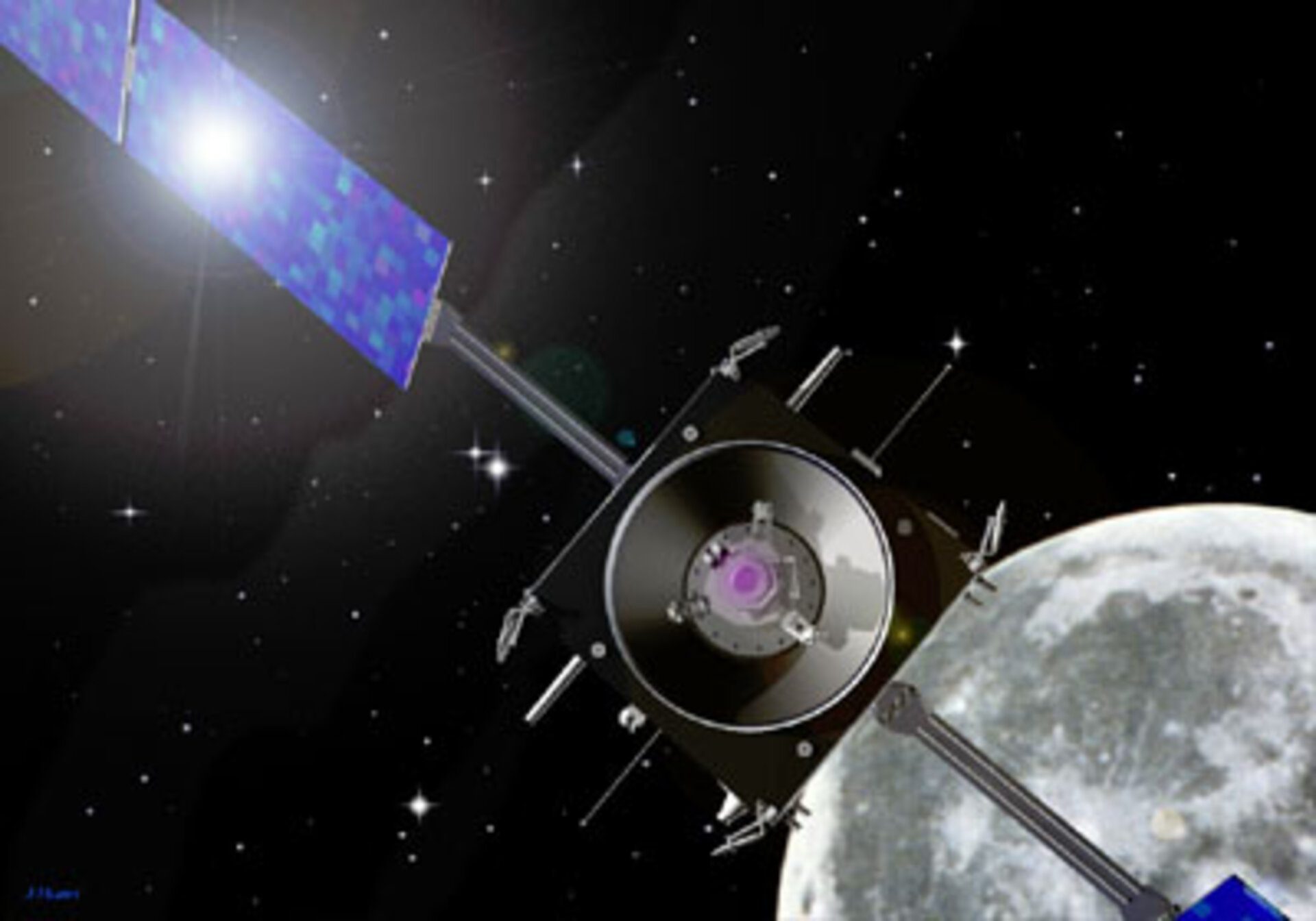
After sixteen months orbiting the Moon, ESA's lunar mission is preparing for the end of its scientific exploration. On 19 June, SMART-1 mission controllers initiated a 17-day series of manoeuvres aimed at positioning the spacecraft to enhance science data return as the mission winds down.
SMART-1, Europe's successful first Moon mission, is scheduled to end on 3 September 2006, impacting on the Moon's surface in a disposal plan similar to that of many earlier lunar missions and almost three years to the day after its 2003 launch.
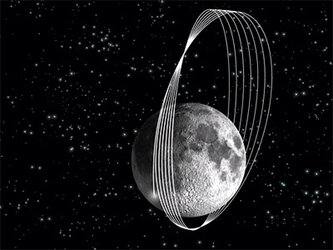
The recently started manoeuvre campaign aims to avoid having the spacecraft intersect with the Moon at a disadvantageous time from the scientific point of view, as it would have naturally about 17 August if left alone. Instead, this 'extension' to mission operations will provide new opportunities for low-altitude scientific observations and give optimum science returns during and after the spacecraft's controlled impact on the Moon.
In preparation for mission end, spacecraft controllers at ESOC, ESA's Spacecraft Operations Centre in Darmstadt, Germany, have started a series of thruster firings to give a 'delta-velocity,' or change in velocity, of approximately 12 metres per second. This will raise the orbit perilune (point of closest passage over the Moon) by about 90 kilometres, and will shift the impact to 3 September.
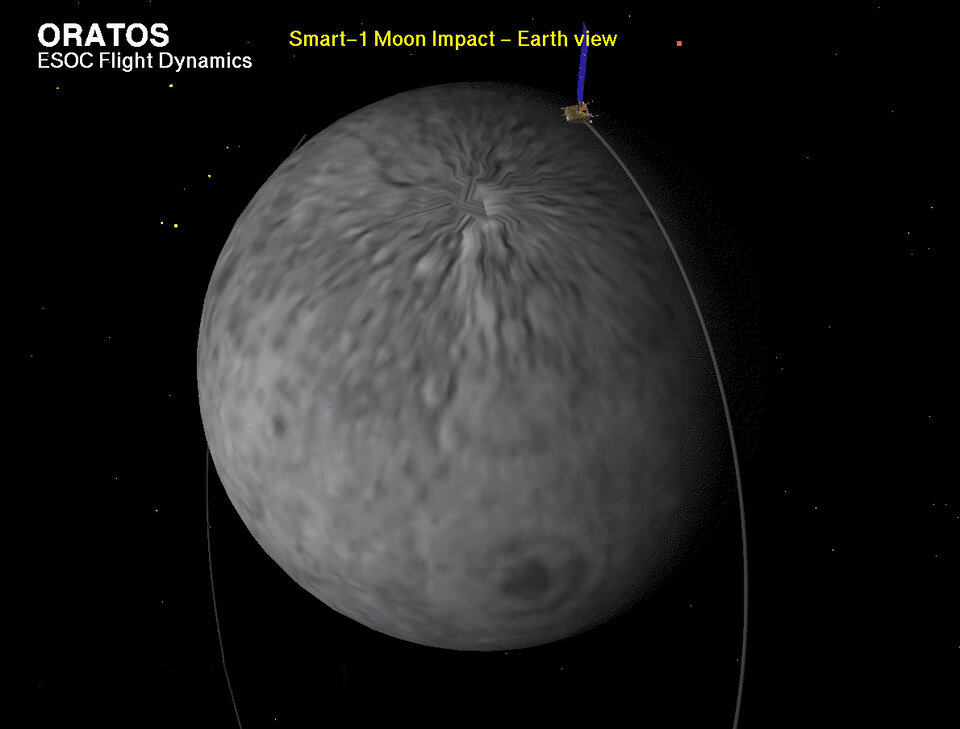
"The shift in date, time and location for Moon intersection is also optimised to favour scientific observations from Earth," said Gerhard Schwehm, ESA's SMART-1 Mission Manager. "Projections based on the current orbit indicated that the spacecraft, if left as is, would impact the Moon on the far side, away from ground contact and visibility. The new location is on the Moon's near-side, at mid-southern latitudes."
For the manoeuvre campaign, the use of the electric propulsion system (the ion engine) had to be ruled out since all Xenon propellant reserves were exhausted during the mission. The mission control team have instead developed an imaginative approach.
Innovative manoeuvre strategy
"The manoeuvre strategy consists of a series of reaction-wheel off-loadings combined with about three hours of intermittent thrust centred at apolune (point of furthest distance from the Moon) during the next 74 orbits," said Octavio Camino, Spacecraft Operations Manager at ESOC.
"We use asymmetric firing of the attitude thrusters to produce a small velocity variation aligned with the flight direction. This will change the orbit by an accumulative effect," added Camino.
"After these manoeuvres, science activities will resume until the impact, with short interruptions for two trim manoeuvres to adjust the impact time, one around the end of July and one at the beginning of September," he concluded.
This manoeuvre campaign and the following trim manoeuvres will make it possible to predict the exact time and location for the SMART-1 impact with more accuracy.
Note to editors
SMART-1 is the first in a series of 'Small Missions for Advanced Research and Technology' in which elements of the platform and miniaturised payload technology have been conceived as a demonstration for future scientific missions and an early opportunity for science. SMART-1 used an innovative ion-propulsion system powered by a small quantity of onboard Xenon and solar energy to generate electricity used to ionise the fuel to travel to the Moon.
After a 27 September 2003 launch, SMART-1 spiralled out over a 14-month period until being captured by the Moon on 15 November 2004, thus successfully achieving the primary objective of demonstrating solar electric propulsion during interplanetary travel. In addition to helping prove new technology from the perspective of satellite design, the mission has also provided an opportunity to develop new ways of conducting ground control operations based on both increased satellite autonomy and improved tools for ground automation.
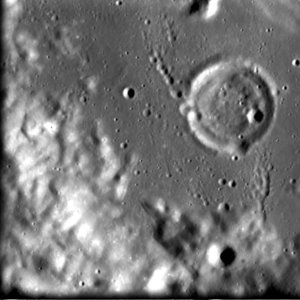
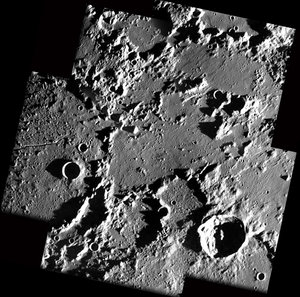
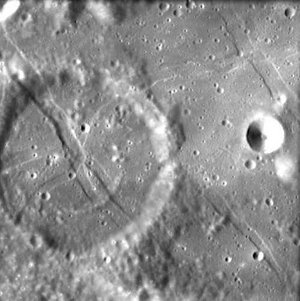
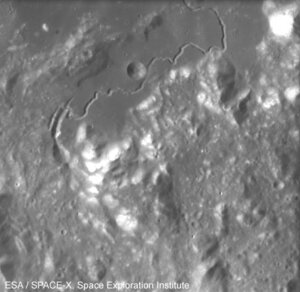
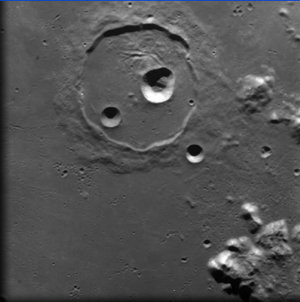
The wealth of scientific data from SMART-1 are still being processed and analysed. Thanks to SMART-1, scientists all over Europe and around the world will have access to the best-resolution surface images ever taken from lunar orbit, as well as a better knowledge of the Moon's minerals. For the first time from orbit, SMART-1 detected Calcium and Magnesium using an X-ray instrument. It measured compositional changes from the central peaks of craters, volcanic plains and giant impact basins. The camera studied impact craters, volcanic features and lava tubes, and monitored the polar regions.
For more information
Gerhard Schwehm
ESA SMART-1 Mission Manager
gerhard.schwehm [at] esa.int
Octavio Camino
ESA SMART-1 Spacecraft Operations Manager
octavio.camino [at] esa.int
Bernard Foing
ESA SMART-1 Project Scientist
bernard.foing [at] esa.int
Monica Talevi
Science Information Manager
ESA - Web Portal
Tel: +31 71 565 3223
Fax: +31 71 565 4101
Monica.Talevi [at] esa.int